

1/1
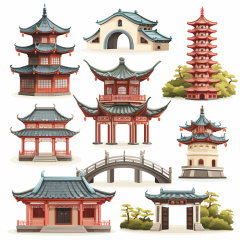
Collection of Traditional Chinese Classical Garden Architecture Patterns
File Type:EPS
This collection showcases an array of patterns featuring traditional Chinese classical garden architectures. It encapsulates the essence of Chinese garden design, presenting a rich tapestry of various architectural elements that have been integral to Chinese garden art for centuries. These patterns are not only a visual delight but also a valuable resource for cultural exploration, educational purposes, and creative design endeavors.
Pattern Overview
2.1 Pavilion Patterns
- Pattern Features: Pavilions in these patterns come in diverse shapes, such as square, hexagonal, and octagonal. They typically have upturned eaves, supported by elegant wooden columns. The roofs are often tiled, and some pavilions are decorated with intricate carvings on the beams and brackets. They are commonly placed in scenic spots within the garden, like beside a pond, on a hilltop, or amidst a grove of trees.
- Cultural Significance: Pavilions serve as focal points for relaxation and contemplation. They represent the harmonious integration of man - made structures with the natural environment, symbolizing the Chinese pursuit of a peaceful and aesthetically pleasing living space.
2.2 Corridor Patterns
- Pattern Features: The corridor patterns display different types, including water corridors that run alongside or over water, and winding corridors that meander through the garden. They are characterized by their long, linear forms, with wooden railings and sometimes lattice - work screens. Some corridors are covered with roofs, providing shelter from the elements, while others are open - air, allowing for an unobstructed view of the surrounding scenery.
- Cultural Significance: Corridors play a crucial role in guiding visitors through the garden, creating a sense of mystery and discovery as one strolls along. They also divide and connect different garden areas, enhancing the spatial complexity and aesthetic rhythm of the overall garden layout.
2.3 Archway Patterns
- Pattern Features: Archways in the collection range from simple moon - shaped (yue - dong men) to more elaborate multi - bay structures. The moon - shaped archways have a smooth, circular opening, often framed by whitewashed walls. Other archways may be made of stone or wood, adorned with carvings of auspicious symbols like dragons, phoenixes, and flowers. They are usually positioned at the entrance of a garden area or as a transition between different scenic zones.
- Cultural Significance: Archways not only mark boundaries but also carry symbolic meanings. The moon - shaped archways, for example, are associated with the beauty of the moon and the concept of harmony. The carvings on more complex archways convey wishes for good fortune, prosperity, and longevity.
2.4 Bridge Patterns
- Pattern Features: Bridge patterns depict various styles, such as arched stone bridges, flat - slab wooden bridges, and zigzag bridges. Arched bridges have a graceful curve, allowing boats to pass underneath, and their stone railings are often carved with motifs like lotus flowers or lions. Flat - slab bridges are simple and straightforward, blending in with the natural landscape. Zigzag bridges add an element of playfulness and visual interest, as they force the viewer to slow down and take in the scenery from different angles.
- Cultural Significance: Bridges are essential for traversing water bodies in the garden, but they also symbolize connection and transition. They represent the journey through life, with the act of crossing a bridge signifying a passage from one state to another.
2.5 Water Feature Patterns
- Pattern Features: These patterns show different water features, including ponds, lakes, and flowing streams. Ponds are often irregularly shaped, mimicking natural bodies of water, and may be surrounded by rocks, plants, and small islands. Lakes are larger in scale, with perhaps a pavilion or a boat dock on the shore. Flowing streams are depicted with gently curving channels, sometimes with water cascading over small rocks, creating a soothing sound.
- Cultural Significance: Water is considered the life - force of a garden. It represents fluidity, change, and purification. Ponds and lakes are often used to reflect the sky, clouds, and surrounding architecture, creating a sense of tranquility and the illusion of a larger space.
2.6 Rockery Patterns
- Pattern Features: Rockery patterns display the art of arranging rocks to create miniature mountains. The rocks used are often 太湖石 (Taihu stone) or other types with unique shapes and textures. They are stacked in intricate formations, with caves, crevices, and peaks. Some rockeries are accompanied by small trees, shrubs, or moss, enhancing their natural appearance.
- Cultural Significance: Rockeries are a symbol of the grandeur of nature in a microcosm. They represent the mountains, which have long held spiritual and aesthetic significance in Chinese culture, associated with stability, endurance, and the abode of immortals.
Design Features
- Harmony with Nature: All the patterns in this collection emphasize the harmony between architecture and nature. The buildings are designed to blend in with the surrounding landscape, using natural materials like wood, stone, and bamboo, and incorporating elements such as plants and water to create a seamless connection with the outdoors.
- Symbolism and Aesthetic Appeal: Each architectural element is rich in symbolism. From the shapes of the archways to the carvings on the pavilions, every detail is carefully crafted to convey cultural meanings and add to the overall aesthetic charm of the garden.
- Spatial Complexity: The patterns showcase the complex spatial design of Chinese gardens. Through the use of corridors, archways, and different levels of elevation, the gardens are designed to create a sense of depth, mystery, and continuous discovery.
Application Scenarios
- Education: These patterns can be used in art, history, and architecture classes to teach students about Chinese classical garden art, its cultural background, and design principles.
- Cultural Promotion: In cultural exhibitions, tourism brochures, and online platforms, they can be used to promote Chinese culture and attract visitors to explore the beauty of Chinese gardens.
- Design: Designers in the fields of interior design, landscape architecture, and graphic design can draw inspiration from these patterns to create modern works that incorporate traditional Chinese elements.


