

1/1
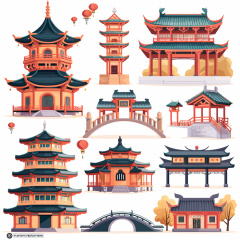
Collection of Ten Chinese Ancient Style Building Icons
File Type:EPS
This collection showcases ten exquisitely designed icons, each representing a distinct type of Chinese ancient - style architecture, including ancestral halls, pavilions, pagodas, and wind - rain bridges. These icons are not only visually appealing but also encapsulate the profound cultural connotations and architectural wisdom of ancient China. They serve as an ideal visual resource for various applications, such as cultural exhibitions, educational materials, and design projects inspired by Chinese heritage.
Icon Details
2.1 Ancestral Hall
- Design Features: The ancestral hall is a grand structure symbolizing family heritage and unity. It typically features a main hall with imposing, gently - curved eaves that seem to reach towards the sky, covered with gray - black tiles, creating a solemn and respectful atmosphere. Inside, ancestral tablets of family forefathers are enshrined. The hall follows a symmetric layout, with a spacious central nave and two side aisles, facilitating the flow of descendants during ancestral worship ceremonies. The wooden columns supporting the hall are often adorned with carvings of auspicious animals like dragons and phoenixes, symbolizing prosperity and nobility in Chinese culture. The interior walls may be painted with scenes of family history, such as the deeds of illustrious ancestors or important family events, further enhancing the hall's cultural significance.
- Cultural Significance: Ancestral halls are the heart of family - centered traditions in China. They are venues for ancestral worship, a practice deeply rooted in Chinese culture to honor and seek blessings from ancestors. These halls also function as gathering places for family members, strengthening the bonds of kinship and fostering a sense of identity and continuity across generations.
2.2 Pavilion
- Design Features: Pavilions are charming structures often found in gardens, parks, or scenic areas. They have gracefully curved eaves, supported by wooden or stone columns. Pavilions can be circular, octagonal, or square in shape, designed to provide a sheltered yet open - air space for people to rest, enjoy the scenery, or engage in cultural activities. The railings of the pavilion are often carved with motifs of lotus flowers, fish, or other auspicious symbols in Chinese culture. The roof may be covered with blue - gray tiles, and the interior is sometimes decorated with calligraphy, paintings, or simple furnishings, creating an elegant and inviting atmosphere.
- Cultural Significance: Pavilions hold a special place in Chinese cultural life. They are associated with leisurely pursuits, such as poetry recitals, tea - drinking gatherings, and contemplation of nature. Pavilions also serve as important elements in traditional Chinese garden design, enhancing the aesthetic beauty of the landscape and providing a focal point for visitors to appreciate the surrounding natural beauty. They represent the Chinese appreciation for simplicity, elegance, and the harmonious relationship between humans and nature.
2.3 Pagoda
- Design Features: Pagodas, with their distinctive multi - storey structures, feature subtly upturned eaves on each level. They are usually constructed of materials like brick, stone, or wood, with a sturdy and compact form. The lower levels often have larger windows for ventilation, while the upper levels have smaller openings to protect the interior, which may house Buddhist scriptures, relics, or serve as observation decks. The exterior of the pagoda is often inscribed with Buddhist scriptures, symbols, or decorative patterns, adding to its spiritual and aesthetic appeal. The overall design of the pagoda, with its vertical orientation, gives a sense of reaching towards the sky, symbolizing the pursuit of spiritual enlightenment.
- Cultural Significance: Originating from ancient India as a Buddhist religious structure and evolving uniquely in China, pagodas are closely associated with Buddhism. They are considered sacred places that house precious Buddhist relics and scriptures. Pagodas also play a role in the landscape, often serving as landmarks and symbols of the region's religious and cultural heritage. Their presence in the environment reflects the harmonious coexistence of religion, architecture, and nature in Chinese culture.
2.4 Wind - Rain Bridge
- Design Features: Wind - rain bridges, also known as covered bridges, are unique to the Dong ethnic group in China. They are usually built at the entrance or exit of a village. The bridge combines the functions of a bridge, a corridor, and a pavilion. The bridge deck is made of wood, and on top of it are multiple - storey pavilions with gracefully curved eaves. The entire structure is held together by mortise - and - tenon joints without the use of nails. The bridge body is often decorated with intricate carvings of animals, plants, and traditional patterns, adding to its aesthetic charm. The bridge is designed to provide shelter from wind and rain for pedestrians, and also serves as a gathering place for villagers.
- Cultural Significance: Wind - rain bridges are not only practical transportation structures but also an important part of Dong ethnic culture. They are believed to bring good luck and prosperity to the village, protecting it from evil spirits. These bridges are also symbols of the Dong people's craftsmanship and their harmonious relationship with nature. They are often used for community activities, such as festivals, meetings, and social gatherings, strengthening the bonds within the community.
2.5 Academic Pavilion
- Design Features: This type of pavilion is dedicated to academic and cultural pursuits. It has a more refined and elegant design compared to regular pavilions. The eaves are delicately curved, and the structure is often made of high - quality wood. The interior is spacious and well - lit, with large windows to allow for a good view of the surrounding scenery. The pavilion may be decorated with calligraphy works of famous scholars, paintings related to academic themes, and bookshelves filled with classic literature. The roof is usually covered with tiles in a light color, giving it a clean and fresh look.
- Cultural Significance: Academic pavilions were places where scholars would gather to study, discuss literature, philosophy, and other academic topics. They played an important role in the dissemination of knowledge and the cultivation of scholars in ancient China. These pavilions were not only physical spaces but also represented the intellectual and cultural pursuits of the literati class, contributing to the development of Chinese traditional culture.
2.6 Mountain - side Ancestral Hall
- Design Features: An ancestral hall built on the side of a mountain has a unique design that blends with the natural landscape. It features bold and dramatic eaves that seem to merge with the slopes of the mountain. The hall is constructed using local stones and timber, carefully integrated with the mountain's terrain. The main hall offers a breathtaking view of the surrounding mountains and valleys, allowing descendants to feel a profound connection with their ancestors and nature. The layout of the ancestral hall is designed to follow the contours of the mountain, with a series of terraces and walkways connecting the different buildings. The use of natural materials and the integration with the mountain environment reflect the Chinese concept of "harmony between man and nature."
- Cultural Significance: The mountain - side ancestral hall represents the harmonious coexistence of human architecture and the natural world in Chinese culture. The choice of a mountain location is often symbolic, as mountains are considered sacred in Chinese tradition, representing stability, endurance, and a connection to the divine. By building the ancestral hall on a mountainside, the family is able to create a spiritual and physical connection between their ancestors, themselves, and the natural environment, emphasizing the importance of nature in Chinese cultural values.
2.7 Twin - Pagodas
- Design Features: Twin - pagodas are a pair of pagodas standing side by side, usually in a temple or a religious complex. They have similar architectural styles, with multi - storey structures and upturned eaves. Each pagoda is constructed of materials such as brick or stone, and is adorned with Buddhist scriptures, symbols, and decorative patterns on the exterior. The pagodas may have different numbers of storeys, but they are designed to be harmonious in overall appearance. The lower levels of the pagodas often have larger openings for ventilation and access, while the upper levels have smaller windows or niches.
- Cultural Significance: Twin - pagodas in Chinese Buddhism often symbolize the dual aspects of the Dharma, such as wisdom and compassion. They are important religious landmarks, representing the spiritual power and the spread of Buddhist teachings. These pagodas are not only objects of religious veneration but also contribute to the aesthetic beauty of the religious site, attracting pilgrims and visitors alike.
2.8 Grand Ancestral Hall Gateway
- Design Features: The grand ancestral hall gateway is a magnificent structure that serves as the entrance to the ancestral hall. It is typically a stone - built archway with slightly upturned eaves. The gateway is inscribed with couplets and maxims that convey the family's values, such as "harmony within the family" and "respect for ancestors." On both sides of the gateway, there may be stone lions or other guardian figures, standing watch over the sacred precincts. The surface of the gateway is embellished with relief carvings of cloud patterns, flowers, and traditional Chinese symbols, representing good fortune and the spiritual nature of the family's heritage. The overall design of the gateway is both robust and elegant, welcoming visitors into the world of the family's ancestral memory.
- Cultural Significance: The grand ancestral hall gateway acts as a visual and symbolic threshold, marking the transition from the outside world to the sacred space of the ancestral hall. It not only showcases the family's status and values but also serves as a statement of the family's identity and pride. The inscriptions and carvings on the gateway carry the family's history and cultural traditions, passing them down through generations.
2.9 Riverside Pavilion
- Design Features: A riverside pavilion is located by the bank of a river, offering a beautiful view of the water. It has gracefully curved eaves and is supported by wooden or stone columns. The pavilion is designed to be open - air, with railings around to ensure safety. The railings are often carved with motifs related to water, such as fish, waves, or lotus flowers. The roof is covered with tiles, and the interior may be decorated with simple furnishings, such as wooden benches and small tables. The pavilion's design allows for a cool breeze to pass through, making it a pleasant place to relax and enjoy the scenery.
- Cultural Significance: Riverside pavilions have long been associated with leisure and cultural activities in Chinese history. They are places where people would gather to enjoy the beauty of nature, write poetry, or have tea parties. The proximity to the river symbolizes the connection between humans and the natural elements, and the pavilion serves as a harmonious point of convergence for people to appreciate and interact with the natural world.
2.10 Village Entrance Wind - Rain Bridge
- Design Features: This wind - rain bridge is specifically built at the entrance of a village. It has a long bridge deck made of wood, with multiple - storey pavilions along the length. The pavilions have upturned eaves and are decorated with colorful paintings and carvings of local legends, animals, and plants. The bridge is supported by sturdy wooden or stone columns, and the entire structure is held together by mortise - and - tenon joints. At both ends of the bridge, there may be additional decorative elements, such as stone lions or traditional Chinese lanterns, adding to the festive and welcoming atmosphere.
- Cultural Significance: The village entrance wind - rain bridge is not only a practical structure for villagers to cross the river but also a symbol of the village's identity and unity. It is believed to bring good luck and protect the village from misfortunes. The bridge serves as a gathering place for villagers, where they can meet, socialize, and celebrate festivals. It also represents the unique cultural and architectural heritage of the local community.
Design Features
- Harmony with Tradition: All the icons in this collection vividly reflect the long - standing Chinese traditions. Whether it's the ancestral hall's emphasis on family unity and ancestor worship, the pavilion's role in cultural and leisure activities, the pagoda's connection to Buddhism, or the wind - rain bridge's significance in ethnic culture, each icon adheres to traditional Chinese cultural values. The choice of materials, such as wood, stone, and earth - toned pigments, as well as the careful consideration of the building's layout and orientation, demonstrate a deep respect for traditional aesthetics. The gentle curves of the eaves and the harmonious spatial arrangements also mimic the traditional Chinese architectural style, creating a sense of continuity and stability.
- Symbolic Expressions: Traditional Chinese symbols and motifs are abundantly used in the design of these icons. Dragons, phoenixes, cloud patterns, lotus flowers, and various inscriptions carry rich cultural and spiritual meanings. These symbols not only adorn the buildings but also serve as visual reminders of the values, history, and aspirations associated with each type of structure. For example, the dragon symbolizes power and good fortune, often seen on the columns of ancestral halls; the lotus flower, representing purity and enlightenment, is a common motif on the railings of pavilions.
- Unique Structural Elements: Each type of building in this collection has its own unique structural elements. Ancestral halls feature symmetric layouts and large, imposing main halls; pagodas have multi - storey structures with upturned eaves on each level; pavilions are characterized by their open - air, sheltered spaces and gracefully curved eaves; wind - rain bridges combine bridge, corridor, and pavilion functions with mortise - and - tenon joint construction. These structural elements not only contribute to the functionality of the buildings but also showcase the 高超的 craftsmanship and architectural ingenuity of ancient China.
Application Scenarios
- Cultural and Heritage Exhibits: These icons can be prominently featured in exhibitions dedicated to Chinese cultural heritage, family history, traditional architecture, and ethnic cultures. They can help visitors gain a deeper understanding of the unique features and cultural significance of various ancient Chinese buildings, and appreciate the craftsmanship and artistic achievements of ancient China. For example, in a museum exhibition about Chinese family traditions, the ancestral hall icon can be used to illustrate the importance of family heritage and ancestor worship.
- Educational Curriculum: In educational settings, these icons can be used as visual aids in courses on Chinese history, culture, art, and architecture. They can enhance students' learning experience by providing a tangible representation of the concepts and ideas being taught. For instance, in a history class discussing the spread of Buddhism in China, the pagoda icon can be used to explain the architectural and religious significance of pagodas. In an art class, students can study the decorative elements and aesthetic features of the pavilions and wind - rain bridges.
- Cultural - Themed Design Projects: Designers working on projects with a Chinese cultural theme, such as the creation of cultural souvenirs, the design of traditional - style interior spaces, or the development of digital content related to Chinese culture, can draw inspiration from these icons. The unique design elements and cultural symbols can be incorporated into the design to create a more authentic and engaging experience for the target audience. For example, a graphic designer can use the elements of the ancestral hall icon to create a logo for a family - owned business that values its heritage; an interior designer can reference the style of the pavilion to create a peaceful and elegant living space.


