

1/1
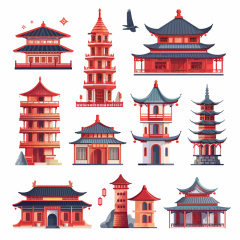
Collection of Ten Chinese Ancient Architecture Icons
File Type:EPS
This collection features ten exquisitely designed icons, vividly representing a variety of ancient Chinese architectures such as pagodas, main halls, and pavilions. Each icon captures the essence of traditional styles, with characteristic upturned eaves and, in many cases, colorful glazed tiles. They not only showcase the historical elegance of Chinese architecture but also carry profound cultural significance, making them highly suitable for cultural exhibitions, educational resources, and design projects with a Chinese - themed focus.
Icon Details
2.1 Grand Buddhist Temple Main Hall
- A magnificent main hall of a Buddhist temple, with steeply upturned eaves that curve gracefully upwards, creating an imposing and solemn atmosphere. The roof is covered with golden - hued glazed tiles, which not only add a touch of grandeur but also symbolize the sacredness and purity within the religious context. This type of hall is often the central and most important building in a Buddhist temple complex, where major religious ceremonies and rituals are held.
2.2 Multi - tiered Octagonal Pagoda
- A tall and elegant octagonal pagoda with multiple tiers. Each tier has delicately upturned eaves, and the tiers gradually decrease in size as they ascend, forming a harmonious and visually appealing silhouette. The pagoda is adorned with a rich variety of colorful glazed tiles, with different colors like red, green, and blue adding to its charm. Pagodas in Chinese culture often have religious connotations, such as housing Buddhist relics, and also serve as symbols of spiritual aspiration.
2.3 Two - storey Garden Pavilion
- This open - air pavilion, with two storeys, has smoothly curved, upturned eaves. The lower storey provides an open space for people to rest and enjoy the surrounding scenery, while the upper storey offers a better vantage point. The roof is covered with vibrant green glazed tiles, which blend seamlessly with the lush greenery of the garden, creating a peaceful and idyllic environment. Garden pavilions were commonly used for relaxation, social gatherings, and appreciating nature in ancient times.
2.4 Mountain Gate of a Taoist Temple
- The imposing mountain gate of a Taoist temple features bold and widely upturned eaves. The gate is decorated with simple yet meaningful patterns on its glazed tiles, such as cloud - like motifs symbolizing the celestial and the divine. As the entrance to the Taoist temple, it not only welcomes visitors but also symbolizes the transition from the mundane world to the sacred and spiritual realm of the temple.
2.5 Imperial Palace Main Chamber
- An elegant main chamber within an imperial palace, characterized by subtly upturned eaves that add a touch of refinement. The chamber is covered with bright yellow glazed tiles, which were reserved for imperial use in ancient China, representing the highest level of nobility and imperial power. The architecture of the imperial palace chambers was designed to reflect the grandeur and authority of the imperial family.
2.6 Ancestral Hall with Intricate Carvings
- A solemn ancestral hall with intricately carved upturned eaves. The carvings on the eaves tell stories of the family's history, traditions, and important events. The hall is covered with rich red glazed tiles, which evoke a sense of warmth, respect, and the significance of family heritage. Ancestral halls were crucial for clans to honor their ancestors, hold family ceremonies, and maintain family bonds.
2.7 Three - storey Scholar's Pavilion
- A three - storey pavilion, often associated with scholars in ancient times. It has gently upturned eaves, giving it a refined and elegant appearance. The pavilion may have been used for studying, writing poetry, or engaging in intellectual discussions. The roof tiles might be of a light - colored glaze, such as gray - blue, which complements the peaceful and scholarly atmosphere.
2.8 Pagoda with a Square Base
- This pagoda has a square - shaped base and multiple storeys, each with upturned eaves. The square base provides stability, and the upturned eaves add a sense of lightness and elegance. The pagoda may be decorated with simple patterns on its glazed tiles, and it could be located in a temple complex or a scenic area, serving as a landmark and a symbol of local culture.
2.9 Monastery Main Hall
- A simple yet dignified main hall of a monastery, with understated upturned eaves. The hall is covered with muted gray - green glazed tiles, which blend well with the quiet and secluded environment of the monastery. Monastery halls were used for religious services, meditation, and the spiritual cultivation of the monks.
2.10 Memorial Archway
- A decorative memorial archway with slightly upturned eaves. The archway is adorned with glazed tile ornaments, such as flowers, animals, or auspicious symbols. It marks important locations, such as the entrance to a historical site, a village, or a family estate, and serves as a commemorative structure, honoring historical events, outstanding individuals, or important achievements.
Design Features
- Distinctive Eaves: The upturned eaves, with their various degrees of curvature, are a prominent feature across all the icons. They not only add dynamic curves and visual interest but also have practical functions in protecting the buildings from rain and sunlight.
- Glazed Tiles: Glazed tiles in a spectrum of colors, including gold, green, red, yellow, and blue, are used to adorn the roofs. These tiles not only enhance the aesthetic appeal but also carry rich cultural symbolism, reflecting different aspects such as divinity, nobility, and good fortune.
- Cultural - specific Details: Each icon incorporates cultural - specific details, from the patterns on the eaves and tiles to the overall architectural forms, which are deeply rooted in Chinese history, religion, and social traditions.
Application Scenarios
- Cultural Exhibitions: These icons can be used in museums, art galleries, and cultural exhibitions to showcase the diversity and beauty of ancient Chinese architecture, helping visitors better understand Chinese cultural heritage.
- Educational Materials: They are excellent visual aids for textbooks, online courses, and educational documentaries that teach about Chinese history, architecture, and culture.
- Graphic Design and Advertising: Designers can utilize these icons in Chinese - themed graphic design projects, such as posters, brochures, and website designs, to add an authentic touch and attract the target audience.
- Interior Decoration: In interior spaces with a Chinese - style theme, these icons can be used on wallpapers, decorative panels, or as part of light fixtures to create an immersive and culturally - rich environment.


