

1/1
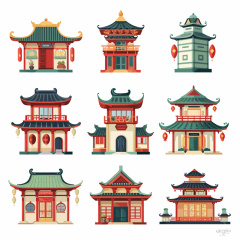
Collection of Nine Chinese Classical Ancestral Hall Icons
File Type:EPS
This collection features nine exquisitely designed icons representing the rich and profound world of Chinese classical ancestral hall architecture. Each icon encapsulates the essence of traditional ancestral hall styles, boasting unique elements such as gracefully curved eaves, harmonious spatial arrangements, and symbolic embellishments. These icons not only mirror the aesthetic allure of ancestral halls but also embody the deep - rooted Chinese values of ancestor worship, family unity, and cultural inheritance. They are highly suitable for cultural exhibitions, educational resources, and design projects related to traditional Chinese culture.
Icon Details
2.1 Main Hall of the Ancestral Hall
- The main hall, the core of the ancestral hall, features grand and gently curved eaves that seem to reach towards the sky. Its roof is often covered with gray - black tiles, exuding a solemn and respectful atmosphere. Inside, ancestral tablets of the family's forefathers are enshrined. The hall usually follows a symmetric layout, with a spacious central nave and two side aisles, facilitating the flow of descendants during ancestral worship ceremonies.
- The wooden columns supporting the hall are often adorned with carvings of auspicious animals like dragons and phoenixes, symbolizing prosperity and nobility in Chinese culture. The interior walls may be painted with scenes of family history, such as the deeds of illustrious ancestors or important family events, further enhancing the hall's cultural significance.
2.2 Entrance Archway of the Ancestral Hall
- The entrance archway, serving as the majestic gateway to the ancestral hall, is typically a stone - built structure with slightly upturned eaves. It is inscribed with couplets and maxims that convey the family's values, such as "harmony within the family" and "respect for ancestors." On both sides of the archway, there may be stone lions or other guardian figures, standing watch over the sacred precincts.
- The archway's surface is embellished with relief carvings of cloud patterns, flowers, and traditional Chinese symbols, representing good fortune and the spiritual nature of the family's heritage. The overall design of the archway is both robust and elegant, welcoming visitors into the world of the family's ancestral memory.
2.3 Meditation and Reflection Chamber in the Ancestral Hall
- A secluded chamber within the ancestral hall complex, it is a small, single - storey building with gently sloping eaves. Constructed mainly of wood, it has large windows to allow natural light and fresh air to enter. This chamber is surrounded by a small garden filled with traditional Chinese plants like bamboo and chrysanthemums, providing a peaceful and private space for family members to meditate on the family's history and values.
- The interior of the chamber is simply furnished, with a small altar dedicated to the family's sages and a few comfortable seats. The walls may be decorated with calligraphy of family mottos or paintings of natural landscapes, further enhancing the meditative atmosphere.
2.4 Genealogy - storing Tower
- A multi - storey tower designed for safeguarding the family's genealogy and important historical records, it has subtly upturned eaves on each level. The tower is usually made of brick or stone, with a sturdy and compact structure. The lower levels may have larger windows for ventilation, while the upper levels have smaller openings to protect the precious documents from the elements.
- The tower's exterior is often inscribed with the family's surname, generation rankings, and important family events. These inscriptions not only add to the tower's cultural significance but also serve as a form of family history preservation.
2.5 Ritual Preparation Hall
- A specialized hall for preparing for ancestral worship rituals, it has a low - profile appearance with gently sloping eaves. It is equipped with various facilities for making offerings, such as tables for arranging food and incense burners. The hall is designed to ensure proper ventilation during the preparation process, with chimneys and well - placed windows.
- The walls of the hall may be painted with images of traditional ritual scenes, as well as instructions on how to perform the rituals correctly. These paintings not only serve as a guide for the family members but also illustrate the importance and complexity of the ancestral worship traditions.
2.6 Mountain - side Ancestral Hall
- An ancestral hall built on the side of a mountain, it features bold and dramatic eaves that seem to blend with the natural landscape. The hall is constructed using local stones and timber, carefully integrated with the mountain's terrain. The main hall of the ancestral hall offers a breathtaking view of the surrounding mountains and valleys, allowing descendants to feel a profound connection with their ancestors and nature.
- The layout of the ancestral hall is designed to follow the contours of the mountain, with a series of terraces and walkways connecting the different buildings. The use of natural materials and the integration with the mountain environment reflect the Chinese concept of "harmony between man and nature."
2.7 Family Library Pavilion
- A two - storey pavilion dedicated to housing the family's books, historical records, and cultural artifacts, it has gracefully curved eaves. The lower storey serves as a reading and study area, while the upper storey stores the precious collections. The pavilion is surrounded by a small courtyard with a well, providing a quiet and conducive environment for family members to study and inherit the family's cultural heritage.
- The roof of the pavilion is covered with blue - gray tiles, symbolizing the vastness of knowledge and the family's intellectual pursuits. The wooden doors and windows of the pavilion are decorated with lattice patterns, adding an element of elegance to the structure.
2.8 Lakeside Memorial Pavilion
- A charming pavilion located by a lake within the ancestral hall grounds, it has exquisitely curved eaves. The pavilion is supported by wooden columns and has a circular or octagonal shape, offering a panoramic view of the lake and its reflections. It is a popular spot for family members to gather, remember their ancestors, and contemplate the family's past and future.
- The pavilion's railings are often carved with motifs of lotus flowers and fish, which symbolize purity, prosperity, and good luck in Chinese culture. The floor is paved with smooth stones, providing a comfortable and stable surface for people to sit and relax.
2.9 Ancestral Worship Altar
- An open - air altar in the heart of the ancestral hall, it has a square or circular shape with low - lying, gently curved eaves around its perimeter. The altar is made of stone and is used for performing ancestral worship rituals, such as offerings to the ancestors, incense - burning ceremonies, and invocations of blessings. It is surrounded by stone incense burners and lanterns, which are lit during rituals to create a sacred and solemn atmosphere.
- The surface of the altar is engraved with traditional Chinese symbols and patterns, including the Bagua (Eight Trigrams), which represent the fundamental principles of the universe in Chinese philosophy. These symbols are believed to enhance the power of the rituals performed on the altar and to connect the descendants with their ancestors.
Design Features
- Harmony with Tradition: All the icons in this collection vividly reflect the long - standing Chinese traditions of ancestor worship and family unity. The choice of materials, such as wood, stone, and earth - toned pigments, as well as the careful consideration of the building's layout and orientation, demonstrate a deep respect for traditional Chinese cultural values. The gentle curves of the eaves and the harmonious spatial arrangements also mimic the traditional Chinese aesthetic, creating a sense of continuity and stability.
- Symbolic Expressions: Traditional Chinese symbols and motifs are abundantly used in the design of these icons. The dragons, phoenixes, cloud patterns, lotus flowers, and Bagua, among others, carry rich cultural and spiritual meanings. These symbols not only adorn the buildings but also serve as visual reminders of the family's values, history, and aspirations, guiding the spiritual journey of the descendants.
- Eaves and Roof Styles: The eaves in these ancestral hall architectures exhibit a range of gentle curves, from the subtle upturns of the genealogy - storing tower to the bold and dramatic curves of the mountain - side ancestral hall. These eaves not only add aesthetic charm but also have practical functions, such as protecting the building from rain and providing shade. The roof styles, including gray - black tiles, blue - gray tiles, and simple sloping roofs, contribute to the overall sense of solemnity and elegance that is characteristic of ancestral hall architecture.
Application Scenarios
- Cultural and Heritage Exhibits: These icons can be prominently featured in exhibitions dedicated to Chinese cultural heritage, family history, and traditional architecture. They can help visitors gain a deeper understanding of the unique features and cultural significance of ancestral hall architecture, and appreciate the craftsmanship and artistic achievements of ancient China.
- Educational Curriculum: In educational settings, these icons can be used as visual aids in courses on Chinese history, culture, art, and architecture. They can enhance students' learning experience by providing a tangible representation of the concepts and ideas being taught, and fostering an appreciation for different cultures and traditions.
- Cultural - Themed Design Projects: Designers working on projects with a Chinese cultural theme, such as the creation of cultural souvenirs, the design of traditional - style interior spaces, or the development of digital content related to Chinese culture, can draw inspiration from these icons. The unique design elements and cultural symbols can be incorporated into the design to create a more authentic and engaging experience for the target audience.


