

1/1
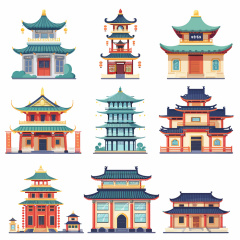
Collection of Nine Ancient Chinese Palace Architecture Icons
No.
SKU:
File Type:EPS
This collection of nine ancient Chinese palace architecture icons offers a vivid and detailed tribute to the grandeur of imperial architecture, encapsulating the essence of China’s royal building heritage. Each icon distills the unique features of iconic palace structures—from towering halls to intricate pavilions—showcasing the meticulous craftsmanship, symbolic design, and hierarchical elegance that defined imperial architecture. These icons bridge history and modernity, serving as versatile visual tools for cultural projects, educational materials, digital interfaces, and artistic creations, bringing the majesty of ancient Chinese palaces to contemporary audiences.
Icon Details
2.1 Imperial Main Hall Icon
- Majestic Symmetry: The icon captures the iconic main hall of an imperial palace, characterized by strict symmetry. Its broad facade features a central throne room entrance flanked by smaller doors, with massive wooden columns supporting a multi-tiered roof. The design reflects the imperial ideology of “centrality and hierarchy,” emphasizing the emperor’s supreme authority.
- Imperial Roof Embellishments: The roof is adorned with glazed yellow tiles (reserved for imperial use) and mythical beast statues along the ridges—dragons, phoenixes, and unicorns—symbolizing divine protection and royal legitimacy. Upturned eaves add a dynamic flair to the otherwise solemn structure.
2.2 Palace Courtyard Gate Icon
- Grand Entrance Portal: This icon depicts the imposing gate leading into a palace courtyard, featuring a tall, fortified structure with a central archway and side passages. The gate is guarded by stone lions (male with a ball, female with a cub), symbols of power and protection.
- Decorative Lintel and Brackets: The lintel above the archway is carved with imperial motifs like dragons chasing pearls, while intricate wooden brackets support the overhanging eaves, blending functionality with artistry.
2.3 Two-Story Pavilion of Royal Gardens Icon
- Elevated Viewing Structure: A two-story pavilion nestled within palace gardens, designed for imperial leisure. The lower floor has open sides with railings, while the upper floor features a balcony with panoramic views of lakes, rockeries, and flower beds.
- Graceful Roof Design: The pavilion’s roof is curved and multi-tiered, with upturned corners resembling bird wings—an echo of the “flying eaves” technique that balances aesthetics and rain drainage.
2.4 Imperial Library Hall Icon
- Scholarly Elegance: This icon represents a palace library, with a more restrained facade than ceremonial halls but equally refined. It features lattice windows (for ventilation) and wooden shelves lining the interior, designed to house ancient manuscripts and imperial archives.
- Symbolism of Knowledge: Carvings of books, brushes, and Confucian motifs adorn the beams, reflecting the palace’s role as a center of learning alongside governance.
2.5 Palace Theater Hall Icon
- Performance Space Design: The icon showcases a specialized hall for imperial operas and ceremonies, with a stage flanked by audience galleries. The interior features decorative screens and acoustically designed wooden panels to enhance sound.
- Theatrical Motifs: Murals of legendary stories and musical instruments decorate the walls, highlighting the fusion of art and imperial entertainment.
2.6 Imperial Bedchamber Pavilion Icon
- Intimate Royal Quarters: A smaller, enclosed pavilion serving as the emperor’s private bedchamber, with a gabled roof and delicate latticework for privacy. The entrance is framed by flowering plants (peonies, symbolizing prosperity), softening the imperial grandeur.
- Functional Luxury: The design emphasizes comfort—sloped roofs for warmth, wide eaves for shade—while retaining subtle imperial symbols like dragon-patterned door knockers.
2.7 Palace Altar Hall Icon
- Sacred Ritual Space: This icon depicts a hall dedicated to ancestral worship, with a raised platform (for offerings) and incense burners. Its simplicity—unadorned wooden beams and dark tiles—conveys reverence, avoiding ostentation in deference to ancestors.
- Heavenly Alignment: The hall is oriented along a north-south axis, aligning with cosmic principles in traditional Chinese cosmology, symbolizing harmony between the imperial family and the divine.
2.8 Corner Tower of Palace Walls Icon
- Defensive and Aesthetic Function: A multi-story tower perched at the corner of palace walls, combining military defense (arrow slits, watchtowers) with architectural beauty. Its intricate roof—often with nine tiers—showcases the pinnacle of traditional carpentry.
- Symbol of Sovereignty: The tower’s height and visibility declared the palace’s dominance over the landscape, serving as a visual reminder of imperial power.
2.9 Imperial Dining Hall Icon
- Ceremonial Feasting Space: The icon features a hall designed for imperial banquets, with a long central table and side tables arranged hierarchically. Large windows admit natural light, while silk curtains add opulence.
- Culinary Symbolism: Carvings of grain and fruit motifs on pillars highlight the empire’s agricultural abundance, a source of imperial legitimacy.
Design Features
- Historical Authenticity: Each icon is rooted in research on imperial architecture (e.g., the Forbidden City), capturing details like roof curvature, bracket systems, and color codes (yellow for imperial, red for prosperity).
- Simplified Clarity: Clean lines and minimal shading ensure readability at any size, while retaining key identifiers—e.g., yellow tiles for main halls, stone lions for gates.
- Cultural Symbolism: Every element carries meaning: dragons for emperor, phoenixes for empress, peonies for wealth—weaving a visual narrative of imperial China’s values.
Application Scenarios
- Educational Materials: Ideal for textbooks, museum exhibits, or online courses on Chinese history, illustrating palace layout and function.
- Digital Interfaces: Perfect for apps/websites focused on cultural tourism (e.g., virtual tours of the Forbidden City) or historical games.
- Art & Merchandise: Suitable for designers creating posters, stamps, or 文创 products (stationery, home decor) celebrating imperial heritage.
- Event Branding: Enhances promotions for cultural festivals, royal-themed exhibitions, or academic conferences on East Asian architecture.


