

1/1
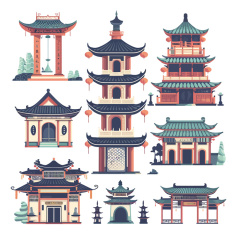
Collection of Eight Chinese Ancient Architecture Icons
File Type:EPS
This collection of eight Chinese ancient architecture icons is a vivid and concise visual compilation, encapsulating the essence of traditional Chinese architecture. It features iconic structures such as pagodas, gatehouses, and archways, each representing a unique aspect of China's rich architectural heritage. These icons are not only a celebration of the remarkable craftsmanship and design principles of ancient times but also serve as valuable visual resources for a wide range of applications. Whether for cultural projects, educational materials, digital interfaces, or artistic creations, they offer a window into the past, bringing the elegance and historical significance of Chinese ancient architecture to the modern world.
Icon Details
2.1 Pagoda Icon
- Multi - tiered Structure: The pagoda icon showcases a typical multi - tiered pagoda, with a tall and slender silhouette. Each tier is designed with distinct eaves, which gradually taper towards the top. The tiers are often separated by decorative bands or small balconies, adding to the pagoda's aesthetic appeal.
- Decorative Finial: At the very top of the pagoda, there is a decorative finial. This finial can take various forms, such as a spire, a flame - shaped ornament, or a cluster of symbolic elements. In Chinese culture, the finial often represents spiritual ascent or connection with the divine, making it an important part of the pagoda's design.
2.2 Traditional Gatehouse Icon
- Grand Facade: The gatehouse icon presents a grand and imposing facade. It usually has a large central entrance, flanked by smaller side entrances or decorative elements. The entrance is often framed by thick wooden or stone posts, with a solid door that may be adorned with studs, knockers, or other decorative hardware.
- Overhanging Eaves: Above the entrance, there are overhanging eaves that provide protection from the elements. These eaves are supported by brackets or corbels, which are not only functional but also highly decorative. The eaves may have upturned corners, a characteristic feature of Chinese architecture that adds a sense of elegance and dynamism.
2.3 Archway with Intricate Carvings Icon
- Elaborate Arch Design: This icon features an archway with a complex and detailed arch structure. The arch is often composed of multiple layers of stone or wood, with each layer contributing to the overall strength and aesthetic of the archway. The keystone at the center of the arch may be decorated with a prominent symbol or motif.
- Rich Carving Motifs: The archway is adorned with a variety of intricate carvings. These carvings can include dragons, phoenixes, flowers, birds, and other symbolic elements. Dragons, for example, represent power and good fortune, while phoenixes symbolize beauty and prosperity. The carvings are executed with great precision, showcasing the high - level craftsmanship of ancient Chinese artisans.
2.4 Pavilion in a Garden Setting Icon
- Harmonious Garden Integration: Depicting a pavilion nestled in a meticulously designed garden, this icon captures the harmonious relationship between architecture and nature in Chinese culture. The pavilion is surrounded by elements such as flower beds, ornamental trees, and a small pond. The garden layout is often based on the principles of balance and symmetry, with paths and walkways leading to the pavilion.
- Unique Pavilion Structure: The pavilion itself has a unique structure. It may have a circular, square, or octagonal floor plan, with a roof supported by wooden columns. The roof can be either a single - tiered or multi - tiered design, with upturned eaves that give it a light and airy appearance. The interior of the pavilion may be furnished with simple benches or tables, providing a comfortable space for relaxation and contemplation.
2.5 Temple Main Hall Icon
- Solemn Hall Architecture: This icon showcases the main hall of a temple, which is typically a large and imposing structure. The hall has a high - pitched roof, often with multiple ridges and decorative elements. The main entrance is grand, with double doors that may be decorated with religious symbols or carvings.
- Symbolic Interior Elements: Inside the hall, there are symbolic elements such as altars, statues of deities, and religious inscriptions. The altars are usually the focal point of the hall, where offerings and ceremonies take place. The statues of deities are carefully crafted, representing the religious beliefs and values of the temple. The inscriptions on the walls or pillars may contain religious teachings, historical records, or prayers.
2.6 Water - Side Pavilion Icon
- Proximity to Water Feature: Depicting a pavilion built beside a body of water, such as a lake, river, or pond, this icon highlights the unique charm of water - side pavilions. The pavilion is often designed to maximize the view of the water, with open - air sides or large windows. The reflection of the pavilion in the water creates a beautiful and serene scene, adding to its aesthetic appeal.
- Special Design for Waterfront: The structure of the water - side pavilion is specially designed to withstand the moisture and environmental conditions near the water. The columns and foundation may be made of materials that are resistant to decay, such as stone or treated wood. The railing around the pavilion may also be designed with intricate patterns, both for safety and decoration.
2.7 Tower - Style Building Icon
- Tall and Majestic Structure: This icon presents a tower - style building, which is usually taller and more imposing than other types of structures. The tower may have multiple storeys, each with its own set of windows or balconies. The design of the tower often emphasizes verticality, with a slender silhouette that gives it a sense of elegance and grandeur.
- Functional and Decorative Elements: The tower may serve various functions, such as a watchtower, a bell tower, or a place for religious observance. It is equipped with functional elements like staircases to access different levels. Decoratively, the tower may be adorned with elements such as eaves, finials, and decorative carvings, which add to its visual interest and cultural significance.
2.8 Courtyard - Entrance Gate Icon
- Entrance Gate Design: The courtyard - entrance gate icon features a gate that serves as the entrance to a courtyard. The gate is designed to be both functional and decorative. It may have a simple yet sturdy structure, with a pair of gates that can be opened and closed. The gates are often made of wood or metal, and may be decorated with hinges, locks, and other hardware.
- Surrounding Decorative Elements: Surrounding the gate, there are decorative elements that enhance its aesthetic. These can include stone lions or other guardian figures placed on either side of the gate, symbolizing protection. The gate may also be framed by a decorative arch or a lintel, which can be carved with patterns or inscriptions that convey messages of welcome, good fortune, or the history of the place.
Design Features
- Authentic Representation: Each icon is carefully designed to accurately represent the key features of the corresponding Chinese ancient architecture. The design is based on in - depth research of historical records, existing architectural examples, and traditional building knowledge, ensuring authenticity.
- Simplified Aesthetic: Despite the complex details of the subject matter, the icons maintain a simplified aesthetic. They use clean lines, minimal shading, and a reduced color palette to ensure clarity and versatility. This makes them suitable for use in various applications, from small - scale digital interfaces to large - format printed materials.
- Cultural Symbolism: The icons are rich in cultural symbolism. Every element, from the shape of the building to the smallest decorative detail, is chosen to convey the deep - seated cultural values and historical significance associated with Chinese ancient architecture. For example, the use of dragon motifs represents imperial power, while certain geometric patterns may symbolize harmony and balance.
Application Scenarios
- Cultural and Educational Projects: Ideal for textbooks, educational websites, museum exhibits, and documentaries on Chinese history, culture, and architecture. These icons can effectively illustrate key concepts, helping learners visualize the structure and significance of different types of ancient Chinese buildings.
- Digital Interfaces: Perfect for apps, websites, or software related to historical tourism, cultural heritage, or simulation games. The icons can enhance the user experience by adding an authentic and visually appealing touch, making the digital content more engaging and immersive.
- Art and Design Projects: Suitable for graphic designers, illustrators, and artists working on projects with a historical, cultural, or traditional theme. The icons can be used as inspiration, reference, or as elements in larger artworks, such as posters, book covers, or decorative patterns.
- Event Branding: Useful for cultural festivals, historical reenactments, academic conferences, or any event focused on ancient Chinese culture. The icons can be incorporated into logos, posters, brochures, and other promotional materials to create a cohesive and culturally - relevant brand image that attracts the target audience.


