

1/1
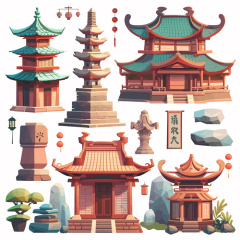
Collection of Common Architectural Icons in Ancient Chinese Buddhist Temples
File Type:EPS
This collection features 4 meticulously - designed icons representing the most common architectural elements within ancient Chinese Buddhist temples: stone lanterns, shrines, main halls, and pagodas. Each icon is crafted with great care to capture the essence of these structures, not only offering a visually appealing display but also serving as a valuable educational resource. They are ideal for cultural research, design inspiration, and educational materials, making the rich and profound Buddhist temple architecture more accessible to a wide range of audiences.
Icon Design Features
2.1 Stone Lanterns
- Distinctive Shapes: The stone lantern icons in this collection display various shapes, with the most common being hexagonal or octagonal. The lantern bodies are typically made of stone, featuring a solid and sturdy structure. They often have a cylindrical or square - shaped base for stability. Some lanterns may have a multi - tiered design, with each tier adding to its visual complexity. The top of the lantern usually has a conical or domed roof, which not only protects the inner lighting area but also gives the lantern an elegant silhouette.
- Ornamental Carvings: Stone lanterns in ancient Chinese Buddhist temples were often adorned with elaborate carvings, and these icons capture this aspect. The surfaces of the lanterns may be decorated with Buddhist symbols such as the lotus flower, which represents purity and enlightenment in Buddhism. Other common carvings include auspicious clouds, symbolizing the celestial realm and the connection between the earthly and the divine. In some cases, there may be small reliefs of Buddhist deities or scenes from Buddhist scriptures, adding a religious and narrative dimension to the lantern's design. The carvings are meticulously detailed, showing the high - level craftsmanship of ancient Chinese artisans.
2.2 Shrines
- Architectural Structures: The shrine icons depict the traditional Chinese - style shrines used to house Buddhist statues or relics. They usually have a wooden or stone frame, with a rectangular or square - shaped main body. The front of the shrine may be open or have doors that can be closed. Some shrines are single - level, while others may have a multi - tiered design, with each tier used for different purposes, such as placing offerings or smaller religious items. The shrine's roof is often in the style of traditional Chinese architecture, with upturned eaves that give it an elegant and distinctive look.
- Decorative Elements: Shrines are rich in decorative elements. The frames may be carved with intricate patterns, including floral motifs like peonies for prosperity and plum blossoms for perseverance. There may also be carvings of dragons and phoenixes, which symbolize power and auspiciousness in Chinese culture. In addition, shrines are often decorated with gold leaf or other precious materials in some parts, highlighting their importance and sacredness. The interior of the shrine may have a red or dark - colored background, creating a solemn and respectful atmosphere for the enshrined objects.
2.3 Main Halls
- Grand Architectural Styles: The main hall icons represent the core and most important building in a Buddhist temple. They showcase the grandeur of traditional Chinese architecture. The main halls usually have a large, spacious interior with high ceilings. The roofs are often multi - eaved, with the number of eaves sometimes indicating the importance or status of the temple. For example, some imperial - sponsored temples may have triple - eaved roofs. The use of large - scale dougong (bracket sets) is prominent, not only for decoration but also for structural support. These bracket sets are intricately designed and add to the aesthetic beauty of the hall.
- Interior Layout and Decoration: Inside the main hall, the layout is carefully arranged. At the center, there is usually a large - scale Buddha statue, which is the focal point of the hall. The statue is often placed on a raised platform, surrounded by smaller statues of bodhisattvas or arhats. The walls of the main hall may be decorated with elaborate Buddhist murals, depicting scenes from Buddhist scriptures, the life of Buddha, or the process of attaining enlightenment. The murals are rich in color, using pigments that have been carefully selected and preserved over time. The floors may be paved with stone or tiles, often with traditional patterns. In addition, there are usually altars for offerings, and the air is filled with the fragrance of incense, creating a solemn and spiritual atmosphere.
2.4 Pagodas
- Unique Structural Forms: The pagoda icons in this collection display the characteristic multi - storeyed and often octagonal - shaped structures of Chinese Buddhist pagodas. Each storey is slightly smaller than the one beneath it, creating a sense of vertical grandeur. The upturned eaves, a defining feature of Chinese pagodas, are gracefully depicted. These pagodas may have a solid or hollow interior, depending on their function. Some pagodas were used to house Buddhist relics, while others served as landmarks or places for meditation and spiritual practice. The pagoda's base is usually large and stable, providing a strong foundation for the upper structures.
- Religious Symbolism in Design: Pagodas are rich in religious symbolism. The number of storeys may have specific Buddhist meanings. For example, a seven - storey pagoda is often associated with the seven steps to enlightenment. Small statues or reliefs of Buddha or other religious figures may be placed on the surfaces of the pagoda, symbolizing the presence of the divine. The pagoda's spire at the top is also an important element, often representing the connection between the earthly and the celestial realms. In some cases, the pagoda may be surrounded by a railing or have small balconies on each storey, adding to its architectural charm.
Cultural Significance
- Religious and Spiritual Significance: These architectural elements are of great religious and spiritual significance in Buddhism. Stone lanterns, for example, not only provide light in the temple, but also symbolize the light of wisdom that dispels the darkness of ignorance. Shrines are the sacred places where Buddhist statues and relics are enshrined, representing the physical manifestation of the Buddha's presence and the focus of devotion for believers. Main halls are the heart of the temple, where important religious ceremonies, sermons, and congregational prayers take place. They symbolize the community of believers and the gathering place for spiritual pursuits. Pagodas, with their religious relics and their tall, imposing presence, are symbols of the Buddha's teachings and the path to enlightenment. They also serve as a reminder of the impermanence of life and the pursuit of spiritual transcendence.
- Artistic and Architectural Heritage: The design and construction of these temple architectures represent the outstanding artistic and architectural heritage of ancient China. They are a testament to the creativity, craftsmanship, and engineering skills of generations of Chinese artisans. The combination of different architectural elements, the use of space, and the integration of religious symbolism into the design are unique to Chinese Buddhist temple architecture. By featuring these elements in the icons, it helps to preserve and promote an appreciation for this precious heritage, ensuring that it is passed down and understood by future generations.
Application Scenarios
- Educational Resources: Teachers can utilize these icons in history, culture, and religious studies classes. They can help students better understand the architectural features, religious significance, and historical context of ancient Chinese Buddhist temples in a more vivid and engaging way. The detailed designs of the icons can be used as a basis for in - depth discussions about Buddhist architecture, its relationship with Chinese culture, and the development of religious art over time.
- Design Inspiration: Graphic designers, web designers, interior designers, and landscape architects can draw inspiration from these icons for projects with a Buddhist - themed or traditional - aesthetic. The unique architectural styles, color palettes, and ornamental elements can be adapted and incorporated into various design works. For example, they can be used to create Buddhist - style website interfaces, design interior spaces with a temple - inspired theme, or develop landscape plans for Buddhist - themed gardens.
- Cultural Promotion: Museums, cultural centers, tourism agencies, and heritage preservation organizations can make use of these icons to promote Chinese Buddhist culture and heritage. They can be used in brochures, exhibitions, online platforms, and educational materials to attract more people to explore the beauty and significance of ancient Chinese Buddhist temples. The eye - catching and detailed nature of the icons can pique the interest of potential visitors and encourage them to learn more about Chinese religious and cultural traditions.


