

1/1
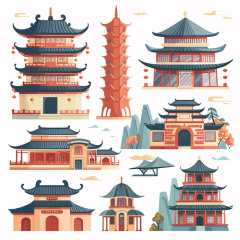
Collection of Chinese Traditional Temple - Style Architecture Patterns
File Type:EPS
This collection showcases eight meticulously - designed patterns that vividly capture the essence of Chinese traditional temple - style architecture. Comprising elements such as pagodas, pavilions, and towers, each pattern is a visual distillation of the unique charm and cultural significance of traditional temple architecture. By blending classic architectural forms with modern design sensibilities, these patterns offer a fresh perspective on China's rich architectural heritage, making them ideal for a wide range of applications, from educational materials to creative design projects.
Pattern Details
2.1 Pattern 1: Multi - storeyed Buddhist Pagodas
- Pattern Features: 5 - 9 storeys, brick/stone structure with Buddhist carvings (lotus, Buddha figures). Curved eaves with upturned corners; spires decorated with precious elements. Solid base, some with carved railings.
- Cultural Significance: Symbolize Buddhist heritage, storing relics/scriptures, representing religious devotion.
2.2 Pattern 2: Elegant Temple Pavilions
- Pattern Features: Square/hexagonal/octagonal, open - air. Red columns support single - eaved roofs with upturned eaves. Stone benches inside; surrounded by gardens or streams.
- Cultural Significance: Used for meditation, rest, and temple events, integrating nature for tranquility.
2.3 Pattern 3: Towering Temple Buildings
- Pattern Features: Tall, multi - storey, brick/stone walls. Rectangular/lattice windows; single/multi - eaved roofs. Murals on exteriors; balconies with patterned railings.
- Cultural Significance: Function as storage, accommodation, or observation points, reflecting temple functionality.
2.4 Pattern 4: Main Temple Halls
- Pattern Features: Large, multi - eaved roofs (often double - eaved hip - and - gable). Wooden doors/windows with lattice work; interior with large Buddha statues.
- Cultural Significance: Core of temple for rituals and worship, embodying Buddhist spiritual focus.
2.5 Pattern 5: Temple Gatehouses
- Pattern Features: Imposing, multi - storey entrance with arched gates. Carvings of Buddhist symbols; multi - eaved roofs with decorative tiles.
- Cultural Significance: Mark temple boundaries, symbolize sanctity and security.
2.6 Pattern 6: Bell and Drum Towers
- Pattern Features: Tall, square, stone - based. Wooden upper storeys; multi - eaved roofs. Equipped with large bells/drums.
- Cultural Significance: Regulate temple time, signal events, symbolize temple presence.
2.7 Pattern 7: Pagoda Complexes
- Pattern Features: Central pagoda surrounded by smaller structures (stupas, prayer halls). Walled with carved gates; stone paths.
- Cultural Significance: Pilgrimage centers, representing collective Buddhist devotion.
2.8 Pattern 8: Monastery Cloisters
- Pattern Features: Covered walkways surrounding courtyards. Column - supported; walls with Buddhist murals.
- Cultural Significance: Spaces for monks' meditation and interaction, fostering spiritual life.
Design Features
- Traditional Aesthetics: Adhere to temple architecture norms with symmetry, classic roof styles, and cultural color schemes (red columns, gray/black roofs).
- Cultural Symbolism: Rich in Buddhist motifs (lotus, Buddha) and nature - related symbols, reflecting harmony between man and nature.
- Detail Focus: Precisely depict carvings, layouts, and architectural elements, showcasing temple craftsmanship.
Application Scenarios
- Education: Illustrate temple architecture in textbooks/courses, aiding cultural understanding.
- Cultural Projects: Promote traditions in exhibitions via posters/displays.
- Design: Inspire graphic/interior/game design with classic elements.


