

1/1
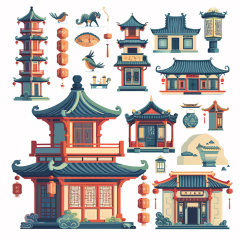
Collection of Chinese Ancient Architecture Icons
File Type:EPS
This collection features a set of exquisitely designed icons that vividly represent the essence of Chinese ancient architecture. It includes icons of stone lanterns, pagodas, pavilions, and temples, each encapsulating the unique charm and profound cultural significance of these architectural marvels. These icons are not only visually appealing but also serve as a valuable resource for those interested in Chinese traditional culture, architecture enthusiasts, and designers seeking inspiration. Whether for educational purposes, cultural projects, or creative design work, this collection offers a captivating glimpse into the world of Chinese ancient architecture.
Icon Details
2.1 Stone Lantern Icon
- Icon Features: The stone lantern icon showcases a classic design. It has a sturdy, cylindrical base made of stone, which provides stability. The body of the lantern is adorned with intricate carvings. Dragons, symbols of power and good fortune in Chinese culture, wind around the body, their scales and claws meticulously detailed. There are also carvings of lotus flowers, representing purity. The top of the lantern has a conical roof - like structure, with a small finial at the tip. A small opening in the lantern body allows for light to shine through.
- Cultural Significance: Stone lanterns in Chinese culture have a long - standing history. They were initially used for lighting in religious settings, especially in temples. The dragon carvings symbolize the connection between the earthly and the celestial, as dragons were associated with the imperial family and the heavens. The lotus flower carvings reflect the influence of Buddhism, as lotus is an important symbol in Buddhist teachings. Stone lanterns also serve as decorative elements in gardens and courtyards, adding an air of tranquility and elegance.
2.2 Pagoda Icon
- Icon Features: This pagoda icon depicts a multi - storeyed structure. It has a square base, which gradually tapers as it rises. Each storey has upturned eaves, a characteristic feature of Chinese pagodas. The eaves are decorated with small, detailed carvings of birds and mythical creatures. The pagoda's body is often painted in red, a color symbolizing good luck and prosperity in China. At the very top of the pagoda, there is a tall spire, which may be decorated with jewels or other ornamental elements.
- Cultural Significance: Pagodas in China are closely related to Buddhism. They were built to house Buddhist relics, scriptures, or as places for religious practice. The multi - storeyed design represents the ascent towards enlightenment. The upturned eaves not only add to the aesthetic beauty but also have practical functions, such as protecting the structure from rain and snow. The pagoda icon thus represents the spiritual and cultural essence of Chinese Buddhism and the architectural ingenuity of ancient China.
2.3 Pavilion Icon
- Icon Features: The pavilion icon shows a two - storeyed wooden structure. The lower storey has open - air corridors, supported by sturdy wooden columns. The columns are painted in a dark, rich color, which complements the light - colored wooden planks of the floor. The upper storey has lattice - work windows, allowing for a view of the surrounding area. The roof of the pavilion is a multi - eaved design, with each eave decorated with small bells. When the wind blows, these bells tinkle, creating a pleasant sound.
- Cultural Significance: Pavilions in Chinese gardens are places for relaxation, social gatherings, and appreciation of nature. They are often located near lakes, ponds, or in the midst of beautiful gardens. The lattice - work windows are not only decorative but also symbolize the Chinese concept of "seeing the world through a frame", emphasizing the beauty of the view. The bells on the eaves add a musical element to the peaceful environment of the pavilion, enhancing the overall experience of tranquility and harmony with nature.
2.4 Temple Icon
- Icon Features: This temple icon presents a grand and solemn structure. It has a large, rectangular main hall, with a double - eaved gable - and - hip roof. The roof is covered with yellow 琉璃瓦,which in ancient times were reserved for imperial - related or very important religious buildings, symbolizing imperial power and the divine. The front of the main hall has a row of large, red - painted wooden doors, with intricate carvings of deities and religious symbols. On either side of the doors, there are stone lions, which are believed to protect the temple from evil spirits.
- Cultural Significance: Temples in China are the centers of religious and cultural activities. They are dedicated to various deities, and people visit them to offer prayers, seek blessings, and participate in religious ceremonies. The use of yellow 琉璃瓦 and the presence of stone lions are important cultural symbols. The temple icon represents the deep - rooted religious beliefs and the high - level architectural and artistic achievements in ancient Chinese society.
2.5 Archway Icon
- Icon Features: The archway icon is a magnificent stone structure. It consists of two tall, sturdy pillars connected by a horizontal beam. The pillars are decorated with elaborate carvings of mythological stories, such as the journey of the Eight Immortals. The horizontal beam has inscriptions of auspicious words and phrases. The archway has a large, arched opening in the middle, which is often used as an entrance to important places, such as temples, gardens, or ancestral halls. The overall design of the archway is symmetrical, giving a sense of balance and order.
- Cultural Significance: Archways in Chinese culture are symbolic gateways. They mark the transition from one space to another, often a more ordinary space to a sacred or important space. The carvings on the archway tell stories that carry moral lessons, historical knowledge, and cultural values. They are a way to commemorate important events, people, or to express good wishes. The archway icon thus represents the rich cultural heritage and the sense of ceremony in ancient Chinese society.
2.6 Courtyard Icon
- Icon Features: The courtyard icon shows an enclosed space surrounded by buildings. The ground of the courtyard is paved with square stone slabs. In the center of the courtyard, there is a small, circular pond with lotus flowers blooming in it. Around the pond, there are several stone benches for people to sit and relax. On the walls of the surrounding buildings, there are various traditional Chinese paintings and calligraphy works. The courtyard is accessed through a small, ornate gate with red - painted wooden doors.
- Cultural Significance: Courtyards in Chinese architecture are the heart of the building complex. They provide a private and peaceful space for family activities, socializing, and enjoying nature. The pond with lotus flowers symbolizes purity and harmony. The presence of traditional paintings and calligraphy works on the walls reflects the Chinese love for art and culture. The courtyard icon represents the traditional Chinese lifestyle that values family, privacy, and the appreciation of beauty.
2.7 Bell Tower Icon
- Icon Features: The bell tower icon depicts a tall, slender building. It has a square base and a multi - tiered structure. Each tier has a small, overhanging roof with upturned eaves. The body of the bell tower is made of a combination of wood and stone. There are large, wooden doors on each side of the lower tier, which lead to the interior where a huge bronze bell is suspended. The top of the bell tower has a small, pointed spire, which is often decorated with decorative elements.
- Cultural Significance: Bell towers in Chinese architecture are important for their practical and symbolic functions. The ringing of the bell is used to mark time, announce important events, or call people to religious services. The bell is also believed to have the power to drive away evil spirits. The design of the bell tower, with its tall and imposing structure, represents the importance of these functions in ancient Chinese society.
2.8 Water Pavilion Icon
- Icon Features: This water pavilion icon is a beautiful structure built over a body of water, such as a lake or a pond. It has a circular or octagonal shape, with a single - eaved roof. The roof is supported by wooden columns, which are painted in a light color to match the serene environment. The floor of the water pavilion is made of wooden planks, and there are railings around the edges for safety. The pavilion has open - air sides, allowing for a panoramic view of the water and the surrounding scenery.
- Cultural Significance: Water pavilions are designed to provide a perfect spot for people to enjoy the beauty of water and nature. They are places for relaxation, meditation, and cultural activities such as poetry recitation. The circular or octagonal shape is considered auspicious in Chinese culture. The water pavilion icon represents the harmonious relationship between humans and nature, as well as the Chinese pursuit of aesthetic pleasure and spiritual tranquility.
2.9 Watchtower Icon
- Icon Features: The watchtower icon shows a tall, rectangular building. It has thick, stone walls for strength and durability. There are small, narrow windows on each side of the watchtower, which were used for observation. The top of the watchtower has a flat roof, with battlements around the edges. The watchtower is often located in strategic positions, such as on the walls of a city or a castle.
- Cultural Significance: Watchtowers in ancient China were important for security and defense. They were used to keep an eye on the surrounding area, detect any potential threats, and warn the people inside the city or castle. The watchtower icon represents the military and defensive aspects of ancient Chinese architecture, as well as the importance of protecting the community.
Design Features
- Rich Symbolism: All the icons in this collection are replete with Chinese cultural symbolism. From the mythical creatures in the carvings to the colors and shapes of the buildings, every element is carefully chosen to convey deep - seated cultural meanings. Symbols such as dragons, lotus flowers, and the color red are used extensively to represent power, purity, and good luck respectively.
- Attention to Detail: The design of each icon pays great attention to detail. The intricate carvings on the stone lanterns, pagodas, and archways, the delicate lattice - work on the pavilions, and the detailed inscriptions on the archways all showcase the high - level craftsmanship of Chinese ancient architecture. These details not only enhance the visual appeal but also contribute to the authenticity of the icons.
- Harmony with Nature: Many of the architecture icons, such as the pavilion, water pavilion, and courtyard, are designed to be in harmony with nature. They are often placed in natural settings, and their design elements, such as the use of natural materials like wood and stone, and the incorporation of elements like ponds and gardens, reflect the Chinese concept of unity between man and nature.
Application Scenarios
- Cultural and Educational Projects: These icons can be widely used in cultural and educational projects. They can be included in textbooks, educational videos, or museum exhibits to help people better understand the rich architectural heritage of China. Teachers can use these icons to illustrate different aspects of Chinese architecture in history and art lessons.
- Design Inspiration: Designers in various fields, such as graphic design, interior design, and game design, can draw inspiration from these icons. The unique architectural styles, decorative patterns, and cultural elements can be incorporated into modern designs to create a sense of cultural identity and uniqueness. For example, the patterns from the archway or the layout of the courtyard can be used in interior decoration for a Chinese - style room.
- Digital and Print Media: In the digital age, these icons are perfect for use in digital media such as websites, mobile apps, and social media posts related to Chinese culture. They can also be printed on postcards, posters, or other cultural products to promote Chinese culture and attract the attention of a wider audience.


