

1/1
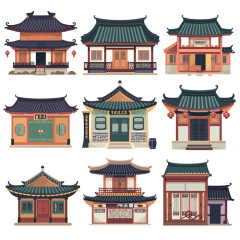
Collection of 9 Sets of Patterns of Traditional Ancient Jiangnan Folk Houses in China
File Type:EPS
This collection presents 9 sets of patterns, showcasing the unique charm of traditional ancient Jiangnan folk houses. These patterns highlight the distinctive architectural features, exquisite decorations, and strong cultural atmosphere of Jiangnan residences, making them ideal for cultural promotion, educational materials, and creative design.
Pattern Details
2.1 Pattern Set 1: White - walled and Black - tiled Courtyard Houses
- Pattern Features: These houses have white walls and black - tiled roofs with upturned eaves. The courtyard is in the center, surrounded by rooms. There are small windows with lattice designs on the walls. Some green plants, like bamboos, are planted around the courtyard.
- Cultural Significance: The white walls and black tiles are typical of Jiangnan architecture, symbolizing simplicity and elegance. The courtyard represents family harmony and unity, while bamboos stand for modesty and perseverance.
2.2 Pattern Set 2: Waterfront Diaojiaolou
- Pattern Features: These houses are built along the water, with wooden stilts supporting the part over the water. The upper floors have wooden railings and large windows. There are stone steps leading down to the water. Some water plants grow near the stilts.
- Cultural Significance: Diaojiaolou reflects the close relationship between Jiangnan people and water. The stilts adapt to the wet environment, and the design shows the wisdom of local residents in utilizing natural resources.
2.3 Pattern Set 3: Lane - side Terraced Houses
- Pattern Features: The houses are arranged in terraces along the lane. They have narrow facades with wooden doors. The roofs are connected, forming a continuous line. There are small balconies with flower pots on some floors.
- Cultural Significance: Terraced houses save space in the narrow lanes of Jiangnan towns. The flower pots add vitality, showing the residents' love for life and beauty.
2.4 Pattern Set 4: Courtyard with a Small Garden
- Pattern Features: The courtyard has a small garden with a pond, a stone bridge, and some flowers like peonies. The houses around the courtyard have corridors connecting them. The doors are decorated with carvings of flowers and birds.
- Cultural Significance: The small garden is a microcosm of nature, reflecting the Jiangnan people's pursuit of a comfortable life. The carvings on the doors symbolize good luck and happiness.
2.5 Pattern Set 5: Tile - roofed Row Houses
- Pattern Features: These are row houses with tile roofs. Each house has a small front door and a few windows. The walls between houses are thin, and there are small alleys between the rows. Some clothes are hung out to dry on the balconies.
- Cultural Significance: Row houses show the close - knit community in Jiangnan. The alleys are important for communication, and hanging clothes reflects the daily life of the residents, full of warmth.
2.6 Pattern Set 6: Wooden - structured Folk Houses
- Pattern Features: The main structure of the houses is made of wood. The beams and columns are decorated with simple carvings. The windows are made of wooden lattice, and the floors are wooden. There is a small attic under the roof.
- Cultural Significance: Wooden structures are suitable for the humid climate in Jiangnan. The carvings show the craftsmanship of local people, and the attic is used for storage, reflecting practicality.
2.7 Pattern Set 7: Bridge - connected Waterside Houses
- Pattern Features: These houses are built along the river, connected by small stone bridges. The houses have doors opening to the river, and some have small docks. The bridges have stone railings with simple carvings.
- Cultural Significance: The connection of houses and bridges shows the integration of architecture and water in Jiangnan. The docks are convenient for transportation and water use, reflecting the region's water - based lifestyle.
2.8 Pattern Set 8: Brick - and - wood Composite Houses
- Pattern Features: The houses are made of both bricks and wood. The lower part is brick, and the upper part is wood. The roof has a gentle slope, and there are ventilation holes on the walls. Some vines climb on the walls.
- Cultural Significance: The composite structure combines the advantages of brick and wood, adapting to the local climate. Vines add a natural touch, showing the harmony between man and nature.
2.9 Pattern Set 9: Ancestral Hall - attached Folk Houses
- Pattern Features: There is an ancestral hall next to the folk houses. The ancestral hall has a larger door with stone lions at the entrance. The folk houses are smaller, with similar styles to the hall. There are memorial tablets in the ancestral hall.
- Cultural Significance: The ancestral hall reflects the importance of family and ancestors in Jiangnan culture. The similar styles of the hall and houses show the inheritance of family traditions.
Design Features
- Adaptation to Environment: The designs are suitable for Jiangnan's humid and rainy climate, with features like sloped roofs and ventilation structures.
- Simple and Elegant Style: The use of white walls, black tiles, and simple carvings creates a plain and graceful look.
- Integration with Nature: Gardens, water, and plants are closely combined with houses, reflecting the idea of harmony between man and nature.
Application Scenarios
- Education: Helps students learn about Jiangnan's architectural history and local culture.
- Cultural Promotion: Used in exhibitions and tourism promotions to display the charm of Jiangnan folk houses.
- Design: Provides inspiration for architectural design, interior decoration, and cultural creative products.


