

1/1
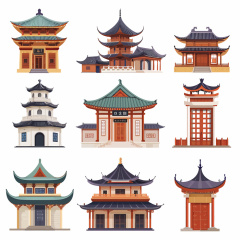
Collection of 9 Sets of Chinese Sui Dynasty Pavilion Architecture - Shaped Icons
File Type:EP
This collection presents a series of meticulously - designed icons that draw inspiration from the magnificent Sui Dynasty pavilion architectures in China. Comprising nine distinct sets, each icon showcases the unique charm of Sui - style pavilions, integrating the grandeur of traditional Chinese architecture with modern design concepts. The Sui Dynasty, though short - lived, left behind a remarkable architectural heritage, and these icons aim to capture the essence of that era's building styles. Whether for educational purposes, cultural promotion, or creative design projects, these icons are bound to infuse a sense of historical elegance and cultural depth.
SIcon Details
2.1 Icon Set 1: Classic Pavilion with Multi - Eaved Roof
- Icon Features: This set of icons features pavilions with multi - eaved roofs, a characteristic of Sui Dynasty architecture. The roofs are gently sloping, with upturned eaves that give the building an elegant and dynamic appearance. The eaves are decorated with simple yet refined wooden brackets, which not only serve as structural elements but also add to the aesthetic appeal. The main body of the pavilion is supported by sturdy wooden columns, painted in a deep red color, symbolizing prosperity. The pavilion has lattice - work windows and doors, with intricate carvings of geometric patterns, reflecting the high - level craftsmanship of the Sui Dynasty. Inside the pavilion, there are simple, traditional - style wooden benches and tables, creating a space for rest and contemplation.
- Historical Significance: In the Sui Dynasty, pavilions with multi - eaved roofs were often built in imperial gardens, temples, and important public spaces. They represented the imperial power and the advanced architectural techniques of the time. The use of multi - eaved roofs was not only for aesthetic reasons but also to enhance the stability of the building and provide better protection from the elements. The lattice - work carvings on windows and doors were also a way to showcase the cultural and artistic achievements of the Sui Dynasty.
2.2 Icon Set 2: Tower - Style Pavilion
- Icon Features: The tower - style pavilions in this set are tall and imposing. They typically have a square or hexagonal base, with the structure gradually tapering as it rises. The exterior walls are made of bricks or stones, with some sections decorated with relief carvings of Buddhist motifs, such as lotus flowers and Buddha statues. This reflects the strong influence of Buddhism in the Sui Dynasty. The tower - style pavilion has multiple floors, each with a balcony surrounded by wooden railings. The railings are intricately designed, with patterns that combine geometric shapes and natural elements like leaves and vines. At the top of the tower, there is a spire, often decorated with metal ornaments, which adds a touch of grandeur.
- Historical Significance: Tower - style pavilions in the Sui Dynasty were often associated with religious activities, especially Buddhism. Many of them were built near temples or as part of temple complexes. They were used for purposes such as storing Buddhist scriptures, providing a vantage point for meditation, or as a symbol of the Buddhist faith. The tall and prominent structure of these pavilions also served to attract the attention of the public and convey the importance of the religious site.
2.3 Icon Set 3: Bridge - Linked Pavilion
- Icon Features: This set of icons depicts pavilions that are connected by bridges, creating a unique and harmonious architectural ensemble. The bridges are arched, with stone balustrades on both sides. The balustrades are adorned with carvings of lions, dragons, and other mythical creatures, which are common in Chinese traditional art. The pavilions on either side of the bridge are symmetrically designed, with similar roof styles and decorative elements. They have open - air corridors that lead to the bridge, allowing people to stroll between the pavilions while enjoying the surrounding scenery. The pavilions are often surrounded by water, such as a pond or a small lake, further enhancing the peaceful and idyllic atmosphere.
- Historical Significance: Bridge - linked pavilions were popular in the Sui Dynasty as a way to create a sense of spatial continuity and connection in gardens and palace complexes. They symbolized the harmonious integration of different architectural elements and the natural environment. The use of bridges to connect pavilions also added a touch of elegance and sophistication to the overall design. These structures were often used for recreational activities, such as banquets, poetry recitals, and leisurely walks, reflecting the refined lifestyle of the Sui - era nobility.
2.4 Icon Set 4: Pavilion with Courtyard
- Icon Features: Each icon in this set shows a pavilion enclosed within a courtyard. The courtyard is surrounded by a low wall, with a main gate that is decorated with elaborate wooden carvings. Inside the courtyard, there are flower beds, small rockeries, and a central path leading to the pavilion. The pavilion itself has a simple yet elegant design, with a single - eaved roof and a rectangular layout. The columns supporting the pavilion are painted in a light color, creating a contrast with the dark - colored roof tiles. The pavilion has large, open - style windows that offer a clear view of the courtyard. There are also some traditional Chinese - style lanterns hanging from the eaves of the pavilion and around the courtyard, adding a warm and inviting atmosphere.
- Historical Significance: Pavilions with courtyards were common residential and recreational structures in the Sui Dynasty. They provided a private and peaceful space for families to gather, relax, and enjoy the beauty of nature. The courtyard was an important part of the design, as it allowed for the cultivation of plants, the placement of decorative elements, and the creation of a micro - environment that was in harmony with the surrounding area. The layout of the pavilion and courtyard also reflected the traditional Chinese concept of feng shui, which emphasized the importance of balance and symmetry in architecture.
2.5 Icon Set 5: Temple Pavilion
- Icon Features: These icons represent pavilions that are part of temple complexes in the Sui Dynasty. The temple pavilions are often larger and more elaborate than regular pavilions. They have a grand entrance with double - doors, decorated with brass fittings and intricate carvings of religious scenes. The roof of the pavilion is multi - eaved, with a central finial that is often in the shape of a lotus flower, a symbol of purity in Buddhism. Inside the pavilion, there are large statues of Buddha or other deities, placed on a raised platform. The walls of the pavilion are adorned with murals that depict Buddhist stories and legends. The pavilion is surrounded by a paved area, with incense burners and prayer mats for devotees.
- Historical Significance: Temple pavilions were the heart of religious activities in the Sui Dynasty. They were places where people came to worship, offer prayers, and seek spiritual guidance. The elaborate design and decoration of these pavilions were intended to create a solemn and sacred atmosphere. The construction of temple pavilions also demonstrated the strong support for Buddhism from the Sui government and the wealthy classes, as Buddhism was a dominant religion during this period.
2.6 Icon Set 6: City - Wall Pavilion
- Icon Features: This set of icons showcases pavilions that are built on top of city walls in the Sui Dynasty. The city - wall pavilions have a strategic location, providing a vantage point for guards to monitor the surrounding area. They are usually square - shaped, with thick walls and small windows for defense. The roof of the pavilion is flat or slightly sloped, with battlements around the edges. The pavilion is accessed by a staircase that leads up from the city wall. Inside, there are simple facilities for the guards, such as a table for maps and a bench for resting. The exterior of the pavilion is often painted in a color that matches the city wall, giving it a cohesive and fortified appearance.
- Historical Significance: City - wall pavilions played an important role in the defense and surveillance of cities in the Sui Dynasty. They were an essential part of the city's fortification system, allowing guards to detect any potential threats from a distance. These pavilions also served as a symbol of the city's power and security. In addition to their military function, they could also be used for official ceremonies and as a place for officials to overlook the city and its activities.
2.7 Icon Set 7: Water - Side Pavilion
- Icon Features: Icons in this set depict pavilions that are built along the banks of rivers, lakes, or canals. The water - side pavilions have a design that takes full advantage of the water view. They often have large, open - air verandas that face the water, with wooden railings for safety. The columns of the pavilion are made of materials that can withstand moisture, such as stone or treated wood. The roof of the pavilion is designed to be lightweight and aerodynamic, to reduce the impact of strong winds near the water. The pavilion is surrounded by a small pier or a boardwalk, where boats can be moored. There are also some potted plants placed around the pavilion, adding a touch of greenery to the water - side setting.
- Historical Significance: Water - side pavilions were popular in the Sui Dynasty for their aesthetic and recreational value. They provided a pleasant place for people to enjoy the beauty of the water, engage in activities such as fishing and boating, or simply relax and unwind. The construction of these pavilions also contributed to the development of waterfront areas, making them more attractive and accessible. In addition, water - side pavilions were often used for social gatherings and cultural events, reflecting the importance of water in the daily life and culture of the Sui people.
2.8 Icon Set 8: Mountain - Side Pavilion
- Icon Features: This set of icons represents pavilions that are built on mountainsides in the Sui Dynasty. The mountain - side pavilions are designed to blend in with the natural landscape. They are often made of local materials, such as stone and wood, which gives them a rustic and natural look. The pavilion is located on a flat platform that is carefully constructed on the slope of the mountain. It has a sloping roof that follows the contour of the mountain, and large windows that offer panoramic views of the surrounding mountains and valleys. There are stone steps leading up to the pavilion, and some areas around the pavilion are planted with native trees and shrubs.
- Historical Significance: Mountain - side pavilions were important for both religious and recreational purposes in the Sui Dynasty. They were often built near temples or shrines located in the mountains, providing a place for pilgrims to rest and enjoy the spiritual and natural environment. For the general public, mountain - side pavilions were also popular destinations for hiking, sightseeing, and experiencing the beauty of nature. The construction of these pavilions demonstrated the Sui people's appreciation for the natural world and their ability to create harmonious structures within it.
2.9 Icon Set 9: Imperial Palace Pavilion
- Icon Features: The icons in this set showcase pavilions that are part of the imperial palaces in the Sui Dynasty. These pavilions are the epitome of luxury and grandeur. They have a complex and symmetrical layout, with multiple wings and levels. The main pavilion is the largest, with a multi - eaved roof that is covered with glazed tiles in bright colors, such as yellow and green, which were reserved for imperial use. The columns of the pavilion are made of precious woods, carved with intricate patterns of dragons, phoenixes, and other imperial symbols. The interior of the pavilion is decorated with expensive silk curtains, fine furniture, and precious artworks. There are large, marble - paved courtyards in front of and around the pavilion, with fountains and elaborate gardens.
- Historical Significance: Imperial palace pavilions were the center of political and social life in the Sui Dynasty. They were used for important ceremonies, imperial audiences, and entertainment of foreign dignitaries. The elaborate design and decoration of these pavilions were a display of the emperor's power, wealth, and cultural refinement. The construction of imperial palace pavilions also required a large amount of resources and the efforts of skilled artisans, reflecting the high level of craftsmanship and organization in the Sui Dynasty.
Design Features
- Traditional Sui - Dynasty Aesthetics: The icons are designed to closely follow the aesthetic principles of Sui Dynasty architecture. They feature the characteristic gentle roof slopes, upturned eaves, and simple yet elegant decorative elements. The use of colors is also in line with Sui - era preferences, with a focus on earthy tones, deep reds, and bright colors for imperial - related structures. The overall design aims to capture the harmonious blend of functionality and beauty that was typical of Sui Dynasty architecture.
- Cultural Symbolism: Each icon is rich in cultural symbolism. The use of dragon and phoenix carvings in imperial - related pavilions represents imperial power and auspiciousness. Buddhist motifs in temple pavilions reflect the influence of Buddhism in the Sui Dynasty. Geometric patterns and natural elements in lattice - work and railings symbolize the balance and harmony between man and nature, which was an important concept in traditional Chinese culture.
- Attention to Detail: Despite being in icon form, great attention has been paid to detail. The carvings on columns, doors, and windows, the design of brackets and railings, and the layout of each pavilion type are all accurately depicted. This allows viewers to appreciate the unique features of Sui Dynasty architecture and understand the historical and cultural context in which these structures were built.
Application Scenarios
- Educational Resources: These icons are highly suitable for use in educational materials, such as history textbooks, art history courses, and educational apps. Teachers can use them to illustrate the architectural achievements of the Sui Dynasty, helping students better understand the historical and cultural background of this period. For example, in a history class on the Sui Dynasty, these icons can be used to show the different types of pavilions and their functions, enhancing students' learning experience.
- Cultural and Artistic Projects: In cultural and artistic projects, such as museum exhibitions, cultural festivals, and art installations, these icons can be used to promote Chinese traditional culture. They can be printed on posters, brochures, or used as part of digital displays to attract the public's attention and showcase the beauty of Sui Dynasty architecture. For instance, in a museum exhibition on Chinese architecture history, these icons can be used to represent the Sui Dynasty section, providing a visual overview of the era's architectural styles.
- Design and Creative Work: Designers in various fields, such as graphic design, interior design, and game design, can draw inspiration from these icons. The unique architectural styles and cultural elements of Sui Dynasty pavilions can be incorporated into modern designs to add a touch of historical and cultural charm. In graphic design, the patterns and colors from these icons can be used in the design of Chinese - themed posters or book covers. In interior design, the layout and decorative elements of Sui - style pavilions can be adapted to create a unique and stylish space. In game design, these icons can be used to create immersive virtual environments that are rich in historical and cultural details.


