

1/1
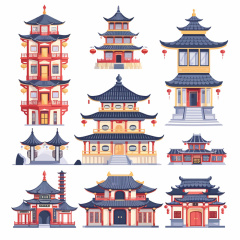
Collection of 9 Sets of Chinese Ancient Classic Royal Architecture - Shaped Icons
File Type:EPS
This remarkable collection showcases nine sets of meticulously - designed icons that vividly capture the essence of Chinese ancient classic royal architecture. Encompassing elements such as magnificent Buddhist temples, sprawling palaces, towering buildings, and solemn monasteries, each icon is a visual masterpiece. It seamlessly blends the grandeur and opulence of ancient royal architecture with modern design concepts, presenting a unique and captivating visual experience. Whether for educational purposes, cultural promotion, or creative design projects, these icons are bound to add a touch of imperial elegance and historical depth.
Icon Details
2.1 Icon Set 1: Grand Buddhist Pagodas in the Royal Style
- Icon Features: Multi - storeyed pagodas with 5, 7, or 9 levels (symbolic in Buddhism). Made of high - quality bricks/stones, adorned with Buddhist carvings (lotus, Buddha statues, auspicious clouds). Broad, curved eaves with upturned corners; spires with precious metals/jewels. Solid bases, sometimes with carved balustrades.
- Cultural Significance: Symbols of imperial support for Buddhism, built near royal areas. Display imperial wealth and piety, aiming to bring blessings to the empire.
2.2 Icon Set 2: Majestic Main Palaces
- Icon Features: Vast, symmetrical layouts with multiple wings/courtyards. Main halls have double - eaved hip - and - gable roofs (highest - ranked), covered in imperial yellow glazed tiles. Precious wood columns with dragon/phoenix carvings. Large, carved double doors; spacious interiors with polished stone/marble floors.
- Cultural Significance: Heart of the imperial court for ceremonies and official business. Demonstrate emperor's authority and dynasty prosperity, with feng shui - based designs for stability.
2.3 Icon Set 3: Towering Palace Buildings
- Icon Features: Tall, multi - storey structures (observation, storage, accommodation). Square/rectangular bases, brick/stone walls. Rectangular/lattice windows; single/multi - eaved roofs (hip - and - gable or pavilion - style for significant ones). Exteriors with murals; balconies with patterned railings.
- Cultural Significance: Add grandeur to the palace complex. Serve various functions, with decorations reflecting artistic achievements and imperial taste.
2.4 Icon Set 4: Royal - Style Monasteries
- Icon Features: Grand entrances with Buddhist carvings; spacious courtyards with cloisters. Main halls (religious services) have multi - eaved roofs (gray/black tiles), large Buddha statues, and murals. Meditation rooms, monk quarters, bell/drum towers.
- Cultural Significance: Imperial - supported Buddhist centers. Blend imperial and religious aesthetics, aiding religious practice and reflecting imperial spiritual merit.
2.5 Icon Set 5: Imperial Garden Pavilions
- Icon Features: Square/hexagonal/octagonal open - air pavilions. Columns (red, sometimes carved) support single - eaved, sloping roofs with upturned eaves. Simple stone furniture; surrounded by gardens, ponds, or streams.
- Cultural Significance: Imperial relaxation and cultural activity spots. Blend nature and architecture, hosting banquets and poetry recitals, reflecting refined imperial taste.
2.6 Icon Set 6: Gate Towers of the Imperial Palace
- Icon Features: Imposing, multi - storey entrances. Thick stone/brick bases with arched gates (brass fittings, carvings). Wooden upper storeys with windows/balconies; multi - eaved roofs with decorative tiles/brackets. Flanked by side gates/watchtowers.
- Cultural Significance: Symbolize imperial power, securing the palace. First impression of grandeur, following strict imperial protocols.
2.7 Icon Set 7: Royal - Sponsored Pagoda Complexes
- Icon Features: Central multi - storey pagoda (intricate Buddhist reliefs, bell - adorned eaves) surrounded by smaller pagodas, stupas, prayer halls. Walled complexes with carved entrance gates; stone paths and courtyards.
- Cultural Significance: Religious/cultural landmarks, honoring Buddhism. Imperial investment promotes religious harmony, preserving Buddhist art/literature.
2.8 Icon Set 8: Inner - Palace Residential Buildings
- Icon Features: Courtyard - style layouts (main building + annexes). Single/double - eaved roofs (gray/black tiles); wood/brick walls with lattice windows. Luxurious interiors; courtyard with plants, well/pond.
- Cultural Significance: Private imperial living quarters. Reflect family values and hierarchy, offering comfort and connection to nature.
2.9 Icon Set 9: Imperial - Style Bell and Drum Towers
- Icon Features: Tall, square structures with stone bases. Thick lower walls (small windows); wooden upper storeys with staircases. Multi - eaved roofs with decorative tiles/brackets; large bells/drums on top. Brightly painted exteriors with carvings.
- Cultural Significance: Key for time - keeping, communication, and security. Symbolize imperial power and order, serving as landmarks.
Design Features
- Traditional Imperial Aesthetics: Follow imperial architectural aesthetics with grandeur, symmetry, and elaborate decoration. Accurate use of colors (yellow for palaces) and elements (roofs, columns, carvings).
- Cultural Symbolism: Dragon/phoenix (imperial power); Buddhist motifs (religious influence); geometric/natural patterns (man - nature harmony).
- Attention to Detail: Precisely render carvings, roofs, layouts, allowing appreciation of royal architecture's unique features.
Application Scenarios
- Educational Resources: Illustrate ancient royal architecture in textbooks/courses, aiding students' understanding of history and culture.
- Cultural and Artistic Projects: Promote traditional culture in exhibitions/festivals via posters/displays, showcasing royal architecture's beauty.
- Design and Creative Work: Inspire designers (graphic, interior, game) with unique styles and elements, adding historical charm to modern designs.


