

1/1
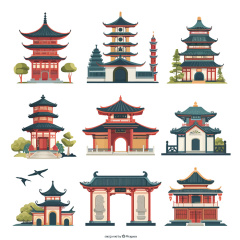
Collection of 9 Chinese Southern - Style Ancient Garden Architecture Icons
File Type:EPS
This collection features 9 exquisitely designed icons in a distinct Chinese southern - style, vividly presenting the charm of ancient garden architectures in the Jiangnan region. It includes a variety of structures such as elegant attics, magnificent main halls, and charming pavilions. Each icon is a harmonious blend of traditional Jiangnan architectural elements and modern design concepts, endowing them with a unique visual appeal and profound cultural significance. Whether for educational materials, cultural and artistic projects, or design and creative works, these icons are sure to add a touch of Jiangnan elegance.
Icon Details
2.1 Two - Storey Attic Icon
- Icon Features: This icon showcases a two - storey attic. The lower storey has an open - air corridor with wooden railings that are delicately carved with floral and bird patterns, typical of Jiangnan - style craftsmanship. The columns supporting the corridor are painted in a light brown color, giving a warm and rustic feel. The upper storey has lattice - work windows, allowing for good ventilation and a view of the surrounding garden. The roof is a sloping, double - eaved design with upturned eaves, covered with blue - gray tiles, which is a characteristic feature of Jiangnan architecture. The attic is set against a backdrop of tall bamboo and a small, meandering stream, creating a serene and idyllic scene.
- Cultural Significance: In Jiangnan culture, attics were often used as private spaces for the family, especially for the study and rest of the literati. The presence of bamboo, which symbolizes integrity and elegance, and the stream, representing the flow of life and tranquility, further emphasizes the refined and peaceful lifestyle that the attic represents. This icon captures the essence of the private and cultured spaces within Jiangnan gardens.
2.2 Main Hall Icon
- Icon Features: The main hall icon is inspired by the grand main halls in Jiangnan gardens. The hall has a large, multi - eaved roof with elaborate ridges. The eaves are decorated with detailed carvings of auspicious animals like dragons and phoenixes, symbolizing prosperity and nobility. The columns of the hall are thick and painted in red, with golden patterns winding around them. The entrance to the hall is through a large, wooden door with brass fittings. Inside the hall, there are some traditional Chinese - style furniture, such as rosewood chairs and tables. The hall is surrounded by a small, paved courtyard with some potted plants and a rockery, adding to the elegant atmosphere.
- Cultural Significance: Main halls in Jiangnan gardens were the centers of family gatherings, important ceremonies, and social activities. They represented the status and wealth of the family. The elaborate decorations and large - scale construction reflect the importance placed on family and social life in Jiangnan culture. This icon represents the grandeur and cultural significance of these main halls as the focal points of the garden and family life.
2.3 Lakeside Pavilion Icon
- Icon Features: This icon depicts a hexagonal pavilion located by a lake. The pavilion has six wooden columns painted in white, creating a clean and fresh look. The railing around the pavilion is made of wood and has beautiful carvings of lotus flowers, which are in harmony with the lake environment. The roof is a multi - eaved, sloping design with upturned eaves, covered with blue - gray tiles. There is a small, wooden platform extending from the pavilion over the lake, where people can stand to enjoy the reflection of the pavilion in the water and the view of the surrounding lotus fields. The background shows a vast lake with a clear sky and some ducks swimming on the water.
- Cultural Significance: Lakeside pavilions in Jiangnan are symbols of tranquility and beauty. They provide an ideal setting for people to enjoy the natural scenery of the lake, such as the blooming lotus flowers, the movement of fish, and the changing colors of the sky reflected in the water. These pavilions are also popular venues for social gatherings, poetry recitals, and tea parties. This icon captures the idyllic and cultural aspects associated with lakeside pavilions in Jiangnan gardens.
2.4 Rockery - Side Pavilion Icon
- Icon Features: Modeled after the pavilions often built beside rockeries in Jiangnan gardens, this icon shows a square - shaped pavilion. The pavilion has a single - storey with an open - air design. The columns are painted in a light green color, blending in with the surrounding plants. The roof is a sloping, single - eaved design with upturned eaves, covered with gray tiles. The railing around the pavilion has simple, geometric patterns. The pavilion is set next to a large rockery, which is made up of strange - shaped 太湖石 (Taihu stones). There are some small trees and flowers growing around the rockery and the pavilion, adding to the natural and rustic feel.
- Cultural Significance: Rockeries in Jiangnan gardens are not only for decoration but also represent mountains, which are considered sacred in Chinese culture. Building a pavilion beside a rockery allows people to enjoy the beauty of the rockery and feel a connection to nature. It is a place for relaxation, meditation, and appreciation of the art of gardening. This icon represents the harmonious coexistence of architecture and nature in Jiangnan gardens.
2.5 Corridor - Connected Pavilion Icon
- Icon Features: This icon presents a pavilion that is connected to other parts of the garden by a winding corridor. The pavilion has a circular shape with a conical roof covered with green tiles. The columns of the pavilion are painted in a dark brown color, giving a sense of stability. The railing around the pavilion has intricate carvings of traditional Chinese patterns. The corridor is made of wood and has lattice - work screens on both sides, providing privacy and ventilation. The corridor curves around the pavilion and leads to other pavilions, buildings, or scenic spots in the garden. The background shows some tall trees and a small pond with water lilies.
- Cultural Significance: Corridors in Jiangnan gardens serve as important circulation paths, connecting different parts of the garden and creating a sense of continuity. They also provide shelter from the sun and rain, allowing people to stroll through the garden in comfort. The connected pavilions offer different vantage points to enjoy the garden scenery. This icon represents the spatial organization and the seamless integration of different elements in Jiangnan gardens.
2.6 Water - Side Tower Icon
- Icon Features: Inspired by the towers often found by water bodies in Jiangnan landscapes, this icon shows a three - storeyed tower. The tower has a circular base and is supported by thick, stone columns. The lower storey has an open - air design, with a railing around it. The middle and upper storeys have windows with simple, yet elegant lattice - work designs. The roof is a conical, multi - eaved design with upturned eaves, covered with tiles in a shade of blue - gray, similar to the color of the water. The tower is surrounded by a small, wooden dock, and there are some lotus leaves and flowers floating in the water around it. The background shows a beautiful river with a clear sky and some mountains in the distance.
- Cultural Significance: Water - side towers in Jiangnan are not only architectural landmarks but also places that enhance the beauty of the natural landscape. They are often used as viewing platforms for people to enjoy the scenery of the water, such as the reflection of the tower in the water, the movement of boats, and the changing seasons. These towers also symbolize the harmonious coexistence of human - made structures and nature. This icon captures the aesthetic and cultural significance of water - side towers in Jiangnan gardens.
2.7 Scholar's Study Icon
- Icon Features: This icon represents a scholar's study in a Jiangnan garden. The study is a small, rectangular building with a sloping roof covered with brown tiles. The walls are made of whitewashed bricks, giving a simple and clean look. There are large windows with lattice - work designs on two sides of the study, allowing for plenty of natural light. The entrance to the study is through a small, wooden door. Inside the study, there is a desk with some books, a writing brush, and an inkstone. There are also some bookshelves filled with books. The study is surrounded by a small, well - maintained garden with some bonsai trees and a small, stone - paved path.
- Cultural Significance: Scholar's studies in Jiangnan were important places for scholars to engage in in - depth research, study of classic texts, and the pursuit of knowledge. The simple and elegant design of the study reflects the scholars' preference for a quiet and conducive environment for study. The presence of bonsai trees, which require patience and care to cultivate, also symbolizes the scholars' refined taste and pursuit of perfection. This icon represents the intellectual and cultural pursuits of the literati class in Jiangnan.
2.8 Archway Icon
- Icon Features: The archway icon is designed based on the traditional archways in Jiangnan. It has a three - arch structure with a large central arch and two smaller side arches. The archway is made of stone, with elaborate carvings of flowers, birds, and traditional Chinese inscriptions. The columns of the archway are decorated with dragon - shaped carvings at the base. The top of the archway has some decorative finials. The archway is set at the entrance of a garden path, leading to a beautiful garden scene with flowers, trees, and a small bridge over a stream.
- Cultural Significance: Archways in Jiangnan are not only decorative elements but also symbols of honor, status, and cultural heritage. They often mark the entrance to important places such as gardens, temples, or ancestral halls. The elaborate carvings on the archway carry rich cultural meanings and reflect the high level of craftsmanship in Jiangnan. This icon represents the cultural and symbolic significance of archways in Jiangnan gardens.
2.9 Bridge Icon
- Icon Features: This icon shows a small, stone - arched bridge in a Jiangnan garden. The bridge has a single arch that spans a small stream. The bridge is made of light - colored stones, with some moss and small plants growing on the sides, giving it a natural and aged look. The railing on both sides of the bridge is made of stone and has simple, geometric patterns. The bridge is surrounded by some weeping willow trees, and the stream below is filled with clear water and some fish. The background shows a small part of the garden with some pavilions and rockeries in the distance.
- Cultural Significance: Bridges in Jiangnan gardens play an important role in connecting different parts of the garden and creating a sense of spatial continuity. They are also important elements in the overall aesthetic of the garden, adding to the charm of the water - side scenery. The image of a bridge over a stream is often associated with the idyllic and peaceful life in Jiangnan. This icon captures the beauty and functionality of bridges in Jiangnan gardens.
Design Features
- Jiangnan - Style Aesthetics: The icons adopt a distinct Jiangnan - style art form, with soft lines, delicate colors, and refined expressions to make the ancient garden architectures more vivid and appealing. The use of simple yet elegant shapes helps to convey the essence of each architecture in a more accessible way, appealing to a wide range of audiences, especially those who are interested in a more gentle and refined interpretation of traditional culture.
- Cultural Symbolism: Each icon is rich in Jiangnan - specific cultural symbols. Lotus flowers, bamboo, and other symbols are carefully incorporated into the design, carrying meanings of purity, elegance, and perseverance. The colors blue - gray, white, and light brown also have cultural significance, representing tranquility, simplicity, and the natural environment. The shapes of the buildings, such as the multi - eaved roofs and lattice - work windows, are also symbolic of the unique architectural style and cultural heritage of Jiangnan.
- Attention to Architectural Details: Despite the simplified design, the icons still pay great attention to the architectural details of Jiangnan ancient garden buildings. The different types of roofs, columns, railings, windows, and decorative elements are accurately depicted, allowing viewers to appreciate the unique features of Jiangnan traditional architecture. The carvings, patterns, and proportions are designed to be as authentic as possible, providing an educational aspect to the visual appeal.
Application Scenarios
- Educational Materials: These icons are highly suitable for use in educational materials, such as textbooks, e - learning courses, and educational apps. Teachers can utilize them to teach students about Jiangnan ancient garden architecture in a more engaging and accessible way. The vivid and colorful designs can easily capture students' attention and help them better understand the different types of Jiangnan ancient garden architectures and their cultural significance. For example, in a history or art class, these icons can be used to illustrate the development of Jiangnan architecture over time and the cultural context in which these buildings were constructed.
- Cultural and Artistic Projects: In cultural and artistic projects, such as museum exhibitions, cultural festivals, or art installations, these icons can be used to promote Jiangnan traditional culture. They can be printed on posters, brochures, or used as part of digital displays to attract the attention of the public and convey the beauty and richness of Jiangnan ancient garden architectures. For instance, in a museum exhibition on Jiangnan history, these icons can be used to represent different architectural styles and periods, providing a visual overview of the evolution of Jiangnan architecture.
- Design and Creative Work: Designers in various fields, such as graphic design, interior design, and game design, can draw inspiration from these icons. The unique architectural styles and cultural elements can be incorporated into modern designs to add a touch of cultural identity. For example, in graphic design, the patterns and colors from the icons can be used in the design of Jiangnan - themed posters or book covers. In interior design, the shapes and decorative elements of the icons can be adapted to create a Jiangnan - style room. In game design, the architecture represented by these icons can be used to create immersive, culturally - rich virtual environments.


