

1/1
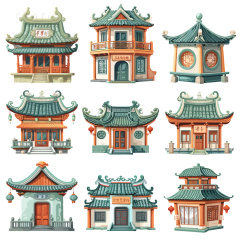
Collection of 9 Chinese Ancient Taoist Temple Architecture Decoration Pictures
File Type:EPS
This collection features 9 exquisitely captured pictures that showcase the magnificent architecture and elaborate decorations of Chinese ancient Taoist temples. These pictures encompass a diverse range of Taoist temple building types, from grand main halls to delicate pavilions, each revealing the unique charm and profound cultural significance of Taoist architecture. They are not only a visual treat but also a valuable resource for those interested in Chinese traditional culture, architecture, and art, suitable for various applications such as cultural research, educational materials, and design inspiration.
Picture Details
2.1 Main Hall of a Taoist Temple with Intricate Wood Carvings
- Picture Features: The main hall in this picture is a grand structure with a multi - eaved roof. The wooden beams and columns are adorned with extremely intricate carvings. There are depictions of mythical creatures like dragons and phoenixes, which are symbols of power and auspiciousness in Chinese culture. The carvings also include various flowers, such as peonies representing prosperity, and plum blossoms symbolizing perseverance. The details of the carvings are so fine that every scale of the dragon and every petal of the flower are clearly visible, demonstrating the high - level craftsmanship of ancient Chinese artisans.
- Cultural Significance: In Taoist temples, the main hall is the central place for religious ceremonies and worshipping deities. The use of dragon and phoenix carvings not only adds to the grandeur of the hall but also implies the connection between the temple and the celestial realm. The flowers and other motifs are also in line with Taoist beliefs, which value the beauty and harmony of nature. These carvings reflect the Taoist pursuit of auspiciousness and the integration of nature - related elements into religious architecture.
2.2 Taoist Temple Gate with Colorful Painted Reliefs
- Picture Features: The temple gate shown here is a double - door structure with a large, arched top. The entire surface of the gate is covered with colorful painted reliefs. The reliefs tell stories from Taoist mythology, such as the journey of the Eight Immortals across the sea. The colors are vivid, with bright reds, blues, and yellows. The figures in the reliefs are depicted with great expression and dynamic postures, making the stories come alive. The edges of the gate are decorated with geometric patterns, adding a sense of order and symmetry.
- Cultural Significance: The gate of a Taoist temple is the entrance to the sacred space. By depicting Taoist mythological stories on the gate, it serves as a way to convey religious teachings and values to the believers and visitors. The use of bright colors is in line with Taoist aesthetics, which often associate certain colors with different aspects of nature and the spiritual world. The geometric patterns represent the order and harmony of the universe, a fundamental concept in Taoist philosophy.
2.3 Pavilion in a Taoist Temple Garden with Exquisite Tile - work
- Picture Features: This hexagonal pavilion is located in a beautiful garden within the Taoist temple. The roof of the pavilion is covered with exquisitely made tiles. The tiles are not only functional but also decorative. They have patterns such as cloud - like shapes, which are very common in Taoist art, symbolizing the ethereal and spiritual nature of the Taoist realm. The edges of the tiles are carefully crafted, and some of them have small, hand - carved details. The pavilion is supported by six wooden columns, which are painted in a dark, rich color that complements the gray of the tiles.
- Cultural Significance: Pavilions in Taoist temple gardens are places for quiet meditation, relaxation, and communication with nature. The cloud - pattern tiles on the roof are a visual representation of the Taoist concept of the connection between the earthly and the celestial. The harmonious combination of the tile - work, columns, and the surrounding natural environment reflects the Taoist principle of unity between man and nature.
2.4 Taoist Temple Wall with Brick Carvings of Taoist Symbols
- Picture Features: The wall in the picture is a long, sturdy structure made of bricks. The bricks are carved with various Taoist symbols. There are the Yin - Yang symbol, which represents the balance and interaction of opposite forces in the universe. There are also the Bagua (Eight Trigrams) symbols, each with its own meaning related to natural phenomena, directions, and aspects of life. The brick carvings are three - dimensional, giving a sense of depth and texture. The wall is painted in a light color, which makes the dark - colored carvings stand out even more.
- Cultural Significance: Taoist symbols are an important part of Taoist culture. The Yin - Yang and Bagua symbols on the temple wall are reminders of the Taoist philosophy of the universe. They are used to ward off evil, attract good fortune, and represent the fundamental principles of the Taoist worldview. The wall, with its carved symbols, serves as a visual manifestation of Taoist beliefs and a boundary that separates the sacred temple area from the outside world.
2.5 Bell Tower in a Taoist Temple with Ornate Roof Design
- Picture Features: The bell tower is a tall, slender building with a multi - tiered roof. The roof has a very ornate design. Each tier has upturned eaves, which are decorated with small, detailed carvings of birds and beasts. The top of the bell tower has a finial in the shape of a Taoist - style flame, symbolizing the spiritual light and energy. The body of the bell tower is made of wood and stone, with wooden doors and windows that have lattice patterns. A large, bronze bell can be seen hanging inside the tower, ready to be rung during important religious ceremonies.
- Cultural Significance: Bell towers in Taoist temples play an important role in religious rituals. The ringing of the bell is believed to purify the air, drive away evil spirits, and announce the beginning and end of ceremonies. The ornate roof design with its various carvings and the flame - shaped finial is a reflection of Taoist spiritual beliefs. The birds and beasts on the eaves may represent the creatures of nature that are in harmony with the Taoist way, and the flame finial represents the eternal and spiritual essence of Taoism.
2.6 Taoist Temple Archway with Stone Carvings of Immortals
- Picture Features: This archway is a magnificent stone structure. The two main pillars and the horizontal beams are covered with stone carvings of Taoist immortals. The immortals are depicted in different poses, some flying with the help of magical artifacts, and some standing with a serene expression. The carvings also include elements such as clouds and mountains, creating a mythical and otherworldly atmosphere. The stone used for the archway is of high quality, with a smooth surface that enhances the details of the carvings. The archway is often the first thing that visitors see when approaching the Taoist temple, making a strong visual impression.
- Cultural Significance: Archways in Taoist temples are symbolic gateways to the sacred space. The carvings of immortals on the archway represent the spiritual realm that Taoists strive to reach. The presence of clouds and mountains in the carvings further emphasizes the connection between the earthly temple and the celestial abode of the immortals. The archway serves as a visual introduction to the Taoist beliefs and the mythological world of the temple.
2.7 Inner Hall of a Taoist Temple with Murals Depicting Taoist Teachings
- Picture Features: The inner hall of the Taoist temple in this picture has walls covered with large - scale murals. The murals depict various aspects of Taoist teachings. There are scenes of Laozi, the founder of Taoism, expounding his philosophy to his disciples. There are also illustrations of the cycle of life, death, and rebirth as understood in Taoist thought. The colors used in the murals are soft and harmonious, with earthy tones and some touches of gold leaf for emphasis. The lines of the paintings are smooth and flowing, giving a sense of movement and continuity.
- Cultural Significance: Murals in Taoist temples are important educational and religious tools. They convey the complex teachings of Taoism in a visual and accessible way. By depicting Laozi and the cycle of life, they remind the believers of the core principles of Taoism, such as the importance of following the Tao, the impermanence of life, and the pursuit of spiritual enlightenment. The use of gold leaf and the harmonious color scheme add to the solemn and sacred atmosphere of the inner hall.
2.8 Taoist Temple Courtyard with Ornamental Stone Lanterns
- Picture Features: The temple courtyard shown in the picture is a spacious and peaceful area. In the corners and along the paths of the courtyard, there are several ornamental stone lanterns. The lanterns are made of stone and have a simple yet elegant design. Each lantern has a body with carvings of lotus flowers, which are symbols of purity in both Taoist and Buddhist cultures. The top of the lantern has a cover that can be removed to place a light source inside. The stone lanterns are placed in a way that they not only provide illumination during the evening but also add to the aesthetic beauty of the courtyard during the day.
- Cultural Significance: Stone lanterns in Taoist temple courtyards have both practical and symbolic functions. As sources of light, they can be used during religious ceremonies held at night. Symbolically, the lotus flower carvings on the lanterns represent the purity of the Taoist path and the spiritual transformation that practitioners aim for. The placement of the lanterns in the courtyard creates a harmonious and serene environment, in line with the Taoist concept of balance and peace.
2.9 Taoist Temple Roof Ridge with Ceramic Figurines
- Picture Features: The roof ridge of the Taoist temple in this picture is decorated with a row of ceramic figurines. The figurines include dragons, phoenixes, and some mythical Taoist guardians. The dragons are fierce - looking, with their bodies coiled and their heads raised, as if ready to soar into the sky. The phoenixes are depicted with gracefully spread wings and colorful plumage. The mythical guardians have unique and powerful appearances, with strange weapons and expressions. The ceramic figurines are brightly colored, with a combination of glazes that make them stand out against the background of the gray roof tiles.
- Cultural Significance: On Taoist temple roofs, ceramic figurines are not only decorative but also have protective and symbolic meanings. Dragons and phoenixes are powerful symbols of good fortune and power. The mythical guardians are believed to protect the temple from evil forces. Their presence on the roof ridge is a way to ensure the safety and auspiciousness of the temple. The bright colors of the ceramic figurines add to the visual splendor of the temple and also have symbolic associations with different aspects of Taoist cosmology.
Design Features
- Rich Symbolism: All the pictures in this collection are replete with Taoist symbolism. From the mythical creatures and symbols in the carvings to the scenes depicted in the murals, every element is carefully chosen to convey Taoist beliefs, values, and the understanding of the universe. The use of symbols such as the Yin - Yang, Bagua, and various deities and immortals is a key design feature that runs through all the architectural decorations.
- High - level Craftsmanship: Whether it's the wood carvings, brick carvings, stone carvings, or the painting of murals, the craftsmanship displayed in these pictures is of an extremely high level. The artisans paid great attention to detail, from the delicate features of the figures to the precise patterns on the tiles and lanterns. This high - level craftsmanship not only makes the decorations visually appealing but also ensures their durability over time.
- Harmony with Nature: Many of the architectural decorations in these pictures show a strong connection with nature. The use of natural elements such as flowers, birds, mountains, and clouds in the carvings and murals reflects the Taoist principle of unity between man and nature. The colors and materials used also blend well with the natural environment of the temple, creating a harmonious and balanced aesthetic.
Application Scenarios
- Cultural Research: These pictures are an invaluable resource for cultural researchers interested in Chinese Taoism. They can be used to study the development of Taoist architecture, the evolution of Taoist symbols and iconography, and the cultural and social context in which these temples were built. The details in the pictures can provide insights into the religious beliefs, artistic styles, and craftsmanship of different historical periods.
- Educational Materials: Teachers and educators can incorporate these pictures into educational materials, such as textbooks, lecture slides, and online courses. They can be used to teach students about Chinese traditional culture, religion, art, and architecture. The vivid and detailed pictures can make the learning process more engaging and help students better understand the complex concepts related to Taoism.
- Design Inspiration: Designers in fields such as interior design, graphic design, and landscape design can draw inspiration from these pictures. The unique architectural styles, decorative patterns, and color schemes can be adapted for modern design projects. For example, the patterns from the tile - work or the layout of the temple courtyard can be used to create a Chinese - style, harmonious living or working space.


