

1/1
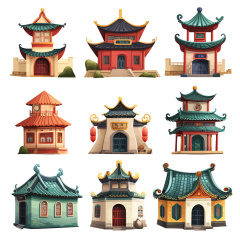
Collection of 9 Cartoon - style Chinese Ancient Pavilion Architecture Icons
File Type:EPS
This collection showcases a set of 9 exquisitely designed cartoon - style icons, each representing a unique type of Chinese ancient pavilion architecture. With a vivid and lively style, these icons not only capture the architectural features of pavilions in ancient China but also infuse them with a touch of playfulness. They are ideal for those who are passionate about Chinese traditional culture, educators looking to teach about ancient architecture in an engaging way, and designers seeking fresh inspiration. Whether for use in cultural projects, educational materials, or creative design works, this collection provides a delightful and accessible view into the world of Chinese ancient pavilion architecture.
Icon Details
2.1 Two - storeyed Wooden Pavilion Icon
- Icon Features: This icon features a charming two - storeyed wooden pavilion. The lower storey has an open - air corridor supported by stout, cylindrical wooden columns. The columns are painted in a warm, earthy brown color, giving a sense of stability. The floor of the lower storey is made of light - colored wooden planks, creating a contrast. The upper storey has lattice - work windows, with each lattice delicately drawn in a geometric pattern. The windows are slightly ajar, as if inviting a gentle breeze. The roof of the pavilion is a double - eaved design, with the eaves curving upwards in a graceful arc. Each eave is decorated with small, colorful tassels that add a touch of playfulness.
- Cultural Significance: In Chinese traditional architecture, two - storeyed wooden pavilions were often built in gardens or scenic areas. They served as places for people to rest, enjoy the scenery, and engage in cultural activities such as poetry recitation. The lattice - work windows not only provided ventilation and a view but also symbolized the Chinese concept of "framing" the beauty of nature. The upward - curving eaves were not only aesthetically pleasing but also had practical functions, like protecting the structure from rain. This icon represents the harmonious blend of functionality and aesthetics in Chinese ancient architecture.
2.2 Multi - eaved Pavilion with Bells Icon
- Icon Features: The multi - eaved pavilion in this icon is a sight to behold. It has three storeys, each with a set of overhanging eaves that become progressively smaller as they ascend. The eaves are painted in bright, vibrant colors, with the outermost edge of each eave adorned with small, shiny bells. When the wind blows, these bells seem to tinkle, as if creating a soft, musical melody. The body of the pavilion is made of wood, with ornate carvings of flowers and birds on the panels between the columns. The columns themselves are painted in a rich, dark red, a color associated with good luck and prosperity in Chinese culture. At the very top of the pavilion, there is a small, golden finial, adding a touch of grandeur.
- Cultural Significance: Pavilions with multi - eaves and bells were often found in important religious or imperial gardens. The bells were not only decorative but also had symbolic meanings. They were believed to ward off evil spirits and their gentle ringing was thought to bring peace and good fortune. The elaborate carvings of flowers and birds represented the beauty of nature and the harmonious relationship between humans and the natural world. This icon reflects the religious and cultural significance attached to such pavilions in ancient China.
2.3 Pavilion by the Lake Icon
- Icon Features: This icon depicts a beautiful pavilion located right by the edge of a serene lake. The pavilion has a circular shape, with a single - eaved roof supported by wooden columns painted in a light blue color, which matches the color of the lake. The floor of the pavilion is made of smooth, white stone slabs. There are railings around the pavilion, with each railing post carved in the shape of a lotus flower, a symbol of purity in Chinese culture. In the center of the pavilion, there is a small, round stone table surrounded by four stone stools. The lake in the background has ripples, and there are a few lotus flowers floating on the surface, creating a peaceful and idyllic scene.
- Cultural Significance: Pavilions by the lake were highly valued in Chinese gardens. They provided a perfect vantage point for people to appreciate the beauty of water, which was considered a symbol of life and fluidity. The circular shape of the pavilion represented the concept of unity and wholeness. The lotus - shaped railing posts and the floating lotus flowers in the lake emphasized the importance of purity and spiritual enlightenment in Chinese philosophy, especially in Buddhism. This icon captures the essence of the harmonious coexistence between architecture and nature in Chinese culture.
2.4 Pavilion in a Garden with Rockery Icon
- Icon Features: The pavilion in this icon is nestled in a lush garden filled with various plants and a magnificent rockery. The pavilion is a two - storeyed structure with a rectangular shape. The lower storey has open - air sides, allowing for a clear view of the garden. The columns of the lower storey are painted in a light green color, blending in with the surrounding foliage. The upper storey has windows with intricately carved wooden shutters. The roof of the pavilion is a double - eaved gable - and - hip design, with the eaves decorated with small, painted tiles in various colors. The rockery near the pavilion is made of large, oddly - shaped stones, some of which resemble mythical creatures. There are small trees and flowers growing on and around the rockery, adding to the charm of the scene.
- Cultural Significance: Pavilions in gardens with rockeries were an integral part of Chinese landscape design. Rockeries were not only decorative but also symbolized mountains, which held great significance in Chinese culture as places of spiritual power and natural beauty. The garden, with its carefully arranged plants and the pavilion, represented the ideal of a harmonious microcosm of the natural world. The pavilion served as a place for people to relax, enjoy the garden scenery, and engage in cultural pursuits. This icon represents the art of creating a peaceful and aesthetically pleasing environment in Chinese traditional gardens.
2.5 Pavilion with a Pagoda - style Roof Icon
- Icon Features: This unique pavilion icon has a pagoda - style roof. The body of the pavilion is square - shaped and made of wood. The columns are painted in a deep, royal purple color, giving the pavilion an air of elegance. The walls of the pavilion, between the columns, have simple yet beautiful paintings of landscapes. The pagoda - style roof has multiple tiers, each tier with upturned eaves. The eaves are decorated with small, golden ornaments that glisten in the sun. At the very top of the roof, there is a tall, spire - like structure with a large, round bead at the tip. The overall design of the pavilion combines the elements of a traditional pavilion and a pagoda, creating a distinct and eye - catching look.
- Cultural Significance: The combination of pavilion and pagoda - style roof in this icon represents the influence of different architectural traditions in Chinese culture. Pagodas were closely associated with Buddhism and symbolized spiritual growth and enlightenment. By incorporating a pagoda - style roof into a pavilion, it added a touch of spiritual significance to a more secular structure. The pavilion could have been used as a place for meditation or as a vantage point to admire the surrounding scenery while also being reminded of the spiritual values. This icon showcases the creative and inclusive nature of Chinese architecture.
2.6 Pavilion with a Balcony Icon
- Icon Features: The pavilion in this icon has a two - storeyed structure with a unique feature - a balcony on the upper storey. The lower storey has open - air corridors, with columns painted in a light, creamy color. The floor of the lower storey is made of wooden planks with a simple, natural finish. The upper storey has a balcony that runs along three sides. The balcony railing is made of intricately carved wood, with patterns of dragons and phoenixes, symbols of power and prosperity in Chinese culture. The windows of the upper storey are large and rectangular, with clear glass panes. The roof of the pavilion is a sloping, single - eaved design, painted in a dark, earthy color that complements the rest of the structure.
- Cultural Significance: Pavilions with balconies were often built in more affluent or important residences. The balcony provided an additional space for people to enjoy the view, socialize, or observe the activities below. The dragon and phoenix carvings on the balcony railing were symbols of high status and good fortune. This icon reflects the social and cultural hierarchy in ancient Chinese society, where the design and features of a building could convey the owner's wealth and status.
2.7 Pavilion in a Courtyard Icon
- Icon Features: This icon shows a pavilion located in the center of a courtyard. The courtyard is surrounded by low - walled buildings with red - painted wooden doors and windows. The ground of the courtyard is paved with square, gray stone slabs. The pavilion in the middle is a hexagonal structure with a single - eaved roof. The columns of the pavilion are painted in a bright, cheerful yellow color. The roof of the pavilion has a gently sloping design, and the eaves are decorated with small, colorful flags. Inside the pavilion, there are several wooden benches arranged in a circular pattern around a small, stone - paved area in the center. There are also a few potted plants placed around the pavilion, adding a touch of greenery.
- Cultural Significance: Pavilions in courtyards were the focal point of family activities and social gatherings in traditional Chinese households. The courtyard provided a private and protected space, while the pavilion offered a place for relaxation, conversation, and entertainment. The hexagonal shape of the pavilion was considered auspicious in Chinese culture. The potted plants symbolized the connection to nature and the importance of bringing the outdoors in. This icon represents the traditional Chinese lifestyle centered around the family and the courtyard.
2.8 Pavilion with a Suspended Bell Icon
- Icon Features: The pavilion in this icon is a simple yet elegant structure. It has a single - storey, square - shaped body made of wood. The columns are painted in a dark, rich color, similar to the color of aged wood. On one side of the pavilion, there is a large, bronze bell suspended from a wooden beam. The bell has intricate carvings of Chinese characters and patterns, telling stories or conveying auspicious messages. The roof of the pavilion is a flat, single - eaved design, with the edges slightly upturned. There are small, decorative elements on the corners of the roof, adding a touch of charm. The floor of the pavilion is made of wooden planks, and there are a few small, circular windows on the sides of the pavilion, allowing for some natural light to enter.
- Cultural Significance: Pavilions with suspended bells were often found in public places, such as temples or marketplaces. The bell was used to announce important events, mark the time, or call people together. The carvings on the bell were not only decorative but also carried cultural and historical significance. This icon represents the practical and cultural functions of such pavilions in ancient Chinese society, as well as the importance of communication and community gathering.
2.9 Pavilion with a View of Mountains Icon
- Icon Features: This icon depicts a pavilion with a breathtaking view of mountains in the background. The pavilion is a two - storeyed, octagonal structure. The lower storey has open - air sides, with columns painted in a light, sky - blue color. The upper storey has windows with lattice - work designs, allowing for a clear view of the mountains. The roof of the pavilion is a multi - eaved design, with each eave decorated with small, white tiles. The mountains in the background are drawn in a soft, pastel color palette, with snow - capped peaks and fluffy clouds floating around them. There are a few trees in the foreground, adding to the natural beauty of the scene.
- Cultural Significance: Pavilions with views of mountains were highly prized in Chinese culture. Mountains were seen as symbols of strength, endurance, and spiritual elevation. Building a pavilion to overlook mountains provided a space for people to connect with nature, find inspiration, and reflect on life. The octagonal shape of the pavilion was considered lucky and harmonious. This icon captures the deep - rooted Chinese love for nature and the desire to be in harmony with the natural world.
Design Features
- Cartoon - style Appeal: The collection adopts a cartoon - style design, which makes the icons visually engaging and accessible. The use of bright colors, exaggerated features, and simplified forms adds a sense of playfulness and fun, making them suitable for a wide range of audiences, especially those who may be new to Chinese ancient architecture.
- Cultural Symbolism: Each icon is rich in Chinese cultural symbolism. From the dragon and phoenix carvings to the use of colors like red, yellow, and purple, which are associated with good luck, prosperity, and nobility respectively, every element is carefully chosen to convey deep - seated cultural meanings. The symbols of nature, such as lotus flowers, mountains, and trees, also play an important role in representing the harmonious relationship between humans and the environment.
- Attention to Architectural Details: Despite the cartoon - style, the icons pay close attention to the architectural details of Chinese ancient pavilions. The different types of roofs, columns, windows, and decorative elements are accurately depicted, allowing viewers to learn about the unique features of Chinese traditional architecture while enjoying the charming and simplified visual representation.
Application Scenarios
- Educational Materials: These icons are perfect for use in educational materials, such as textbooks, e - learning courses, and educational apps. Teachers can use them to teach students about Chinese ancient architecture in a more engaging and accessible way. The vivid and colorful designs can capture students' attention and help them better understand the different types of pavilions and their cultural significance.
- Cultural and Artistic Projects: In cultural and artistic projects, such as museum exhibitions, cultural festivals, or art installations, these icons can be used to promote Chinese traditional culture. They can be printed on posters, brochures, or used as part of digital displays to attract the attention of the public and convey the beauty and richness of Chinese ancient architecture.
- Design and Creative Work: Designers in various fields, such as graphic design, interior design, and game design, can draw inspiration from these icons. The unique architectural styles and cultural elements can be incorporated into modern designs to add a touch of cultural identity. For example, the patterns and colors from the icons can be used in the design of Chinese - themed rooms, or the shapes of the pavilions can be adapted for character or level design in games.


