

1/1
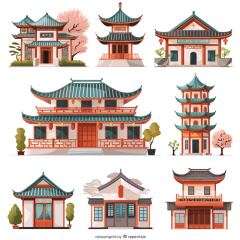
Collection of 8 Sets of Icons of Chinese Ancient Pavilion - style Buildings with Ornamental Flowers and Trees
File Type:EPS
This collection showcases 8 sets of exquisitely - designed icons, vividly presenting the charm of Chinese ancient pavilion - style buildings. The icons not only accurately capture the unique architectural features of pavilions, terraces, towers, and halls but also add the delicate touch of ornamental flowers and trees, creating a harmonious and idyllic atmosphere. Each icon is a perfect blend of traditional Chinese aesthetics and modern design concepts, rich in cultural connotations and artistic value. It is an ideal resource for cultural promotion, educational materials, and creative design projects.
Icon Details
2.1 Icon Set 1: Elegant Water Pavilions
- Icon Features: These icons feature pavilions gracefully built over water. The pavilions have a single - eaved, sloping roof with upturned eaves, supported by red - painted wooden columns. The columns may be adorned with simple, traditional carvings. The open - air structure of the pavilion provides a panoramic view of the surrounding water. Ornamental lotus flowers are delicately placed in the water around the pavilion, and weeping willows with long, drooping branches stand on the banks, their leaves gently touching the water surface, adding a soft and elegant touch.
- Cultural Significance: Water pavilions in ancient China were often places for scholars and nobles to enjoy the scenery, compose poems, and hold banquets. The lotus flower, symbolizing purity and enlightenment in Chinese culture, and the weeping willow, representing sentimentality and parting, enhance the cultural and aesthetic atmosphere of the pavilion. The combination of the pavilion and the water reflects the traditional Chinese pursuit of harmony between man and nature.
2.2 Icon Set 2: Hillside Pavilions
- Icon Features: Hillside pavilion icons show pavilions nestled on the slopes of mountains. The pavilions are usually square or hexagonal in shape. Their roofs are made of gray tiles, and the wooden beams and columns are in a natural, unpainted state, blending well with the mountain environment. Around the pavilion, azaleas in full bloom splash the area with vibrant colors. Pine trees stand tall nearby, their branches stretching out as if protecting the pavilion. A small stone path winds its way up to the pavilion, adding a sense of tranquility and mystery.
- Cultural Significance: Hillside pavilions were favored by hermits and scholars seeking seclusion and inspiration. The azalea, often associated with spring and vitality, and the pine tree, a symbol of longevity and perseverance in Chinese culture, enrich the cultural meaning of the pavilion. The location of the pavilion on the mountainside represents the ancient Chinese yearning for a simple and peaceful life close to nature.
2.3 Icon Set 3: Towering Towers
- Icon Features: Tower icons depict tall, multi - storey buildings. These towers have a solid, square - shaped base made of stone or brick. The walls are thick, with small, rectangular windows that offer views of the distance. The multi - eaved roofs are elaborate, with each eave decorated with rows of small, decorative tiles. On the balconies of each storey, flower pots filled with peonies are placed. The peonies, with their large, showy blooms, add a touch of luxury and opulence to the tower. At the base of the tower, there is a small garden with neatly trimmed shrubs.
- Cultural Significance: Towers in ancient China had various functions, such as observation, storage, and as landmarks. The peony, known as the "king of flowers" in Chinese culture, symbolizes wealth, honor, and prosperity. The tower, with its grand structure and the luxurious peonies, reflects the power and status of the owner or the importance of the place where it is located.
2.4 Icon Set 4: Grand Halls
- Icon Features: Hall icons represent large - scale, imposing buildings. The main halls have a double - eaved, hip - and - gable roof, a symbol of high status in traditional architecture. The roofs are covered with dark - colored tiles, giving a sense of stability and solemnity. The hall is supported by thick, red - painted wooden columns, with intricate carvings of dragons and phoenixes. In front of the hall, there is a large courtyard. In the courtyard, magnolia trees stand tall, their large, white flowers blooming gracefully. Along the sides of the courtyard, there are neatly arranged flower beds filled with chrysanthemums.
- Cultural Significance: Grand halls were used for important ceremonies, meetings, and religious activities. The dragon and phoenix carvings on the columns symbolize imperial power and good fortune. The magnolia, which represents purity and nobility, and the chrysanthemum, a symbol of longevity and good luck in Chinese culture, enhance the solemn and noble atmosphere of the hall.
2.5 Icon Set 5: Terrace with Orchids
- Icon Features: Terrace icons show flat, elevated platforms. The terraces are made of stone slabs, with a simple and sturdy railing around them. On the terrace, there are several orchid pots. The orchids, with their delicate flowers and elegant leaves, are the highlight of the icon. Some climbing vines, such as wisteria, wind their way along the railing, adding a soft and flowing element. A small, ornate stone table and a few stools are placed on the terrace, creating a cozy space.
- Cultural Significance: Terraces were used for various activities, such as enjoying the moonlight, stargazing, or simply relaxing. The orchid is highly regarded in Chinese culture as a symbol of elegance, purity, and friendship. The wisteria, with its beautiful cascading flowers, represents love and longing. The combination of these elements on the terrace creates a refined and romantic atmosphere.
2.6 Icon Set 6: Pagoda in the Forest
- Icon Features: Pagoda icons in this set are set in a forest environment. The pagoda is a multi - storeyed structure, usually with an odd number of levels, such as five or seven. It is constructed with high - quality bricks or stones, and its eaves are broad and gracefully curved. The pagoda is adorned with carvings of Buddhist motifs, such as lotus flowers and Buddha statues. Around the pagoda, there are tall bamboo groves, their slender stalks swaying gently in the wind. Wildflowers, such as daisies and primroses, bloom among the grass at the base of the pagoda.
- Cultural Significance: Pagodas were originally built to enshrine the relics of the Buddha or important Buddhist scriptures. The bamboo, symbolizing integrity, perseverance, and flexibility in Chinese culture, and the wildflowers, representing the beauty and vitality of nature, surround the pagoda, creating a peaceful and sacred environment that is in line with the Buddhist concept of harmony.
2.7 Icon Set 7: Pavilion in the Imperial Garden
- Icon Features: These icons represent pavilions in an imperial - style garden. The pavilion has a complex and ornate design. It has a triple - eaved roof, with each eave decorated with elaborate wooden brackets and small, gilt - edged tiles. The columns are painted in bright red and decorated with gold - leaf carvings of imperial symbols, such as dragons and phoenixes. In the garden around the pavilion, there are carefully manicured topiary in the shapes of animals and geometric patterns. Rare and precious flowers, such as camellias and peonies, are planted in large flower beds. A small, meandering stream runs through the garden, with koi fish swimming in the clear water.
- Cultural Significance: Pavilions in imperial gardens were places for the royal family to relax, entertain guests, and enjoy the beauty of the garden. The elaborate design and decoration of the pavilion, along with the rare flowers and imperial - themed carvings, reflect the supreme power and wealth of the imperial family. The topiary and the well - designed garden layout demonstrate the high - level gardening skills and the pursuit of perfection in imperial culture.
2.8 Icon Set 8: Corridor - connected Pavilions
- Icon Features: This icon set shows a series of pavilions connected by long, covered corridors. The pavilions are of different shapes, including square, octagonal, and hexagonal. Each pavilion has a single - eaved or double - eaved roof, with upturned eaves. The corridors are supported by wooden columns, which are painted red. The corridor walls are decorated with lattice - work windows and painted murals. Along the corridors and around the pavilions, there are hanging flower baskets filled with colorful petunias. Potted bonsai, with their carefully shaped trees and rocks, are placed at intervals, adding an artistic touch.
- Cultural Significance: Corridor - connected pavilions were common in large - scale gardens and architectural complexes. They provided a convenient and sheltered way for people to move between different areas. The hanging flower baskets and potted bonsai not only beautify the space but also reflect the refined taste of the owners. The corridors, with their decorative elements, also serve as a form of art, enhancing the overall aesthetic and cultural value of the architectural group.
Design Features
- Traditional Architectural Aesthetics: The icons strictly follow the traditional aesthetics of Chinese ancient architecture. They feature elements such as symmetry, elegance, and elaborate decoration. The roof styles, column designs, and overall proportions of the buildings are accurately depicted to reflect the unique charm of different types of Chinese ancient architecture. The use of colors, such as red for columns, gray for roofs, and natural colors for wood, is in line with the historical color - coding system in traditional architecture.
- Harmonious Integration of Architecture and Nature: The addition of ornamental flowers and trees in the icons creates a harmonious blend between the man - made architecture and the natural environment. The types of flowers and trees are carefully selected according to their cultural significance and their ability to complement the architecture. For example, the use of lotus flowers with water pavilions and pine trees with hillside pavilions not only adds beauty but also deepens the cultural connotations of the icons.
- Attention to Detail: Despite being in icon form, great care has been taken to capture every minute detail. The carvings on columns, doors, and railings, the design of roofs and eaves, and the arrangement of flowers and trees are all precisely depicted. This allows viewers to appreciate the unique features of Chinese ancient architecture and the delicate beauty of the ornamental plants, as well as understand the historical and cultural context in which these elements were combined.
Application Scenarios
- Educational Resources: These icons are highly suitable for use in educational materials, such as history textbooks, art history courses, and educational apps. Teachers can use them to illustrate the architectural achievements and cultural significance of Chinese ancient architecture, as well as the traditional Chinese concept of harmony between man and nature. For example, in a history class on ancient Chinese culture, these icons can be used to show the different types of buildings and how they were integrated with the natural environment, enhancing students' understanding of the rich historical and cultural heritage of China.
- Cultural and Artistic Projects: In cultural and artistic projects, such as museum exhibitions, cultural festivals, and art installations, these icons can be used to promote Chinese traditional culture. They can be printed on posters, brochures, or used as part of digital displays to attract the public's attention and showcase the beauty of Chinese ancient architecture and its cultural elements. For instance, in a museum exhibition on Chinese traditional gardens, these icons can be used to represent the various elements of the garden, providing a visual overview of the garden's design and cultural meaning.
- Design and Creative Work: Designers in various fields, such as graphic design, interior design, and game design, can draw inspiration from these icons. The unique architectural styles and the combination of architecture and nature in these icons can be incorporated into modern designs to add a touch of historical and cultural charm. In graphic design, the patterns and colors from these icons can be used in the design of Chinese - themed posters or book covers. In interior design, the layout and decorative elements of the buildings, as well as the use of ornamental plants, can be adapted to create a luxurious and elegant space. In game design, these icons can be used to create immersive virtual environments that are rich in historical and cultural details.


