

1/1
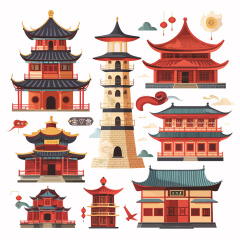
Collection of 8 Classic Chinese Architectural Icon Pattern Sets
File Type:EPS
This collection features 8 distinct sets of icons, each capturing the unique essence of classic Chinese architecture. From towering brick pagodas to grand imperial palaces and imposing gate towers, every set boasts exclusive structural traits, decorative motifs, and cultural symbolism. It serves as a vital resource for cultural dissemination, educational materials, and creative design, offering a vivid glimpse into China's diverse architectural legacy.
Icon Details
2.1 Icon Set 1: Octagonal Brick Pagoda
- Icon Features: A slender octagonal brick pagoda with 7 storeys, each tier tapering gently upward. Its exterior is adorned with relief carvings of flying apsaras and Buddhist sutra excerpts, set within rectangular niches. The eaves of each storey are supported by diminutive wooden brackets, with a single bronze bell hanging from each corner, chiming softly in the breeze. The base is a square stone platform surrounded by low balustrades carved with lotus patterns.
- Cultural Significance: Built to house sacred relics, this pagoda's octagonal shape symbolizes the Buddhist concept of "eightfold path to enlightenment." The apsara carvings reflect the fusion of Indian Buddhist art with Chinese craftsmanship, while the bells are believed to dispel negative energy and spread blessings.
2.2 Icon Set 2: Imperial Main Palace
- Icon Features: A colossal hall with a double-eaved hip-and-gable roof covered in golden-yellow glazed tiles, reserved exclusively for emperors. The facade is dominated by 12 massive red-lacquered columns, each wrapped in gilded dragon carvings that coil upward toward the ceiling. The central hall features a raised throne platform with a dragon-embossed throne, flanked by incense burners shaped like mythical qilin beasts. Behind the throne hangs a large horizontal tablet inscribed with imperial mottos.
- Cultural Significance: As the political heart of the empire, this palace embodies absolute imperial power. The golden tiles signify the emperor's "divine right," while the 12 columns represent the 12 months, symbolizing imperial rule over time. The dragon motifs—with 5 claws, exclusive to emperors—underscore the ruler's supremacy.
2.3 Icon Set 3: City Gate Tower with Watchtowers
- Icon Features: A fortified gate tower with a thick stone base and a two-storey wooden superstructure. The lower level has a single arched passageway, flanked by narrow arrow slits for defense. The upper storey features a broad wooden balcony with lattice windows, offering panoramic views of the surrounding area. Attached to both sides are small square watchtowers with crenellated tops, connected to the main tower by walled corridors. The roof is a simple gable design with grey tiles, lacking ornate decorations.
- Cultural Significance: Primarily a defensive structure, this gate tower reflects ancient China's emphasis on urban security. The arrow slits and watchtowers highlight its military function, while the arched passageway—wide enough for horse-drawn carriages—balances practicality with defense. It symbolizes the boundary between the ordered city and the chaotic outside world.
2.4 Icon Set 4: Pavilion-style Brick Pagoda
- Icon Features: A 5-storey square pagoda blending pagoda and pavilion designs. Each storey has open-sided wooden pavilions with overhanging eaves, supported by red-painted wooden columns. The brick core is visible between the pavilions, etched with simple geometric patterns. The top storey features a square wooden canopy with a small bronze spire. Surrounding the base are four stone steles, each carved with a different seasonal landscape.
- Cultural Significance: Designed for both worship and leisure, this pagoda embodies the Chinese philosophy of "unity of man and nature." The open pavilions allow visitors to admire the scenery, merging spiritual practice with aesthetic appreciation. The seasonal steles reflect the importance of harmony with natural cycles in traditional culture.
2.5 Icon Set 5: Imperial Ancestral Temple Gate
- Icon Features: A grand gate with a triple-eaved roof covered in dark green glazed tiles—reserved for imperial ancestral structures. The central doorway is flanked by two smaller side doors, all framed by stone archways carved with cloud patterns. Above the central door hangs a black lacquer plaque with gold characters reading "Imperial Ancestral Temple," written in the emperor's calligraphy. On either side stand stone statues of xiezhi—mythical beasts that judge right from wrong.
- Cultural Significance: This gate serves as the entrance to the imperial ancestral temple, a sacred space for worshipping ancestors. The green tiles distinguish it from imperial palaces, emphasizing reverence over royal authority. The xiezhi statues symbolize justice and the importance of ancestral virtues in governance.
2.6 Icon Set 6: Hexagonal Bell Pagoda
- Icon Features: A hexagonal brick pagoda with 9 storeys, each featuring a circular bell chamber. The exterior is decorated with terracotta reliefs of Buddhist deities, including Sakyamuni and Guanyin, each in distinct mudras. The top storey houses a large bronze bell with intricate engravings of dragons chasing pearls. The base is surrounded by a hexagonal moat, with stone bridges connecting to the mainland.
- Cultural Significance: Built as a Buddhist bell tower, its 9 storeys correspond to the "Nine Heavens" in Chinese cosmology. The bell, rung during ceremonies, is believed to awaken sentient beings from ignorance. The hexagonal shape and moat reflect feng shui principles, channeling positive energy toward the structure.
2.7 Icon Set 7: Princely Residence Hall
- Icon Features: A two-storey wooden hall with a single-eaved hip roof covered in blue glazed tiles—signifying princely rank. The facade features lattice windows with floral patterns, and the main entrance is flanked by wooden screens carved with peonies and cranes. The interior has a central hall with a raised platform for receiving guests, and side chambers with low couches for rest. The courtyard in front has a small pond with a stone bridge, surrounded by plum trees.
- Cultural Significance: This hall was the residence of imperial princes, balancing dignity with comfort. The blue tiles denote rank below the emperor, while peonies (symbol of wealth) and cranes (symbol of longevity) reflect aristocratic aspirations. The plum trees in the courtyard symbolize resilience, a valued virtue among nobility.
2.8 Icon Set 8: Merchant Guild Gate Tower
- Icon Features: A three-storey gate tower with a mix of brick and wood construction. The first floor has a large arched entrance with stone carvings of merchants trading goods. The second floor features a wooden balcony with railings carved into coin patterns, and the third floor has a small shrine dedicated to the God of Wealth. The roof is a hip-and-gable design with red tiles, and the corners are decorated with ceramic figures of merchants and camels.
- Cultural Significance: Built by merchant guilds, this gate tower reflects the rising influence of merchants in late imperial China. The trading scenes and coin motifs celebrate commercial success, while the God of Wealth shrine underscores business aspirations. The camel figures highlight the importance of long-distance trade along the Silk Road.
Design Features
- Structural Diversity: From octagonal and hexagonal pagodas to square and rectangular palaces, each icon showcases unique architectural forms tailored to their function—defensive, religious, or residential.
- Decorative Exclusivity: Ornamentation ranges from Buddhist reliefs and imperial dragons to merchant-themed carvings, with each motif tied to the building's purpose and user group.
- Color Coding: Strict color symbolism distinguishes icons: golden yellow for imperial palaces, green for ancestral structures, blue for princely residences, and red for commercial buildings, reflecting China's hierarchical society.
Application Scenarios
- Educational Materials: Ideal for teaching architectural history, helping students distinguish between building types based on structure, decoration, and color.
- Cultural Exhibitions: Perfect for showcasing China's social diversity through architecture, highlighting differences between religious, imperial, and merchant structures.
- Design Projects: Offers varied motifs for themed designs—from imperial symbols for luxury brands to merchant motifs for commercial logos.


