

1/1
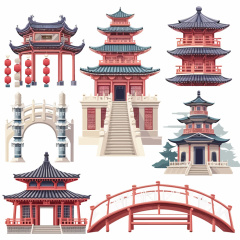
Collection of 7 Classic Chinese Ancient Architectural Icon Sets
File Type:EPS
This collection showcases 7 sets of exquisitely designed icons, vividly capturing the unique charm and profound cultural connotations of classic Chinese architecture. Comprising icons of pavilions, arch bridges, and multi - storey buildings, each set is a visual distillation of the distinct architectural features, rich symbolic meanings, and delicate ornamental details of these iconic structures. It serves as an excellent resource for cultural promotion, educational materials, and creative design, offering a window into the long - standing and resplendent Chinese architectural heritage.
Icon Details
2.1 Icon Set 1: Elegant Water - side Pavilion
- Icon Features: This icon depicts an elegant pavilion standing by the water. The pavilion has a single - eaved, curved roof, supported by slender, red - painted wooden columns. The columns are adorned with delicate carvings of flowers and birds, adding a touch of liveliness. The open - air structure of the pavilion allows for a clear view of the surrounding water, where there are floating water lilies and small fish swimming. Some climbing plants, like wisteria, wind their way along the railing of the pavilion, creating a soft and flowing atmosphere. A small, stone - paved path leads to the pavilion from the shore.
- Cultural Significance: Water - side pavilions in ancient China were popular places for relaxation, enjoying the scenery, and for literary and artistic gatherings. They symbolize the harmonious coexistence between man - made structures and nature. The water lilies, representing purity in Chinese culture, and the wisteria, often associated with love and longing, enhance the refined and romantic ambiance of the pavilion. The pavilion's location by the water reflects the traditional Chinese appreciation for the beauty of nature and the pursuit of a peaceful and idyllic lifestyle.
2.2 Icon Set 2: Arched Bridge over a Stream
- Icon Features: The icon shows a beautiful arched bridge spanning a clear stream. The bridge is made of stone, with a smooth, rounded arch. The sides of the bridge are decorated with carved stone railings, featuring patterns of dragons and phoenixes. These mythical creatures are carved in great detail, with their bodies undulating and their eyes shining, as if they are about to come to life. Below the bridge, the stream is flowing gently, with ripples spreading out from the movement of small fish. On both banks of the stream, there are willow trees, their long branches hanging down and touching the water surface, creating a serene and picturesque scene.
- Cultural Significance: Arched bridges in Chinese culture not only serve as practical transportation facilities but also carry rich cultural meanings. The dragon and phoenix carvings on the bridge symbolize good fortune, imperial power, and high status. Bridges are often seen as symbols of connection and transition, linking different areas and representing the passage of time and the continuity of life. The willow trees, which are associated with parting and longing in Chinese literature and culture, add a touch of sentimentality to the overall scene.
2.3 Icon Set 3: Two - storey Pavilion in a Garden
- Icon Features: This icon presents a two - storey pavilion located in a beautiful, well - manicured garden. The pavilion has a double - eaved, sloping roof with upturned eaves. The upper storey has an open - air balcony with a wooden railing, providing a vantage point to enjoy the garden view. The columns of the pavilion are painted in a light, warm color, and there are simple, yet elegant traditional carvings on the beam - ends. The garden around the pavilion is filled with various colorful flowers, such as peonies, chrysanthemums, and roses. There are also small, artificial ponds with goldfish swimming in them. Some small, decorative pavilions and benches are placed around the garden, creating a pleasant and inviting atmosphere.
- Cultural Significance: Pavilions in gardens were important cultural and recreational spaces in ancient China. The double - eaved roof indicates a certain level of elegance and importance. Different types of flowers in the garden carry their own cultural significance. Peonies symbolize wealth and prosperity, chrysanthemums represent longevity, and roses can convey love. The artificial ponds with goldfish not only enhance the beauty of the garden but also symbolize good luck and prosperity. The garden as a whole represents the traditional Chinese pursuit of harmony between man and nature, and the pavilion serves as a focal point for people to relax and appreciate the beauty of the natural environment.
2.4 Icon Set 4: Grand Multi - arch Bridge
- Icon Features: The icon features a grand multi - arch bridge. The bridge has multiple stone arches, each with a slightly different curve, creating a harmonious and rhythmic visual effect. The arches are supported by sturdy piers, which are also made of stone. The bridge deck is wide and flat, paved with large stone slabs. On both sides of the bridge, there are stone railings with elaborate carvings of lions, lotus flowers, and other traditional Chinese motifs. The lions are carved in different poses, some standing majestically, some playing with balls, and some looking out into the distance. The lotus flowers are delicately carved, with their petals and stamens clearly visible. The bridge spans a wide river, and below it, the river water is flowing turbulently, highlighting the grandeur of the bridge.
- Cultural Significance: Multi - arch bridges in Chinese history are engineering marvels. They demonstrate the high - level construction skills of ancient Chinese people. The lion carvings on the bridge are believed to ward off evil spirits and protect the bridge and the people using it. The lotus flowers, which are deeply associated with Buddhism in Chinese culture, symbolize purity, enlightenment, and spiritual growth. The bridge, with its multiple arches, represents the ability to overcome obstacles and connect different regions, and it also reflects the traditional Chinese concept of harmony and balance in architecture.
2.5 Icon Set 5: Three - storeyed Pavilion with a View
- Icon Features: This icon depicts a three - storeyed pavilion standing on a small hill. The pavilion has a triple - eaved, hip - and - gable roof, covered with dark - colored tiles. The eaves are decorated with small, decorative figures, adding a touch of elegance. Each storey of the pavilion has large, open windows, allowing for a panoramic view of the surrounding area. From the top storey, one can see a vast expanse of mountains, forests, and a meandering river in the distance. At the base of the hill, there are some ancient trees, such as pine and cypress, which have withstood the test of time. A winding path leads up to the pavilion, lined with wildflowers and small shrubs.
- Cultural Significance: Pavilions on hills were often used for enjoying the scenery, meditation, and for hosting cultural activities. The triple - eaved roof is a sign of high - level architecture and indicates the importance of the pavilion. The view from the pavilion, with mountains, forests, and a river, reflects the traditional Chinese love for nature and the pursuit of spiritual connection with the natural world. The pine and cypress trees, which symbolize longevity and perseverance in Chinese culture, enhance the solemn and timeless atmosphere around the pavilion. The winding path leading to the pavilion represents the journey of life and the pursuit of higher spiritual and cultural experiences.
2.6 Icon Set 6: Small Arched Bridge in a Courtyard
- Icon Features: The icon shows a small, charming arched bridge in a private courtyard. The bridge is made of red - painted wood, with a simple, yet elegant arch. The handrails of the bridge are decorated with carved patterns of geometric shapes and simple floral designs. The bridge spans a small, artificial pond in the courtyard. In the pond, there are water lilies and a few small goldfish swimming among the rocks. Around the pond, there are some potted plants, such as orchids and bonsai, adding a touch of refinement. The courtyard is surrounded by a low, white - washed wall with a red - tiled roof, creating a peaceful and secluded environment.
- Cultural Significance: In traditional Chinese courtyard architecture, small arched bridges are decorative elements that enhance the aesthetic appeal of the space. They also symbolize the transition from one area of the courtyard to another, adding a sense of mystery and exploration. The red - painted wood of the bridge represents good luck and prosperity in Chinese culture. The water lilies in the pond symbolize purity, and the goldfish are signs of good fortune. The potted orchids and bonsai, which are highly regarded in Chinese horticulture, reflect the refined taste of the courtyard's owner. The courtyard as a whole represents the private and harmonious living environment that the Chinese people have long strived for.
2.7 Icon Set 7: Towering Multi - storey Building
- Icon Features: This icon represents a towering multi - storey building. The building has a rectangular base and multiple storeys, with each storey slightly smaller than the one below. The building is made of wood and brick, with a large, sloping roof covered with grey tiles. The roof has upturned eaves, which are decorated with elaborate carvings of dragons, phoenixes, and other mythical creatures. The windows of the building are large and rectangular, framed with wooden panels. On the first floor, there is a large, double - door entrance, with brass knockers. The building is surrounded by a stone - paved square, and in the square, there are some stone sculptures, such as lions and kylins.
- Cultural Significance: Multi - storey buildings in ancient China were often used for various purposes, such as residential, religious, or official functions. The dragon and phoenix carvings on the roof represent imperial power, good fortune, and high status. The building's design, with its multiple storeys and large roof, reflects the traditional Chinese architectural style and the emphasis on hierarchy and order. The stone sculptures of lions and kylins around the building are believed to protect the building and bring good luck. The building as a whole is a symbol of the prosperity and cultural achievements of ancient Chinese society.
Design Features
- Authentic Representation of Traditional Architecture: The icons in this collection are designed with great precision, accurately reflecting the unique features of Chinese pavilions, arch bridges, and multi - storey buildings. The roof styles, column designs, and overall proportions of the buildings are based on historical architectural records and real - world examples. The use of colors, such as red for columns and railings in some icons to symbolize good luck and vitality, and natural colors for stone and wood, adheres to the traditional color - coding system in Chinese architecture, enhancing the authenticity of the icons.
- Harmonious Incorporation of Cultural Symbols: Each icon is richly decorated with various cultural symbols deeply rooted in Chinese history and culture. From the dragon and phoenix carvings symbolizing imperial power and good fortune to the lotus flowers representing purity and enlightenment, these symbols not only add visual interest but also convey the profound cultural connotations of the buildings. The integration of natural elements, such as flowers, trees, and water, with the man - made architecture reflects the traditional Chinese concept of harmony between man and nature, further enriching the design.
- Attention to Detail in Ornamentation: Despite their relatively small size, the icons pay meticulous attention to the ornamental details. The carvings on columns, railings, and archways, the decorative elements on roofs and eaves, and the arrangement of plants and other accessories are all carefully designed to showcase the exquisite craftsmanship of ancient Chinese architecture. This attention to detail allows viewers to appreciate the beauty and complexity of these structures, even in a simplified icon format.
Application Scenarios
- Educational Purposes: These icon sets are highly suitable for use in educational materials, such as history textbooks, art history courses, and cultural education programs. Teachers can use them to illustrate the different types of Chinese architecture, their cultural significance, and the historical context in which they were built. For example, in a history class on ancient Chinese dynasties, the multi - storey building icons can be used to teach students about the social structure and architectural styles of the time. In an art history class, students can study the design features and ornamental details of the icons to understand the development of Chinese architectural art.
- Cultural Promotion and Tourism: In the fields of cultural promotion and tourism, these icons can be used to attract people's attention to China's rich architectural heritage. They can be printed on brochures, posters, and postcards for tourist attractions, cultural festivals, and exhibitions. For instance, in a tourism campaign for a historical city with many ancient bridges and pavilions, these icons can be used to represent the city's unique cultural attractions, helping to promote tourism and increase cultural awareness.
- Graphic and Web Design: Designers in graphic and web design can draw inspiration from these icon sets. The unique architectural styles and cultural symbols can be incorporated into modern designs to add a touch of traditional Chinese charm. For example, in the design of a Chinese - themed website, these icons can be used as navigation buttons or decorative elements to create a cohesive and culturally - rich visual experience. In graphic design projects, such as logo design or packaging design for products with a Chinese cultural theme, the elements from these icons can be adapted to create a distinct and memorable design.


