

1/1
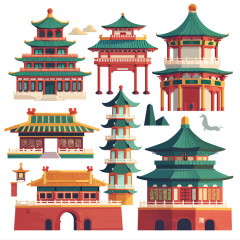
Collection of 7 Chinese Classical Architecture Icons
File Type:EPS
This collection features 7 exquisitely designed icons that vividly represent classic elements of Chinese architecture. Comprising 1 pagoda, 2 city gates, 1 archway (pai fang), and 3 pavilions, each icon is a harmonious blend of traditional aesthetics and modern design sensibilities. These icons are not only visual representations but also carriers of profound Chinese cultural connotations, making them perfect for a wide range of applications, from educational resources to creative design projects, and cultural promotion endeavors.
Icon Details
2.1 Pagoda Icon
- Icon Features: The pagoda icon showcases a multi - storeyed structure with distinctively curved eaves. Each storey is slightly smaller than the one below, creating a tapered effect. The body of the pagoda is adorned with intricate carvings, such as lotus patterns and Buddhist symbols, which are delicately rendered. The roof is covered in small, tiled shingles, and at the very top, there is a finial that may be in the shape of a gourd or a flame, adding a touch of elegance. The overall color scheme is a combination of earthy tones like beige and brown for the body, with golden accents on the eaves and the finial.
- Cultural Significance: Pagodas in Chinese culture have deep - rooted Buddhist origins. They were initially built to enshrine Buddhist relics and scriptures, serving as important religious landmarks. Over time, they also became symbols of good fortune and prosperity. The number of storeys in a pagoda often carried symbolic meaning, with odd numbers like 7, 9, or 13 being considered auspicious. This icon represents the long - standing influence of Buddhism on Chinese architecture and culture, as well as the pursuit of spiritual enlightenment and good luck.
2.2 City Gate 1 (Zhengyang Gate - Inspired) Icon
- Icon Features: Inspired by the famous Zhengyang Gate in Beijing, this icon depicts a massive, imposing structure. The gate has a large, central archway flanked by two smaller side archways. The walls of the gate are thick and sturdy, made of gray bricks with visible mortar lines. Above the archways, there is a row of red - painted wooden beams and brackets (dougong), which not only add to the structural stability but also serve as decorative elements. The roof of the gate is a double - eaved design, with upturned eaves that are characteristic of Chinese architecture. On the top of the roof, there are small, decorative tiles and ridge beasts. The large wooden doors of the gate are painted red and are studded with brass nails, giving them a sense of strength and grandeur.
- Cultural Significance: City gates in ancient China were not only entry and exit points but also symbols of a city's defense and power. They played a crucial role in protecting the city from invaders, controlling the flow of people and goods, and serving as ceremonial spaces. The Zhengyang Gate, for example, was an important part of Beijing's imperial city, used for grand processions and imperial announcements. This icon represents the historical and cultural importance of city gates in Chinese urban planning and the imperial system.
2.3 City Gate 2 (Yingtian Gate - Inspired) Icon
- Icon Features: Modeled after the Yingtian Gate in Luoyang, this icon presents a magnificent and symmetrical structure. It has a central, large - scale archway that is flanked by two pairs of smaller side archways on either side. The base of the gate is a high, stone - built platform, which gives the structure a sense of solidity. The archways are adorned with elaborate carvings of dragons, phoenixes, and other mythical creatures, which are symbols of imperial power and good fortune. The upper part of the gate features multiple layers of red - painted wooden brackets and beams, supporting a grand, multi - eaved roof. The eaves are decorated with small, colorful tiles and ornate finials. The gate also has two large, red - painted wooden doors with brass knockers in the shape of animal heads.
- Cultural Significance: The Yingtian Gate was a significant ceremonial and celebratory venue during the Sui, Tang, and Wuzhou dynasties. Emperors received foreign envoys, issued important edicts, and held grand ceremonies here. It was a symbol of imperial authority and the prosperity of the dynasties. This icon captures the grandeur and historical importance of such imperial - era city gates, representing the pinnacle of Chinese imperial architecture and the diplomatic and political significance attached to these structures.
2.4 Archway (Pai Fang) Icon
- Icon Features: The archway icon is a classic representation of a Chinese pai fang. It consists of two thick, upright stone pillars connected by two horizontal beams. The pillars are decorated with relief carvings of flowers, animals, and geometric patterns. In the center of the upper beam, there is a plaque with inscriptions (which can be left blank in the icon for a more universal design). The archway has a simple, yet elegant roof structure, with upturned eaves and small, tiled shingles. The overall color of the archway is a natural stone color, such as light gray or beige, which gives it a sense of durability and solemnity.
- Cultural Significance: Pai fang in Chinese culture were built for various reasons, including commemorating great achievements, honoring ancestors or heroes, and marking important locations. They were often found in front of temples, tombs, ancestral halls, or along important roads. The carvings and inscriptions on pai fang carried rich cultural and moral messages, representing the values and traditions of Chinese society. This icon symbolizes the long - standing cultural traditions of commemoration, respect for elders, and the transmission of cultural values in Chinese society.
2.5 Pavilion 1 (Huanghelou - Inspired) Icon
- Icon Features: Inspired by the famous Huanghelou (Yellow Crane Tower), this pavilion icon is a two - storeyed structure. The lower storey has an open - air corridor supported by red - painted wooden columns. The columns are stout and feature simple, yet elegant carvings at the base. The floor of the corridor is made of wooden planks. The upper storey has lattice - work windows with intricate geometric designs, which are slightly ajar, as if inviting the breeze. The roof of the pavilion is a double - eaved, sloping design, with the eaves curving upwards gracefully. The tiles on the roof are a dark, earthy color, and there are small, decorative finials at the corners of the eaves. The overall structure is set against a backdrop of light blue sky and a few wispy clouds.
- Cultural Significance: The Huanghelou is one of the three famous ancient towers in southern China. It has been a popular subject in Chinese literature and art for centuries, symbolizing the beauty of nature, the passage of time, and the pursuit of spiritual and literary refinement. Pavilions like this were often places where scholars would gather to enjoy the view, write poetry, and engage in intellectual discussions. This icon represents the rich literary and cultural heritage associated with such iconic pavilions in Chinese history.
2.6 Pavilion 2 (Tengwangge - Inspired) Icon
- Icon Features: Modeled after the Tengwangge in Nanchang, this pavilion icon is a multi - storeyed, grand structure. It has a large, open - air balcony on each storey, with red - painted wooden railings. The railings are decorated with delicate carvings of flowers and vines. The columns supporting the building are thick and sturdy, painted in a deep, rich red color. The lattice - work windows on each storey are large and well - proportioned, allowing for a good view of the surrounding area. The roof of the Tengwangge - inspired pavilion is a complex, multi - eaved design, with the eaves extending outwards and curving upwards in a graceful arc. The tiles on the roof are a combination of dark gray and light blue, creating a beautiful contrast. At the top of the roof, there is a tall, decorative finial.
- Cultural Significance: The Tengwangge is an important cultural and historical landmark in Chinese history. It has been rebuilt and renovated many times over the centuries but has always retained its status as a symbol of the elegance and prosperity of ancient Chinese culture. It was a place for imperial banquets, cultural gatherings, and a source of inspiration for countless poets and artists. This icon captures the grandeur and cultural significance of the Tengwangge, representing the high - level aesthetic and cultural pursuits of the Chinese literati and the imperial class in ancient times.
2.7 Pavilion 3 (Yueyanglou - Inspired) Icon
- Icon Features: Inspired by the Yueyanglou on Dongting Lake, this pavilion icon is a two - storeyed structure with a distinct, octagonal shape. The lower storey has an open - air gallery with red - painted wooden columns. The columns are decorated with simple, yet meaningful carvings related to nature, such as waves and fish, in reference to its location by the lake. The upper storey has windows with lattice - work in a unique octagonal pattern. The roof of the pavilion is a conical, multi - eaved design, with the eaves curving upwards gently. The tiles on the roof are a dark, earthy color, and there is a decorative finial at the very top. The pavilion is set against a background of a vast lake, with some small boats floating on the water, and a hazy mountain in the distance.
- Cultural Significance: The Yueyanglou is renowned for its beautiful location and the profound literary works associated with it. It has been a symbol of the harmonious relationship between humans and nature in Chinese culture. Poets and scholars have long been inspired by the view of Dongting Lake from the Yueyanglou, and their works have further enhanced its cultural significance. This icon represents the connection between architecture, nature, and literature in Chinese culture, as well as the traditional Chinese philosophy of living in harmony with the natural world.
Design Features
- Cultural Symbolism: Each icon is replete with Chinese cultural symbols. Dragons and phoenixes symbolize imperial power and good fortune, while lotus patterns represent purity and enlightenment. The use of red color often symbolizes luck, happiness, and prosperity, and the number of elements in the icons, such as the storeys of the pagoda or the archways of the gates, may carry symbolic meanings. These symbols are carefully integrated into the design, making the icons not just visual representations but also carriers of cultural messages.
- Attention to Architectural Details: Despite being in an iconic form, the icons pay meticulous attention to the architectural details of Chinese classical buildings. The different types of roofs, columns, brackets, windows, and decorative elements are accurately depicted, allowing viewers to appreciate the unique features of Chinese traditional architecture. The carvings, patterns, and proportions are designed to be as authentic as possible, providing an educational aspect to the visual appeal.
- Artistic Interpretation: The collection also incorporates an artistic interpretation, which makes the icons aesthetically pleasing. The use of colors, shapes, and the overall composition of each icon is carefully crafted to capture the essence and charm of Chinese classical architecture. The background elements, such as the sky, clouds, and natural scenery, are added to enhance the overall atmosphere and bring the icons to life, making them more engaging and accessible to a wide range of audiences.
Application Scenarios
- Educational Materials: These icons are highly suitable for use in educational materials, such as textbooks, e - learning courses, and educational apps. Teachers can utilize them to teach students about Chinese classical architecture in a more engaging and accessible way. The vivid and colorful designs can easily capture students' attention and help them better understand the different types of Chinese classical buildings and their cultural significance. For example, in a history or art class, these icons can be used to illustrate the development of Chinese architecture over time and the cultural context in which these buildings were constructed.
- Cultural and Artistic Projects: In cultural and artistic projects, such as museum exhibitions, cultural festivals, or art installations, these icons can be used to promote Chinese traditional culture. They can be printed on posters, brochures, or used as part of digital displays to attract the attention of the public and convey the beauty and richness of Chinese classical architecture. For instance, in a museum exhibition on Chinese history, these icons can be used to represent different architectural styles and periods, providing a visual overview of the evolution of Chinese architecture.
- Design and Creative Work: Designers in various fields, such as graphic design, interior design, and game design, can draw inspiration from these icons. The unique architectural styles and cultural elements can be incorporated into modern designs to add a touch of cultural identity. For example, in graphic design, the patterns and colors from the icons can be used in the design of Chinese - themed posters or book covers. In interior design, the shapes and decorative elements of the icons can be adapted to create a Chinese - style room. In game design, the architecture represented by these icons can be used to create immersive, culturally - rich virtual environments.


