

1/1
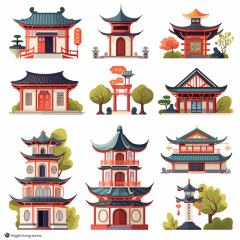
Collection of 10 Sets of Chinese Classical Building Patterns with Tree Decorations
File Type:EPS
This collection presents 10 exquisitely designed sets of patterns, featuring a harmonious blend of Chinese classical architectures such as pagodas, pavilions, and temple gates, adorned with various trees. Each pattern set is a visual ode to the profound cultural heritage of China, where architecture and nature coexist in perfect harmony. These patterns not only showcase the intricate details of traditional Chinese architecture but also highlight the significance of nature in Chinese aesthetics. They are ideal for a wide range of applications, including cultural and artistic projects, educational materials, and design inspiration.
Pattern Details
2.1 Pagoda Amidst Pine Trees
- Pattern Features: In this pattern, a majestic multi - storey pagoda stands tall, its body constructed of brick or wood, with upturned eaves on each level. The pagoda is surrounded by tall, straight pine trees. The pine needles are depicted in fine detail, and their branches gracefully reach towards the pagoda, as if embracing it. The pagoda's exterior is inscribed with Buddhist scriptures and symbols, and its vertical orientation gives a sense of reaching towards the sky. The combination of the pagoda's solemnity and the pine trees' ever - green vitality creates a serene and spiritual atmosphere.
- Cultural Significance: Pagodas, originating from ancient India and evolving uniquely in China, are closely associated with Buddhism, symbolizing the pursuit of spiritual enlightenment. Pine trees, in Chinese culture, represent longevity, perseverance, and steadfastness. Together, they create a scene that reflects the harmonious coexistence of religious beliefs and the enduring qualities of nature.
2.2 Pavilion by a Willow - lined Pond
- Pattern Features: A charming octagonal pavilion with gracefully curved eaves is set beside a pond. The pavilion is supported by wooden columns, and its railings are carved with motifs of lotus flowers. Willow trees line the edge of the pond, their long, slender branches hanging down and gently touching the water surface. The willow leaves are delicately drawn, fluttering in the breeze. The pavilion's interior may be decorated with calligraphy or paintings, and the roof is covered with blue - gray tiles.
- Cultural Significance: Pavilions are places for relaxation, cultural activities, and the appreciation of nature in Chinese culture. Willow trees are often associated with elegance, flexibility, and the arrival of spring. The pattern represents the Chinese love for leisurely pursuits in beautiful natural settings, as well as the harmonious relationship between humans and nature.
2.3 Temple Gate with Cypress Trees
- Pattern Features: The temple gate, a grand and imposing structure, is made of stone or wood. It has a wide entrance with two large doors, often decorated with copper knockers in the shape of animal heads. On both sides of the temple gate stand tall cypress trees. The cypress trees have thick trunks and dense foliage, their branches reaching upwards in a solemn manner. The temple gate may be inscribed with couplets and maxims that convey Buddhist teachings or blessings.
- Cultural Significance: Temple gates mark the entrance to sacred religious spaces. Cypress trees are considered sacred in Chinese culture and are often planted in temples and cemeteries, symbolizing solemnity, longevity, and the connection between the human and the spiritual worlds. The pattern thus creates a sense of reverence and sacredness.
2.4 Two - storey Pavilion among Bamboo Groves
- Pattern Features: A two - storey pavilion is nestled among a bamboo grove. The pavilion has a refined and elegant design, with delicately curved eaves. The lower storey serves as a spacious gathering area, while the upper storey may be used for meditation or observation. The bamboo stalks are depicted in various poses, some straight and tall, others bending slightly in the wind. The leaves of the bamboo are drawn in a way that shows their freshness and vitality. The pavilion's wooden structure is painted in warm colors, and its windows are decorated with lattice patterns.
- Cultural Significance: Bamboo is highly regarded in Chinese culture for its strength, flexibility, and purity. It is also associated with the literati class and their values of integrity and modesty. The pavilion among the bamboo groves represents a retreat for scholars and a place of tranquility, where one can engage in intellectual and spiritual pursuits.
2.5 Pagoda with a Ginkgo Tree in Front
- Pattern Features: A pagoda with a distinct silhouette stands prominently, and in front of it is a large ginkgo tree. The ginkgo tree has a thick, gnarled trunk and broad, fan - shaped leaves. In autumn, the leaves turn a beautiful golden color, which contrasts vividly with the pagoda's usually earth - toned or gray - hued body. The pagoda has multiple storeys, and each storey has upturned eaves that are decorated with small bells or other ornaments. The ginkgo tree's branches spread out, creating a natural canopy over the pagoda's entrance.
- Cultural Significance: Ginkgo trees are known for their long lifespan and are considered symbols of hope, resilience, and the passage of time. The pagoda, as a religious and cultural landmark, represents spiritual continuity. The combination of the two in the pattern evokes a sense of the enduring nature of both nature and human - made cultural heritage.
2.6 Three - tiered Temple Gate and Surrounding Plum Blossom Trees
- Pattern Features: The three - tiered temple gate is a magnificent structure, with each tier having slightly upturned eaves. The gate is decorated with intricate carvings of Buddhist deities, lotus flowers, and other religious symbols. Surrounding the temple gate are plum blossom trees. The plum blossoms, with their delicate petals in shades of pink and white, bloom profusely against the backdrop of the temple gate. The branches of the plum blossom trees are twisted and gnarled, adding a sense of character and beauty to the scene.
- Cultural Significance: Plum blossoms are highly revered in Chinese culture as a symbol of perseverance, purity, and the arrival of spring. They are often associated with the noble character of the literati. The temple gate, as a gateway to the sacred, and the plum blossom trees together create a scene that combines religious solemnity with the beauty and symbolic meaning of nature.
2.7 Riverside Pavilion and Maple Trees
- Pattern Features: A riverside pavilion, with its open - air design and gracefully curved eaves, is located by the bank of a river. The pavilion is supported by stone columns, and its railings are carved with motifs related to water, such as fish and waves. Maple trees line the riverbank near the pavilion. In autumn, the maple leaves turn a fiery red, creating a spectacular display of color. The reflection of the pavilion and the maple trees in the river adds to the beauty and tranquility of the scene. The pavilion's interior may have simple furnishings, such as wooden benches for people to sit and enjoy the view.
- Cultural Significance: The riverside pavilion is a place for people to enjoy the beauty of nature, write poetry, or have tea parties. Maple trees, especially their autumn foliage, are highly admired in Chinese art and literature for their vibrant colors, symbolizing the changing seasons and the beauty of nature. The pattern captures the essence of Chinese cultural life in a natural setting.
2.8 Mountain - side Pagoda and Fir Trees
- Pattern Features: A pagoda is built on the side of a mountain, its structure blending in with the natural landscape. The pagoda has a sturdy and compact form, with upturned eaves that seem to echo the slopes of the mountain. Fir trees cover the mountain around the pagoda. The fir trees have straight trunks and dense, dark - green foliage, giving a sense of strength and stability. The pagoda's lower levels may have larger windows for ventilation, while the upper levels have smaller openings. The mountain - side location provides a breathtaking view of the surrounding valleys and mountains.
- Cultural Significance: Mountains are considered sacred in Chinese culture, representing stability, endurance, and a connection to the divine. The pagoda on the mountain - side, along with the fir trees, creates a spiritual and natural harmony. It reflects the Chinese belief in the unity of man and nature and the pursuit of spiritual elevation in a natural environment.
2.9 Village Temple Gate and Fruit - bearing Trees
- Pattern Features: The village temple gate is a simple yet charming structure, made of local materials such as wood and stone. It has a single - storey design with a sloping roof and a small entrance. On both sides of the temple gate are fruit - bearing trees, such as peach or apricot trees. The trees are depicted with ripe fruits hanging from their branches, symbolizing prosperity and good fortune. The temple gate may be inscribed with the name of the village or simple religious inscriptions. The fruit - bearing trees add a touch of warmth and vitality to the temple gate.
- Cultural Significance: In Chinese culture, fruit - bearing trees are associated with good luck, fertility, and abundance. The village temple gate is an important part of the community, serving as a place for villagers to gather for religious and cultural activities. The combination of the temple gate and the fruit - bearing trees in the pattern represents the hopes and values of the local community.
2.10 Multi - storey Pavilion and Ornamental Trees
- Pattern Features: A multi - storey pavilion, with its elegant and complex design, is surrounded by various ornamental trees. The pavilion has gracefully curved eaves on each storey, and its wooden structure is decorated with intricate carvings of dragons, phoenixes, and other auspicious symbols. The ornamental trees, such as camellia or magnolia trees, are planted around the pavilion. The camellia flowers have large, colorful petals, while the magnolia flowers are known for their purity and elegance. The pavilion's windows offer views of the surrounding trees, and the trees' branches provide shade and beauty to the pavilion.
- Cultural Significance: The multi - storey pavilion is often a place for important cultural and social gatherings. Ornamental trees are chosen for their beauty and symbolic meanings in Chinese culture. Camellias symbolize love and admiration, while magnolias represent nobility and purity. The pattern showcases the luxurious and refined side of Chinese traditional culture, where architecture and nature are combined to create a harmonious and aesthetically pleasing environment.
Design Features
- Harmony between Architecture and Nature: All the patterns in this collection emphasize the harmonious coexistence of Chinese classical architecture and nature. The buildings are not only placed in natural settings but are also integrated with the trees in terms of composition, color, and symbolic meaning. The gentle curves of the building eaves often mirror the natural lines of the tree branches, and the earth - toned colors of the architecture blend well with the greens, browns, and other natural colors of the trees.
- Intricate Details of Architecture: Each building in the patterns is depicted with great attention to detail. The pagodas' multi - storey structures, the pavilions' delicate eaves and railings, and the temple gates' imposing facades are all rendered in a way that showcases the 高超的 craftsmanship of Chinese classical architecture. The carvings, inscriptions, and decorative elements on the buildings are carefully drawn, reflecting the rich cultural and religious significance of these structures.
- Symbolic Representation of Trees: The trees in the patterns are not just decorative elements but also carry deep symbolic meanings. From the longevity - symbolizing pine and cypress trees to the prosperity - representing fruit - bearing trees, each type of tree contributes to the overall cultural narrative of the pattern. The seasonal changes of the trees, such as the autumn colors of maple and ginkgo trees, add a dynamic element to the static architecture, further enhancing the sense of harmony between nature and human - made structures.
Application Scenarios
- Cultural and Artistic Projects: These patterns can be used in a wide range of cultural and artistic projects, such as creating traditional Chinese - style paintings, illustrations for books on Chinese culture, or as inspiration for modern art installations that explore the theme of Chinese heritage. They can also be used to design cultural souvenirs, such as postcards, bookmarks, or decorative plates, which can help promote Chinese culture and art.
- Educational Materials: In educational settings, these patterns can be used as visual aids in courses on Chinese history, culture, art, and architecture. They can help students better understand the characteristics of Chinese classical architecture, the symbolic meanings of different elements in Chinese culture, and the relationship between humans and nature in Chinese aesthetics. Teachers can use these patterns to create engaging lessons, such as asking students to analyze the cultural significance of the buildings and trees in each pattern.
- Interior Design and Decoration: Designers can draw inspiration from these patterns for interior design and decoration projects with a Chinese - style theme. The patterns can be used to create wall murals, wallpaper designs, or to decorate furniture. For example, a pattern of a pavilion among bamboo groves can be used to create a peaceful and elegant atmosphere in a study or a meditation room.


