

1/1
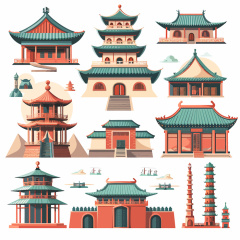
Collection of 10 Classic Ancient Chinese Architectural Icon Sets
File Type:EPS
This collection features 10 sets of meticulously designed icons, vividly encapsulating the grandeur and elegance of classic ancient Chinese architecture. Comprising icons of palaces, pagodas, ancient temples, and pavilions, each set is a visual distillation of the unique architectural features, rich cultural connotations, and exquisite ornamental details of these iconic structures. It serves as an ideal resource for cultural dissemination, educational materials, and creative design, offering a window into the profound and long - standing Chinese architectural heritage.
Icon Details
2.1 Icon Set 1: The Forbidden City - style Palace
- Icon Features: This icon depicts a magnificent palace inspired by the Forbidden City. The main hall has a triple - eaved, hip - and - gable roof, covered with golden - colored glazed tiles that glisten in the sun. The columns are painted bright red and adorned with elaborate carvings of dragons, symbolizing imperial power. The palace is surrounded by a high, red - painted wall with yellow - tiled eaves. In front of the main hall, there is a large, open square paved with stone slabs. On both sides of the square, there are smaller, symmetrically - arranged halls with single - eaved roofs. Ornamental bronze lions, a symbol of protection and dignity, are placed at the entrance of the main hall.
- Cultural Significance: Palaces in ancient China, such as the Forbidden City, were the centers of imperial power. The use of golden tiles and dragon carvings was restricted to imperial buildings, representing the supreme status of the emperor. The symmetrical layout of the palace complex reflects the traditional Chinese concept of order and harmony. The bronze lions at the entrance were believed to ward off evil spirits and safeguard the imperial residence. This icon set is a powerful representation of the imperial grandeur and the highly - structured nature of ancient Chinese imperial architecture.
2.2 Icon Set 2: Mountain - side Pagoda
- Icon Features: The icon showcases a pagoda standing on the slopes of a mountain. The pagoda is a multi - storeyed, octagonal structure made of stone. Each storey has a distinct set of carvings, including Buddhist motifs like lotus flowers and Buddha statues. The eaves of the pagoda are broad and gracefully curved, with small bells hanging from the corners that tinkle gently in the wind. Around the pagoda, there are tall pine trees, their branches stretching out, and wildflowers blooming in the grass. A small, winding path leads up to the pagoda, adding to its serene and secluded atmosphere.
- Cultural Significance: Pagodas in Chinese culture were often associated with Buddhism, originally built to enshrine the relics of the Buddha or important Buddhist scriptures. The octagonal shape of the pagoda is considered auspicious in Buddhism. The pine trees, symbolizing longevity and perseverance, and the wildflowers, representing the beauty and vitality of nature, create a harmonious and sacred environment around the pagoda. The location on the mountainside reflects the traditional Chinese pursuit of a spiritual connection with nature in a peaceful and secluded setting.
2.3 Icon Set 3: Ancient Temple in the Forest
- Icon Features: This icon presents an ancient temple nestled deep within a forest. The temple's main hall has a double - eaved, sloping roof with upturned eaves, supported by sturdy wooden columns. The columns are painted in a dark, rich color, giving a sense of solidity and age. The temple's entrance is marked by a large, red - painted gate with brass knockers. Inside the temple, there are statues of Buddha and various Bodhisattvas. The temple grounds are surrounded by ancient trees, such as cypress and ginkgo, their branches intertwined, providing shade and a sense of tranquility. There are also small, decorative stone lanterns placed along the paths, adding to the peaceful and mysterious atmosphere.
- Cultural Significance: Ancient temples in China were not only places of religious worship but also centers of cultural and social activities. The design of the temple, with its traditional Chinese architectural elements, reflects the long - standing religious and cultural traditions. The cypress and ginkgo trees, often associated with longevity and wisdom in Chinese culture, enhance the solemn and peaceful environment of the temple. The stone lanterns, which have a long history in Chinese and Japanese cultures, were used to illuminate the temple grounds during religious ceremonies and also symbolize the light of wisdom in Buddhism.
2.4 Icon Set 4: Water - side Pavilion
- Icon Features: The icon features an elegant pavilion built over a body of water. The pavilion has a single - eaved, curved roof, supported by slender, white - painted wooden columns. The columns are adorned with simple, yet delicate carvings of flowers and vines. The open - air structure of the pavilion allows for a clear view of the surrounding water. In the water around the pavilion, there are floating water lilies, and small fish swimming among them. Some climbing plants, like wisteria, wind their way along the railing of the pavilion, adding a soft and flowing touch. A small, arched bridge leads to the pavilion from the shore.
- Cultural Significance: Water - side pavilions were popular in ancient China for their refreshing and peaceful environment. They were often used for relaxation, enjoying the scenery, and for literary and artistic gatherings. The water lilies, symbolizing purity in Chinese culture, and the wisteria, representing love and longing, create a refined and romantic atmosphere. The pavilion's location over the water reflects the traditional Chinese appreciation for the beauty of nature and the harmonious relationship between man - made structures and the natural environment.
2.5 Icon Set 5: Imperial Summer Palace - style Palace
- Icon Features: This icon portrays a palace in the style of an imperial summer palace. The main building has a multi - eaved roof with elaborate wooden brackets and colorful, decorative tiles. The palace is surrounded by a large, well - manicured garden with artificial lakes, bridges, and rockeries. There are pavilions and corridors connected to the main palace building, providing sheltered walkways. The garden is filled with various flowers, such as peonies and lotuses, and there are also exotic trees and shrubs. In the center of the artificial lake, there is a small island with a pavilion on it, accessible by a stone bridge.
- Cultural Significance: Imperial summer palaces were places where the royal family could escape the heat of the city and enjoy a more relaxed and natural environment. The elaborate design of the palace, with its luxurious roof decorations and the well - designed garden, reflects the high - level of craftsmanship and the pursuit of beauty and comfort in imperial life. The peonies, symbolizing wealth and prosperity, and the lotuses, representing purity and enlightenment, add to the cultural and aesthetic richness of the palace - garden complex. The artificial lakes, rockeries, and bridges in the garden are designed to create a microcosm of the natural world, following the traditional Chinese concept of "bringing nature into the garden."
2.6 Icon Set 6: Square - shaped Pagoda with Ornamentation
- Icon Features: The icon shows a square - shaped pagoda with a multi - storeyed structure. The pagoda is made of high - quality bricks, and each storey has a different set of carvings. The eaves are broad and slightly curved, and on each corner of the eaves, there are small, decorative figures. The pagoda is adorned with carvings of various Buddhist symbols, such as the eight treasures (wheel, conch, umbrella, canopy, lotus, vase, fish, and knot). At the base of the pagoda, there is a small, paved courtyard with some potted plants, like bonsai. A few small, stone - carved lions are placed around the courtyard, adding a touch of protection and dignity.
- Cultural Significance: Square - shaped pagodas in Chinese Buddhist architecture have a long history. The carvings of Buddhist symbols on the pagoda represent the rich Buddhist culture and its profound influence on Chinese architecture. The eight treasures are important symbols in Buddhism, each with its own meaning, such as the wheel representing the Dharma, and the lotus symbolizing purity. The potted bonsai, which are a unique form of Chinese horticultural art, add an artistic and refined touch to the pagoda's surroundings. The stone - carved lions, as in many Chinese architectural settings, are believed to protect the pagoda from evil.
2.7 Icon Set 7: Ancient Temple Complex
- Icon Features: This icon represents an ancient temple complex. The complex includes a main hall, side halls, and a bell tower. The main hall has a large, double - eaved roof with a central ridge decorated with dragon - shaped ornaments. The columns of the main hall are thick and painted red, with carvings of mythical creatures. The side halls have single - eaved roofs and are connected to the main hall by covered corridors. The bell tower is a tall, square - shaped structure with a sloping roof. A large, bronze bell hangs inside the bell tower. The temple complex is surrounded by a wall with small, arched gates. Inside the complex, there are large, stone tablets engraved with Buddhist scriptures and inscriptions commemorating important events in the temple's history.
- Cultural Significance: Ancient temple complexes were important religious and cultural institutions in Chinese society. The main hall, with its grand design and dragon - shaped ridge ornaments, represents the high status and importance of the temple. The side halls were often used for different religious activities or to house additional Buddha statues. The bell tower, with its large bronze bell, was used to mark the time for religious ceremonies and also had a symbolic meaning in Buddhism, representing the call to enlightenment. The stone tablets with Buddhist scriptures and inscriptions preserved the temple's history and religious teachings, playing an important role in the transmission of Buddhist culture.
2.8 Icon Set 8: Two - storey Pavilion in a Garden
- Icon Features: The icon features a two - storey pavilion located in a beautiful garden. The pavilion has a double - eaved, sloping roof with upturned eaves. The upper storey has an open - air balcony with a wooden railing, offering a view of the garden. The columns of the pavilion are painted in a light color, and there are simple, traditional carvings on the beam - ends. The garden around the pavilion is filled with colorful flowers, such as chrysanthemums, roses, and camellias. There are also small, artificial ponds with goldfish swimming in them. Some small, decorative pavilions and benches are placed around the garden, creating a pleasant and inviting atmosphere.
- Cultural Significance: Pavilions in gardens were places for people to relax, enjoy the beauty of nature, and engage in cultural activities. The double - eaved roof of the pavilion indicates a certain level of elegance and importance. The different types of flowers in the garden, each with its own cultural significance (chrysanthemums symbolize longevity, roses can represent love, and camellias are associated with nobility), add to the cultural and aesthetic richness of the garden. The artificial ponds with goldfish not only enhance the beauty of the garden but also have symbolic meanings, such as prosperity and good luck.
2.9 Icon Set 9: Mountain - top Pagoda
- Icon Features: This icon depicts a pagoda standing on the top of a mountain. The pagoda is a tall, multi - storeyed structure with a conical roof. It is made of stone, and the surface of the pagoda is adorned with simple, geometric carvings. The pagoda is surrounded by a clear, blue sky and white clouds. At the base of the pagoda, there are some rugged rocks and a few sparse, hardy plants, such as mountain pines. The view from the pagoda shows a vast expanse of mountains and valleys, with a small stream winding its way through the landscape.
- Cultural Significance: Mountain - top pagodas were often built to mark important religious or scenic spots. The location of the pagoda on the mountain top gives it a sense of grandeur and spiritual significance. The simple, geometric carvings on the pagoda may represent the fundamental principles of Buddhism or the harmony of nature. The mountain pines, which can withstand harsh mountain environments, symbolize perseverance and strength. The view from the pagoda, with the vast mountains and valleys, reflects the traditional Chinese admiration for the grandeur of nature and the spiritual connection between man and the natural world.
2.10 Icon Set 10: Memorial Archway near a Temple
- Icon Features: The icon shows a magnificent memorial archway standing near an ancient temple. The archway is made of stone and has a three - door structure. The columns of the archway are thick and decorated with carvings of dragons, phoenixes, and other mythical creatures. The lintels are engraved with inscriptions and patterns that tell stories of local heroes, historical events, or religious legends. On top of the archway, there are small, decorative eaves. The archway is surrounded by some well - trimmed shrubs and a few potted orchids, adding a touch of elegance. The ancient temple in the background has a red - painted wall and a yellow - tiled roof, with a large, wooden gate.
- Cultural Significance: Memorial archways in ancient China were built to commemorate important events, honor outstanding individuals, or mark special places. The dragon and phoenix carvings on the archway symbolize imperial favor, good fortune, and high status. The inscriptions and patterns on the archway carry valuable historical and cultural information. The orchids, which are highly regarded in Chinese culture as symbols of elegance, purity, and friendship, enhance the aesthetic and cultural value of the archway. The proximity to the ancient temple further emphasizes the cultural and religious significance of the area, as the archway may be related to the temple's history or the people associated with it.
Design Features
- Authentic Representation of Traditional Architecture: The icons in this collection are designed with great attention to detail, accurately representing the unique features of ancient Chinese palaces, pagodas, temples, and pavilions. The roof styles, column designs, and overall proportions of the buildings are based on historical architectural records and real - world examples. The use of colors, such as red for columns, yellow or gold for imperial - related roofs, and natural colors for stone and wood, adheres to the traditional color - coding system in Chinese architecture, enhancing the authenticity of the icons.
- Harmonious Incorporation of Cultural Symbols: Each icon incorporates various cultural symbols that are deeply rooted in Chinese history and culture. From the dragon and phoenix carvings symbolizing imperial power and good fortune to the lotus flowers and Buddhist motifs representing purity and enlightenment, these symbols not only add visual interest but also convey the rich cultural connotations of the buildings. The integration of natural elements, such as flowers, trees, and water, with the man - made architecture reflects the traditional Chinese concept of harmony between man and nature, further enriching the design.
- Attention to Detail in Ornamentation: Despite their relatively small size, the icons pay great attention to the ornamental details. The carvings on columns, doors, and archways, the decorative elements on roofs and eaves, and the arrangement of plants and other accessories are all carefully designed to showcase the exquisite craftsmanship of ancient Chinese architecture. This attention to detail allows viewers to appreciate the beauty and complexity of these structures, even in a simplified icon format.
Application Scenarios
- Educational Purposes: These icon sets are highly suitable for use in educational materials, such as history textbooks, art history courses, and cultural education programs. Teachers can use them to illustrate the different types of ancient Chinese architecture, their cultural significance, and the historical context in which they were built. For example, in a history class on ancient Chinese dynasties, the palace - style icons can be used to teach students about the imperial power and the elaborate architectural styles of the time. In an art history class, students can study the design features and ornamental details of the icons to understand the development of Chinese architectural art.
- Cultural Promotion and Tourism: In the fields of cultural promotion and tourism, these icons can be used to attract people's attention to China's rich architectural heritage. They can be printed on brochures, posters, and postcards for tourist attractions, cultural festivals, and exhibitions. For instance, in a tourism campaign for a historical city with many ancient temples and palaces, these icons can be used to represent the city's unique cultural attractions, helping to promote tourism and increase cultural awareness.
- Graphic and Web Design: Designers in graphic and web design can draw inspiration from these icon sets. The unique architectural styles and cultural symbols can be incorporated into modern designs to add a touch of traditional Chinese charm. For example, in the design of a Chinese - themed website, these icons can be used as navigation buttons or decorative elements to create a cohesive and culturally - rich visual experience. In graphic design projects, such as logo design or packaging design for products with a Chinese cultural theme, the elements from these icons can be adapted to create a distinct and memorable design.


