

1/1
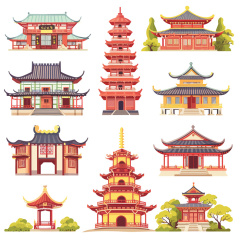
Collection of 10 Chinese Ancient Classic Architecture Icons
File Type:EPS
This collection features 10 exquisitely designed icons, presenting a diverse range of Chinese ancient architectures. It includes 2 pagodas, 6 palaces, and 2 pavilions. Each icon is a vivid representation of the rich architectural heritage of China, meticulously crafted to showcase the unique charm and cultural significance of these structures. These icons are not only visually appealing but also carry profound historical and cultural connotations, making them ideal for various applications such as cultural and educational projects, design inspiration, and digital or print media.
Icon Details
2.1 Octagonal Pagoda with Flying Eaves
- Icon Features: This octagonal pagoda stands tall with multiple storeys. Each storey has gracefully upturned eaves, creating a sense of lightness and elegance. The pagoda's body is adorned with intricate carvings of Buddhist motifs, such as lotus flowers and Buddha statues. The base of the pagoda is sturdy, providing a stable foundation. The overall design of the pagoda follows the traditional Chinese Buddhist architectural style, with a vertical orientation that gives a sense of reaching towards the sky.
- Cultural Significance: Pagodas in Chinese culture are closely associated with Buddhism. They are often built to house Buddhist relics, scriptures, or as places for religious practice. The octagonal shape is considered auspicious in Buddhism, symbolizing the eightfold path to enlightenment. The upturned eaves not only add to the aesthetic beauty but also have practical functions, such as protecting the structure from rain and snow. This pagoda icon represents the spiritual and cultural essence of Chinese Buddhism.
2.2 Square - based Pagoda with a Bell - shaped Top
- Icon Features: The square - based pagoda has a solid and simple structure. The lower part of the pagoda is a square - shaped body, with each side decorated with reliefs of geometric patterns. As it rises, the pagoda gradually tapers, and the top is in the shape of a bell, with a small finial at the very tip. The bell - shaped top is often used in Chinese pagoda designs to enhance the visual appeal and also has symbolic meanings. Small bells are usually hung from the eaves, which tinkle in the wind, creating a peaceful and harmonious atmosphere.
- Cultural Significance: The square base of the pagoda symbolizes stability and earthliness, while the bell - shaped top represents the connection between the earthly and the spiritual realms. The bells on the eaves are believed to ward off evil spirits and also add a musical element to the religious environment. This pagoda icon reflects the traditional Chinese concept of harmony between man, nature, and the divine.
2.3 The Forbidden City - style Palace
- Icon Features: This palace icon is modeled after the magnificent Forbidden City. It has a large, rectangular layout with a main hall in the center. The main hall features a double - eaved gable - and - hip roof, covered with yellow 琉璃瓦,which symbolize imperial power. The eaves are decorated with rows of small animal statues, each with its own symbolic meaning. The palace is surrounded by red - painted walls and gates, with intricate carvings on the wooden doors and windows. In front of the main hall, there is a large courtyard, often used for imperial ceremonies.
- Cultural Significance: The Forbidden City is the epitome of Chinese imperial architecture. The use of yellow 琉璃瓦 was exclusive to the imperial family, representing the highest level of power and authority. The red walls symbolize good fortune and prosperity. The layout of the palace follows strict rules of feng shui, aiming to create a harmonious and auspicious environment for the emperor and his court. This palace icon represents the grandeur and authority of the Chinese imperial era.
2.4 Tang - style Palace with Wide Eaves
- Icon Features: The Tang - style palace has a distinct appearance with wide, gently sloping eaves. The main building has a single - eaved hip - and - gable roof, which gives it a more open and spacious feel. The columns supporting the roof are thick and sturdy, with simple but elegant capitals. The palace is painted in warm colors, such as earthy browns and reds, which are characteristic of the Tang Dynasty. The building is surrounded by a veranda, providing a shaded area for people to walk and enjoy the view.
- Cultural Significance: The Tang Dynasty was a period of great prosperity and cultural development in China. The architecture of this era emphasized a sense of grandeur and harmony. The wide eaves not only protected the building from the elements but also created a sense of openness and hospitality. The use of natural colors reflected the Tang people's love for nature and simplicity. This palace icon represents the cultural and artistic achievements of the Tang Dynasty.
2.5 Song - style Palace with Intricate Wood Carvings
- Icon Features: This Song - style palace is known for its elaborate wood carvings. The main hall has a multi - eaved roof, with each eave decorated with detailed carvings of flowers, birds, and mythical creatures. The wooden doors and windows are also adorned with delicate lattice patterns and carvings. The palace is built on a raised platform, which adds to its solemnity. The overall design is more refined and detailed compared to other styles, with a focus on craftsmanship and aesthetics.
- Cultural Significance: The Song Dynasty was a time when Chinese art and craftsmanship reached new heights. The intricate wood carvings in the palace not only served as decorative elements but also reflected the high level of artistic skills and the cultural values of the era. The use of raised platforms was a common feature in Song - style architecture, emphasizing the importance and status of the building. This palace icon showcases the refined and sophisticated culture of the Song Dynasty.
2.6 Yuan - style Palace with Islamic - influenced Elements
- Icon Features: The Yuan - style palace incorporates some Islamic - influenced elements due to the cultural exchanges during the Yuan Dynasty. The main building has a flat - roofed structure in some parts, which is different from the traditional Chinese sloping roofs. The arches and domes in the palace are inspired by Islamic architecture. The exterior is decorated with geometric patterns and calligraphy, which are typical of Islamic art. However, it still retains some Chinese architectural features, such as the use of red - painted columns and traditional Chinese decorative motifs.
- Cultural Significance: The Yuan Dynasty was a period of extensive cultural integration, with the influence of various ethnic and religious groups. The combination of Islamic and Chinese architectural elements in this palace icon reflects the cultural diversity and openness of the Yuan Dynasty. It represents the harmonious coexistence and mutual influence of different cultures in Chinese history.
2.7 Ming - style Palace with Grand Courtyards
- Icon Features: The Ming - style palace features large, well - planned courtyards. The main hall is surrounded by multiple smaller buildings, all arranged in a symmetrical pattern around the courtyards. The main hall has a high - pitched, multi - eaved roof, with yellow 琉璃瓦. The walls of the palace are thick and sturdy, often painted in red. The courtyards are paved with stone slabs and may have gardens, fountains, or other decorative elements. The overall layout of the palace gives a sense of order and hierarchy.
- Cultural Significance: The Ming Dynasty placed great emphasis on order and hierarchy in all aspects of life, including architecture. The symmetrical layout of the palace and the grand courtyards were designed to reflect the imperial power and the strict social order of the time. The use of yellow 琉璃瓦 and red walls continued to symbolize imperial authority and good fortune. This palace icon represents the structured and formal culture of the Ming Dynasty.
2.8 Qing - style Palace with Richly Decorated Facades
- Icon Features: The Qing - style palace has richly decorated facades. The main building has a complex roof structure, with multiple eaves and elaborate ridge ornaments. The facades are covered with colorful paintings and carvings of dragons, phoenixes, and other auspicious symbols. The wooden components of the building, such as the beams and columns, are often painted in bright colors and decorated with gold leaf. The palace may also have ornate gates and pavilions, adding to its grandeur.
- Cultural Significance: The Qing Dynasty was a time when Chinese architecture became more elaborate and decorative. The use of rich colors, gold leaf, and intricate carvings on the palace facades was a way to display the wealth and power of the imperial family. Dragons and phoenixes, as symbols of the emperor and empress, were frequently used in the decorations. This palace icon represents the opulent and decorative style of the Qing Dynasty.
2.9 Hexagonal Pavilion in a Garden
- Icon Features: This hexagonal pavilion is located in a beautiful garden setting. It has a single - eaved, hexagonal - shaped roof, with upturned eaves that give it a light and elegant appearance. The pavilion is supported by six wooden columns, which are painted in a natural color. The interior of the pavilion may have simple wooden benches or tables for people to rest. The roof is covered with gray tiles, which blend well with the natural environment. The pavilion is surrounded by flowers, trees, and perhaps a small pond.
- Cultural Significance: Pavilions in Chinese gardens are places for people to relax, enjoy the scenery, and engage in cultural activities such as poetry recitation or tea - drinking. The hexagonal shape is considered auspicious in Chinese culture. The pavilion in the garden represents the harmonious relationship between humans and nature, as well as the Chinese love for aesthetically pleasing and peaceful environments.
2.10 Square Pavilion with a Curved Roof
- Icon Features: The square pavilion has a unique curved roof, which is different from the traditional flat - topped or sharply angled roofs. The curved roof gives the pavilion a more dynamic and elegant look. The pavilion is made of wood, with a square - shaped body supported by four columns. The columns are decorated with simple carvings or painted in a warm color. The interior of the pavilion may be open - air or have a simple roofed area for shelter. It is often placed in a scenic spot, such as by a lake or on a hilltop.
- Cultural Significance: The curved roof of the pavilion not only adds to its aesthetic value but also symbolizes the connection between the pavilion and the flowing lines of nature. The square shape represents stability. This pavilion icon reflects the Chinese concept of finding a balance between stability and the beauty of nature, and it serves as a place for people to seek tranquility and inspiration.
Design Features
- Cultural Symbolism: All the icons in this collection are rich in cultural symbolism. From the religious significance of the pagodas to the imperial power represented by the palaces and the harmonious relationship with nature symbolized by the pavilions, each icon carries deep - rooted cultural meanings. The use of specific colors, shapes, and decorative elements is carefully chosen to convey these cultural connotations.
- Attention to Detail: The design of each icon pays great attention to detail. Whether it's the intricate carvings on the pagodas and palaces or the delicate lattice patterns on the pavilions, every element is meticulously crafted to showcase the high - level craftsmanship of Chinese ancient architecture. The small details not only enhance the visual appeal but also contribute to the overall authenticity of the icons.
- Harmony with the Environment: The architecture icons, especially the pavilions, are designed to be in harmony with the environment. They are often placed in natural settings such as gardens, by lakes, or on mountains, and their design elements, such as the choice of materials and colors, are selected to blend in with the surrounding nature. This reflects the traditional Chinese concept of unity between man and nature.
Application Scenarios
- Cultural and Educational Projects: These icons can be widely used in cultural and educational projects. They can be included in textbooks, educational videos, or museum exhibits to help people better understand the rich architectural heritage of China. Teachers can use these icons to illustrate different architectural styles in history lessons, and museums can display them to enhance the visitor experience.
- Design Inspiration: Designers in various fields, such as graphic design, interior design, and game design, can draw inspiration from these icons. The unique architectural styles and cultural elements can be incorporated into modern designs to create a sense of cultural identity and uniqueness. For example, the patterns and colors from the palace icons can be used in interior decoration for a Chinese - style room.
- Digital and Print Media: In the digital age, these icons are perfect for use in digital media such as websites, mobile apps, and social media posts related to Chinese culture. They can also be printed on postcards, posters, or other cultural products to promote Chinese culture and attract the attention of a wider audience.


