

1/1
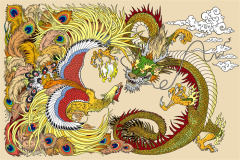
Ancient Japanese Auspicious Beast Decoration: Dragon and Phoenix Facing Each Other with Auspicious Clouds
File Type: AI
This decoration background image, rooted in ancient Japanese auspicious beast elements, captures a majestic dragon and a graceful phoenix facing each other, set against a backdrop of billowing auspicious clouds. With its vibrant and 华丽 (gorgeous) color palette, it blends the dragon’s celestial power, the phoenix’s divine elegance, and the clouds’ ethereal softness into a scene that radiates harmony, prosperity, and divine blessing. Suitable for cultural exhibitions, imperial-themed interiors, sacred spaces, or high-end art collections, it embodies the profound symbolism of balance, unity, and eternal fortune in ancient Japanese culture.
The Majestic Dragon
Regal Form and Luminance
The dragon, positioned on the left, exudes an aura of celestial authority. Its body is long and sinuous, coiling gently with a sense of controlled power. The scales covering its body shimmer in iridescent shades of deep blue, emerald green, and gold, resembling a mosaic of precious stones that catch the light. Each scale is meticulously detailed, overlapping like the plates of a royal armor, and they glow with an inner radiance, as if infused with celestial energy.
The dragon’s head is held high, adorned with a pair of curved antlers and flowing whiskers that drift in the air. Its eyes, like glowing amber orbs, are sharp and wise, fixed on the phoenix with a gaze that conveys mutual respect. The dragon’s jaws are slightly parted, revealing a hint of sharp fangs, and its forked tongue flicks out softly, adding a touch of vitality. Its wings are partially spread, their membranes translucent with veins of silver that glint in the light, and its claws, strong and curved, are poised as if resting on an invisible pedestal.
Cultural Symbolism
In ancient Japanese culture, the dragon is a symbol of imperial power, celestial wisdom, and control over natural forces—particularly water and rain. It embodies the yang energy—active, strong, and masculine—representing strength, leadership, and the ability to bring prosperity through balance. The dragon’s presence facing the phoenix signifies the union of opposing yet complementary forces, a cornerstone of cosmic harmony in Japanese philosophy.
3. The Graceful Phoenix
Elegant Form and Vibrancy
The phoenix, positioned on the right, radiates beauty and grace. Its body is sleek and slender, with a long, curved neck that adds to its elegant posture. The plumage covering its body is a stunning array of fiery hues—crimson, scarlet, and gold—resembling flames that glow from within. Each feather is soft yet vibrant, with the wing feathers fanning out in layers that create a sense of depth, and the tail feathers trailing behind it like a 绚丽 (gorgeous) cascade of color.
The phoenix’s head is crowned with a crest of golden feathers that stand upright, and its eyes, like bright rubies, are warm and wise, locking onto the dragon’s gaze. Its beak is sharp yet delicate, and it holds a small sprig of a sacred plant in its mouth, symbolizing peace and renewal. The phoenix’s posture is upright and poised, with its wings slightly spread as if ready to take flight, yet rooted in the moment of connection with the dragon.
Cultural Symbolism
In ancient Japanese culture, the phoenix—known as hō-ō—is a symbol of rebirth, immortality, and peace. It embodies the yin energy—nurturing, graceful, and feminine—representing beauty, renewal, and the ability to bring harmony. The phoenix is believed to appear only during times of great prosperity and balance, and its presence facing the dragon signifies the perfect union of yin and yang, the harmony between strength and grace, and the unity of celestial forces.
4. The Auspicious Cloud Background
Ethereal and Blessing-Packed
The background is filled with billowing auspicious clouds, creating a soft and ethereal setting for the dragon and phoenix. The clouds are rendered in shades of white, pale pink, and lavender, with subtle gradients that give them a fluffy, three-dimensional appearance. Some clouds are thick and voluminous, like piles of cotton, while others are wispy and delicate, drifting gently between the dragon and phoenix. The clouds catch the light, with edges glowing in soft gold, as if touched by the sun’s rays, adding a sense of divine radiance to the scene.
Symbolism of the Clouds
In Japanese culture, auspicious clouds (kichijoji) are symbols of good fortune, divine presence, and the connection between heaven and earth. They are believed to carry the blessings of the gods, making them a powerful emblem of prosperity and protection. The clouds surrounding the dragon and phoenix act as a bridge between the two creatures, symbolizing the spiritual bond that unites them. They also represent the celestial realm, where the dragon and phoenix—both divine beasts—reside, emphasizing their sacred status and the purity of their union.
5. Harmony of the Pair
Visual Interaction
The dragon and phoenix are positioned in perfect symmetry, facing each other with a sense of mutual reverence. The dragon’s coiled body forms a gentle arc that mirrors the phoenix’s curved neck, creating a visual balance that draws the eye to the space between them—a focal point of connection. The dragon’s cool blues and greens complement the phoenix’s warm reds and golds, creating a harmonious contrast that symbolizes the union of yin and yang. The clouds wrap around both creatures, framing them in a soft embrace that enhances their unity, while the golden highlights in their scales and feathers create a cohesive link, ensuring the scene feels interconnected.
Cultural Fusion
Together, the dragon, phoenix, and auspicious clouds embody the ancient Japanese concept of wa (harmony), which is the foundation of cosmic order. They represent the union of heaven and earth, power and grace, action and stillness—forces that are opposing yet interdependent. This fusion reflects the belief that true prosperity comes from balance, and that unity between different energies brings lasting fortune. The image also captures the essence of kotodama (the spirit of words), where the silent interaction between the dragon and phoenix speaks of eternal promises of protection, prosperity, and harmony.
6. Aesthetic and Cultural Depth
The artwork draws inspiration from traditional Japanese yamato-e paintings and imperial art, with meticulous attention to detail in the rendering of the dragon’s scales, the phoenix’s feathers, and the clouds’ soft texture. The use of vibrant colors and gold accents reflects the opulence of imperial symbolism, which sought to convey the grandeur of divine and royal power. Culturally, the image is rooted in myths of the dragon and phoenix as guardians of fortune, their union symbolizing a golden age of peace and prosperity. It invites viewers to contemplate the beauty of balance, the power of unity, and the presence of divine blessings in the world.
7. Application Scenarios
This decoration is suitable for prestigious spaces:
- Cultural Exhibitions: It showcases the rich symbolism of ancient Japanese auspicious beasts, highlighting the significance of the dragon and phoenix as symbols of harmony.
- Imperial-Themed Interiors: Palaces, stately homes, or luxury hotels with imperial aesthetics are enhanced by this decoration, adding a touch of regal grandeur and blessing.
- Sacred Spaces: Temples, shrines, or meditation rooms benefit from its presence, as it radiates a sense of peace, spiritual unity, and divine grace.
- High-End Art Collections: It is a valuable addition to collections of Asian art, with its stunning visuals and deep cultural significance.


